
About Francis Horner
Lived 1778 – 1817 (aged 38). Francis Horner was a British economist and politician.
Francis Horner FRSE (12 August 1778 – 8 February 1817) was a Scottish Whig politician, journalist, lawyer and political economist.
Early life: 1778–1807
He was born in Edinburgh the son of John Horner a linen merchant and his wife Joanna Baillie. The family lived originally on Princes Street then moved to 19 York Place. His younger brother was Leonard Horner. He had another younger brother, John Horner Esq. (1782-1829), and a younger sister, Frances Horner (1789-1876) who married Myles Byrne.
He was educated at the High School in Edinburgh under Dr Alexander Adam. He then spent a year at a private school in Shacklewell near London under John Hewlett.
He then studied law at University of Edinburgh, where he was praised by Professor Dugald Stewart as an intellectual all-rounder. He left the university in 1795 and went with Rev. John Hewlett to Middlesex, where he almost lost his Scottish accent. He read David Hume's history in August 1800 and wrote: "The history of Britain, during the eighteenth century, haunts me like a dream; and I am alternately intoxicated with visions of historic laurels and of forensic eminence".
He qualified as an advocate in Scotland in 1800 but after a few years of practice went to London to train for the English bar at Lincoln's Inn and qualified there in 1807.
In 1802, Horner was one of the founders (with Francis Jeffrey) of the Edinburgh Review, and in the next few years he would contribute fourteen articles to that journal. He features as the character Frank the Tinker in John Paterson's Mare, James Hogg's allegorical satire on the Edinburgh publishing scene first published in the Newcastle Magazine in 1825.
Through his involvement with the Edinburgh Review, Horner became acquainted with fellow Whig journalists.
In 1807 he was elected a Fellow of the Royal Society of Edinburgh. His proposers were Sir James Hall, John Playfair and Thomas Allan.
Political career: 1806–1817
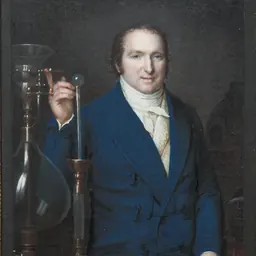
Sir Henry Raeburn.
Horner was MP for St. Ives in 1806, Wendover in 1807, and St. Mawes in 1812 (in the patronage of the Marquess of Buckingham).
He translated Leonhard Euler's Elements of Algebra in 1797 and revised Henry Bennet's Short Account of a late Short Administration for publication in 1807.
Horner was offered a Treasury secretaryship in 1811 when Lord Grenville was attempting to form a ministry, which he refused as he would not accept office until he was wealthy enough to survive out of office. A believer in political economy, he criticised the Corn Laws and slavery in 1813–15. On 20 March 1815 the City of London voted thanks to him for his critique of protectionism. where he "extended and confirmed his fame as a political economist by his share in the famous Bullion Report". The committee produced its report on 8 June (but not published until August). On 20 February 1811 Horner advocated the repeal of restrictions on cash payments and on 6 May put forward sixteen resolutions in favour but they were countered on 26 June by government counter-resolutions.
In January 1811 Horner wrote:
In the situation to which the continent of Europe is reduced, and in the situation which England commands, I cannot imagine a general peace of any duration; and without it, we can have no peace with France ... If the whole Continent were to be tranquillised into one empire, and should slumber for years in repose under a vigilant and well-organised despotism, no fate could be intended for us but annexation to the mass; nor could we devise any safety for ourselves, but by adopting public institutions, and by fostering sentiments of individual ambition and conduct, of which defensive war and the most rigid prejudices of local patriotism were constant objects ... It seems infinitely more probable, that the new empire of France will be perpetually disturbed by efforts in one member or another to throw off the yoke ... I conceive it would be the duty of this country ... to contribute from our resources every aid and encouragement to the insurgents. It is idle to sigh for peace, if it cannot be had upon system, and for a period to be sure of; England forms a part of Europe, and must share its vicissitudes and agitations.
Horner further claimed that the British war policy should be based on "the principles by which Elizabeth was guided, and afterwards King William; forbearing all little bye objects of gain and aggrandisement, and keeping steadily in view, through all fortunes and in the lowest depth of our despair, the ultimate partition of the Continent into independent states, and the revival of a public law in Europe".
After Napoleon's defeat in 1814, he criticised the peace settlement as "the plunder of Europe" by the "robbers of Vienna".
He never married and had no children.
Legacy
G. F. R. Barker, writing in the Dictionary of National Biography in 1891, gave this assessment of Horner:
Horner was a man of sound judgment and unassuming manners, of scrupulous integrity, and great amiability of character. He was a correct and forcible speaker, and though without the gift of eloquence or humour, exercised a remarkable influence in the House of Commons, owing to his personal character. Few men, with such small advantages at the outset of their career, ever acquired in such a short space of time so great a reputation among their contemporaries. As a political economist Horner ranks deservedly high, and though the bullion report, with which his name is identified, produced no immediate legislative result, its effect upon public opinion was so great that Peel was enabled to pass his bill for the gradual resumption of cash payments by the bank a few years afterwards (59 Geo. III, c. 49). Lord Cockburn, in "Memorials of his Time," has recorded his conviction that "Horner was born to show what moderate powers, unaided by anything whatever except culture and goodness, may achieve, even when these powers are displayed amidst the competition and jealousy of public life" (p. 313), while Scott declared that Horner always put him "in mind of Obadiah's bull" (LOCKHART, Life of Sir Walter Scott, 1845, p. 156).
Don’t just read it —
keep it.
Full-length biographies made to live with: read them, listen on the way to work, watch them tonight.
- E-book
- Audio
- Video
Instant download · yours to keep · every purchase keeps this site free
Important facts
People in Francis Horner's life
Named in this biography and alive at the same time



Related people
Same field, nearest in time


Contemporaries
People whose lives overlapped Francis Horner's


Frequently asked questions
Who was Francis Horner?
British politician (1778-1817)
When was Francis Horner born?
Francis Horner was born on 12 August 1778 in Edinburgh.
When did Francis Horner die?
Francis Horner died on 8 February 1817 in Pisa.
What was Francis Horner's occupation?
Francis Horner was an economist and politician.
What nationality was Francis Horner?
Francis Horner was British.
Sources & further reading
Cite this page
APA: Biography.guide. (2026). Francis Horner. https://biography.guide/francis-horner/
MLA: "Francis Horner." Biography.guide, https://biography.guide/francis-horner/.
Chicago: "Francis Horner." Biography.guide. https://biography.guide/francis-horner/.
Data last updated: 2026-09-20 · Spot an error? Report a correction.
Page generated 2026-09-27 05:22 UTC