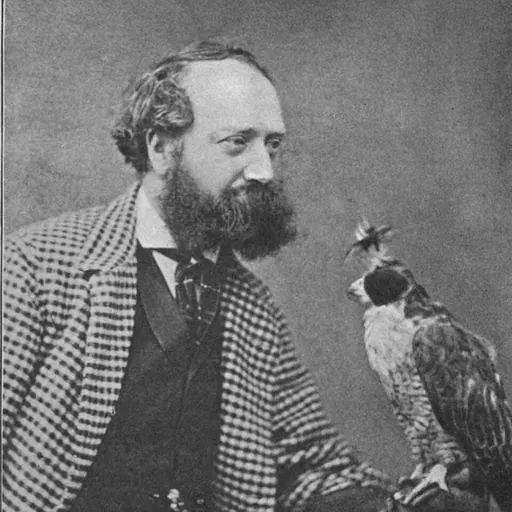
About Francis Henry Salvin
Lived 1817 – 1904 (aged 87). Francis Henry Salvin was a British writer.
Francis Henry Salvin (1817–1904) was an English writer on falconry and cormorant-fishing.
Life Born at Croxdale Hall on 4 April 1817, was fifth and youngest son of William Thomas Salvin, of Croxdale Hall, Durham, by his wife Anna Maria, daughter of John Webbe-Weston, of Sutton Place, Surrey. Educated at Ampleforth College, he served for several years in the militia, joining the 3rd battalion of the York and Lancaster Regiment in 1839 and retiring with the rank of captain in 1864.
In 1857 Salvin inherited from his uncle, Thomas Monnington Webbe-Weston, the Tudor mansion Sutton Place, Surrey, but usually lived at Whitmoor House on the estate. He trained young otters to follow him like dogs and sleep in his lap, and at one time kept a wild boar with collar and bell. He was active in field sports when past 70. After the bird's death, Salvin learned by dissection that Isaac was a female. Isaac was stuffed in 1847 by John Hancock and went to the Hancock Museum, Newcastle. alt=Lettering (hand-written in pencil) reads 'Hobblegobble', a trained cormorant aged 8 or 9. This bird had been lame through life from tumours on the pad or cushion of each foot which I think had been originally caused by feeding it on meat when young. It died suddenly, March 20th 1876. F.H. Salvin In 1874, Savin appeared in a painting by James Clarke Hook (the painting was purchased by Aberdeen granite merchant, Alexander MacDonald). Hobble Gobble sat for a portrait by the same artist in 1873. Rosalie Hook described the bird as a "tolerably patient sitter but a troublesome guest as he insisted on fish diet without a particle of salt on it & I had to drive to Farnham for his dinner". Hobble Gobble was also given an autopsy upon its death in 1876.
Sub-Inspector, the first known cormorant bred in confinement, was exhibited at the Fisheries Exhibition, South Kensington, in 1883, and was sent to the London Zoological Gardens after Salvin's death, surviving until 1911.
Other birds included Hoang Ho and Kas-wang (named after the human Chinese role of Great Khan, this bird was also female), The Water Nymph, Pick-pocket and Artful Dodger.
Works Salvin, a contributor to The Field, collaborated in two works on falconry. The first, Falconry in the British Isles (1855; 2nd edit. 1873), with William Brodrick of Chudleigh, had figures of hawks drawn by Brodrick, and compared to the work of Joseph Wolf. Salvin also assisted Gage Earle Freeman with Falconry: its Claims, History, and Practice (1859), the Remarks on training the Otter and Cormorant appended to it being his.
Don’t just read it —
keep it.
Full-length biographies made to live with: read them, listen on the way to work, watch them tonight.
- E-book
- Audio
- Video
Instant download · yours to keep · every purchase keeps this site free
Important facts
People in Francis Henry Salvin's life
Named in this biography and alive at the same time




Related people
Same field, nearest in time
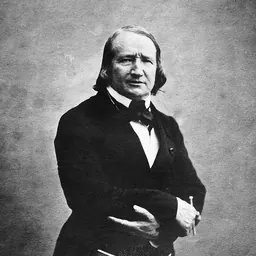
Contemporaries
People whose lives overlapped Francis Henry Salvin's



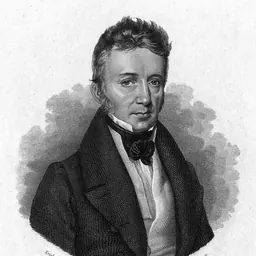
Frequently asked questions
Who was Francis Henry Salvin?
British Army officer and writer
When was Francis Henry Salvin born?
Francis Henry Salvin was born on 4 April 1817 in Croxdale Hall.
When did Francis Henry Salvin die?
Francis Henry Salvin died on 2 October 1904 in Guildford.
What was Francis Henry Salvin's occupation?
Francis Henry Salvin was a writer.
What nationality was Francis Henry Salvin?
Francis Henry Salvin was British.
Sources & further reading
· Wikipedia: Francis Henry Salvin
· DBpedia: Francis Henry Salvin
Cite this page
APA: Biography.guide. (2026). Francis Henry Salvin. https://biography.guide/francis-henry-salvin/
MLA: "Francis Henry Salvin." Biography.guide, https://biography.guide/francis-henry-salvin/.
Chicago: "Francis Henry Salvin." Biography.guide. https://biography.guide/francis-henry-salvin/.
Data last updated: 2026-09-22 · Spot an error? Report a correction.
Portrait: Wikimedia Commons · author & licence
Page generated 2026-09-27 05:03 UTC