
Francis Gleeson
British army military chaplain
About Francis Gleeson
Lived 1884 – 1959 (aged 75). Francis Gleeson was a military chaplain.
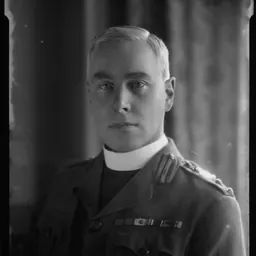
Father Francis Gleeson (28 May 1884 – 26 June 1959) was an Irish Roman Catholic priest who served as a British Army chaplain during Ireland's involvement in the First World War. Educated at seminaries near Dublin, Gleeson was ordained in 1910 and worked at a home for the blind before volunteering for service upon the outbreak of war. Commissioned into the Army Chaplains' Department and attached to the 2nd Battalion, Royal Munster Fusiliers he served with them at the First Battle of Ypres. During this battle Gleeson is said to have taken command of the battalion after all the officers were incapacitated by the enemy. He was highly regarded by his men for tending to the wounded under fire, visiting the frontline trenches, and bringing gifts.
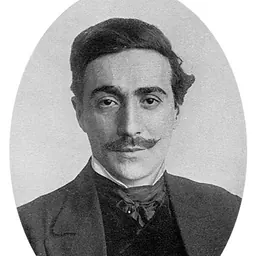
On 8 May 1915, on the eve of the Battle of Aubers Ridge, Gleeson addressed the assembled battalion at a roadside shrine and gave the general absolution. The battalion suffered heavily in the battle and when paraded again afterwards only 200 men were assembled. Gleeson's absolution was the subject of a painting by Fortunino Matania that was made at the request of the widow of the battalion's commanding officer. At the end of his year's service in 1915 Gleeson returned to Dublin and became a curate but rejoined the army as a chaplain in 1917 and remained for a further two years. After the war he returned once more to Ireland, becoming a priest at churches near to Dublin and being elected canon of the Metropolitan Chapter of the Archdiocese of Dublin before his death on 26 June 1959.
Early life
Gleeson was born on 28 May 1884 in Main Street, Templemore, County Tipperary, Ireland, and was one of thirteen children. Gleeson decided to become a Catholic priest and was educated at the Holy Cross College in Dublin and St Patrick's College in Maynooth. He was ordained as a priest by the Archbishop of Dublin, William Walsh, on 19 June 1910 at St Mary's Pro-Cathedral. Gleeson (not to be confused with Fr Francis Doyle Gleeson, the US Jesuit born 1895) was a speaker of Irish.
Outbreak of war On the outbreak of the First World War in July 1914 Gleeson volunteered for service with the British Army, one of only 17 Roman Catholic priests to do so. He was commissioned as a Chaplain to the Forces, 4th Class (equivalent to a Captain) in the Army Chaplains' Department on 18 November 1914 and joined the 2nd battalion, Royal Munster Fusiliers who were already in action on the Western Front in France.
In December he joined the battalion in a counterattack at the Battle of Givenchy. That month he wrote critically of those in Britain who supported the war, stating "If ... advocates of war were made to be soaked and caked and crusted with cold, wet trench mud, like these poor soldiers, and to wear those mud-weighted coats, they would not be so glib with their treatises on the art of war. These militants should be made to undergo a few nights in cheerless billets [and] mud-river trenches to teach them a lesson. What is it all for at all?". The mass was in memory of the seven officers and 200 men of the Munsters who had died in an action at Festubert from 21 to 22 December. The 2nd Munsters, barely recovered from their earlier losses, were ordered to halt a German advance that had already captured the front line trenches of an Indian unit. The men held out for 60 hours, including what Gleeson called a "dreadful night of carnage", before being relieved. Gleeson noted in his diary that day "such desolation. Such suffering! If all militarists had hearts at all they should bleed, if they saw the scene of frozen men I saw today - this Christmas day of 1914 AD. How I felt on that death region today! Good saviour of the world - will you deem to bring peace and abolish all war forever?"
Gleeson was an advisor to men of all faiths in the regiment and kept careful records of their names and addresses so that he could write to the families of those that died. He recorded the dates that each Catholic man received the sacrament so he could reassure their families that they had died in a state of grace. Gleeson ended each of his letters with the words "They paid a great sacrifice", which was later used as the title of a book published in 2010 that details the wartime service records of men from Cork. At times the task almost overwhelmed him and this is evident in his personal diary when he wrote, in June 1915, "I got 12 letters today; just after reading them. What answering they will take tomorrow. I like to give these poor people all the solace I can, anyhow, but still there's no limit to the sorrowing inquiries. The tragedy of these letters". Although he was not a nationalist he supported the right of his soldiers to fly the Irish tricolour in the trenches.
One of Gleeson's men said: "He's a warrior and no mistake. There's no man at the Front more brave or cooler. Why, it is in the hottest place up in the firing line he do be to give comfort to the boys that are dying." Quotes from Gleeson were used in Irish recruiting posters and leaflets.
Aubers Ridge Whilst moving forwards to the trenches on 8 May 1915, in preparation for the Battle of Aubers Ridge, Lieutenant-Colonel Victor Rickard ordered the battalion to halt at a roadside shrine in Rue du Bois, near Fleurbaix. The shrine, which had been pointed out to Rickard by Gleeson, was in fact the altar of the Chapel of Notre Dame de Seez which had been destroyed by shells earlier in the war. Gleeson followed the battalion to the start of the trenches to bid the men farewell.
The battalion launched their attack at 5.30 the next morning. Casualties in the battalion amounted to 11 officers and 140 men killed, including Lieutenant-Colonel Rickard, in addition to 8 officers and 230 men wounded. The painting was destroyed by German bombs during the Second World War. He had a strong commitment to the idea of freeing Belgium from German occupation but was known to be critical of what he considered anti-clerical views held by the French authorities. Gleeson was appointed curate in St Michael's Parish, Dún Laoghaire on 13 July 1920. It was subsequently staged in the Abbey Theatre Dublin in April 1935. In March 1938 it was presented again during the Sundays of Lent and the Passion Week with a cast of seventy at Our Lady's Hall in Inchicore, Dublin.
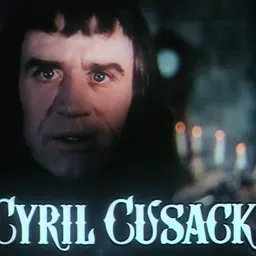
His second drama Rose of Battle was set in the French lines during the 1914–18 war, in which one of two soldier friends is reconciled to his faith and Church after his friend is killed but he, though badly wounded, becomes miraculously cured through the prayers of his friend's sister, a hospital nurse. The drama was widely acclaimed in 1935 when staged at the Abbey Theatre, Dublin (casting Cyril Cusack), the Opera House, Cork, and the Theatre Royal, Waterford.
Later life and legacy
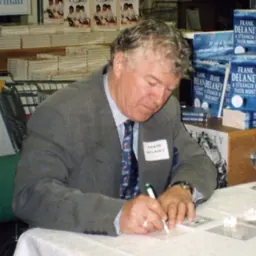
Gleeson was appointed curate of Bray, Aughrim, on 18 May 1924 and became the priest of the parish on 20 January 1941. His grave faces west as is traditional for Christian clergy, and points towards the altar of the cemetery's mortuary chapel. The Old Comrades Association of the Royal Munster Fusiliers honoured him in their annual report, stating that he was "a canon when he died. A saint when next we all meet". The diaries, notes and records from the diocesan collection were digitised in an 18-month-long joint project with the University College Dublin that was completed in April 2015. Gleeson is mentioned in Frank Delaney's novel Shannon, set in post-war Ireland, with reference made to his taking command of the battalion at the First Battle of Ypres and to being "a bit shook up" by his experiences.
The stole Gleeson wore during his famous absolution before Aubers Ridge was rediscovered in August 2014 in the collection of the National Army Museum, having been acquired by them in 1959. A memorial was unveiled on the centenary of the fighting at Aubers Ridge in May 2015 at the recently rediscovered site of Gleeson's absolution at Rue de Bois.
Don’t just read it —
keep it.
Full-length biographies made to live with: read them, listen on the way to work, watch them tonight.
- E-book
- Audio
- Video
Instant download · yours to keep · every purchase keeps this site free
Important facts
People in Francis Gleeson's life
Named in this biography and alive at the same time

Related people
Same field, nearest in time





Contemporaries
People whose lives overlapped Francis Gleeson's

Frequently asked questions
Who was Francis Gleeson?
British army military chaplain
When was Francis Gleeson born?
Francis Gleeson was born on 28 May 1884 in Templemore.
When did Francis Gleeson die?
Francis Gleeson died on 26 June 1959 in Dublin.
What was Francis Gleeson's occupation?
Francis Gleeson was a military chaplain.
Sources & further reading
· DBpedia: Francis Gleeson (priest)
Cite this page
APA: Biography.guide. (2026). Francis Gleeson. https://biography.guide/francis-gleeson/
MLA: "Francis Gleeson." Biography.guide, https://biography.guide/francis-gleeson/.
Chicago: "Francis Gleeson." Biography.guide. https://biography.guide/francis-gleeson/.
Data last updated: 2026-09-20 · Spot an error? Report a correction.
Page generated 2026-09-27 05:19 UTC