
Francis Dukinfield Astley
About Francis Dukinfield Astley
Lived 1781 – 1825 (aged 43–44).
Francis Dukinfield Astley (1781–1825) was an English poet, art collector, agriculturalist, industrialist, and High Sheriff of Cheshire. As a patron of the arts he was influential in the development of Manchester's first cultural institutions in the early 19th century.
When he died unexpectedly there were widespread rumours—never proven—that he was poisoned by his brother-in-law, Whig politician Thomas Gisborne.
Early life
Astley's father, John Astley, came from a modest family in Shropshire, but travelled to Rome and Florence in his twenties to study art, and there managed to eke out a living making copies of works by famous painters like Titian. He later moved to Dublin for several years and established a career as a portrait painter, which he successfully continued once he finally returned to England. While his clients among the gentry and nobility praised his work, more discerning critics of the time considered him unexceptional—Horace Walpole wrote that "he has got too much into the style of the four thousand English painters about town, and is so intolerable as to work for money, not for fame," while Samuel Redgrave wrote that his "character and expression" were "weak."
This poor critical assessment, in part, reflected upper class distaste for John Astley's reputation as "a ladykiller of the first water." Known as "Beau Astley" for his charm and good looks, he married three times. His second marriage came in 1759 to Penelope Dukinfield Daniel, the wealthy widow of Sir William Dukinfield Daniel, the 3rd holder of the Dukinfield baronetcy. Penelope died only three years later, in 1762, and both the baronetcy and her substantial wealth and land holdings—the Dukinfield estate near Ashton-under-Lyne in Cheshire—were inherited by her only daughter, Henrietta, who lived in an asylum due to mental illness. He sold Schomberg and moved back north to the Dukinfield estate and began his most ambitious architectural project: Dukinfield Lodge, a mansion intended to be his family's new home, which was mostly completed by 1775.
Francis Dukinfield Astley's mother, Mary Wagstaffe, was his father's third wife—one of three daughters of a prominent local surgeon who were collectively known as "the Manchester beauties." He was their third child together, and oldest son; he and all of his full siblings were born at Dukinfield Lodge.
Inheritance Astley was only six years old when his father died in 1787.
The young Astley was sent away to board at Rugby School, and then study at Christ Church, Oxford. When he returned he immediately took an active role in managing the family's estate, pursuing a number of ventures to try and improve its profitability. He quickly gained a reputation as an "enlightened landlord," showing concern for his tenants' welfare during the economic slump brought on by the Napoleonic Wars by pausing rent collections and distributing money to those in need in the wider community.
He had a particular interest in new developments in agriculture and forestry and encouraged his farming tenants to experiment with ways of improving their yields, presenting engraved silver cups to those who displayed particular excellence. In 1812 he wrote to the journal of the Society for the Encouragement of Arts, Manufactures, and Commerce with news that one of his tenants, James Ogden, had invented a device for quickly and easily pruning trees ("the Dukinfield Pruner") which had been adopted across the region, and urged the Society to reward Ogden for his ingenuity (which it did, with a prize of ten guineas).
Bells were rung across Ashton-under-Lyne on his 25th birthday in 1804 and a large crowd gathered to celebrate.
He also became a keen fox hunter, and commissioned the construction of Hunters' Tower, a lodge and stables dedicated to "festive enjoyment," to provide a home for the county's various hunting clubs. Astley wrote "A Hunting Song for a Snowy Day" to commemorate its opening on 27 February 1807. Hunters' Lodge later became a meeting house for Whigs in the Stalybridge area in the wake of the Reform Act 1832. He was a freemason, and became Provincial Grand Master of the Cheshire Masonic Lodges in 1814.
Poetry & art
Poet Astley wrote poetry from a young age, and also painted as a hobby. Astley discovered he had been conned shortly after, and successfully sued Blakey for the return of his money and paintings.
Astley, as one of the wealthiest men in the region, provided crucial support to young artists, musicians, and writers who otherwise could not have afforded to pursue their ambitions: he was the first patron of a young John Ralston in the early 1810s, and allowed him to practice his technique by copying paintings in the Lodge's collection. Astley was one of the first (and most generous) patrons of what would become the Royal Manchester Institution, donating £42 in 1823 towards the purchase of a plot of land on Mosley Street in Manchester for the construction of its headquarters.
Family Astley married Susan Fyshe Palmer, from Ickwell in Bedfordshire, in 1812. Together they had two sons: their first, John Dukinfield Astley, accidentally fell out of a window and died in 1813, aged only 16 weeks; their second son, Francis Dukinfield Palmer Astley, was born on 24 April 1825, only a few months before his father's death. Gisborne came from a wealthy political family which had produced several mayors of Derby, and aside from his large estates in Derbyshire and Staffordshire he was also a successful coal, lime, and sand merchant in Manchester. Two of his brothers-in-law, William Evans and Charles Fyshe Palmer, were both members of parliament elected on platforms for parliamentary reform, and Gisborne himself would also become a liberal, reforming MP in 1830 when he was elected as the Whig representative for Stafford. Though most of the collection almost certainly consisted of copies (many of which were painted by John Astley during his time in Italy), the auction catalogue boasted only of a number of "original" works, including St. John Preaching in the Wilderness by Cornelis Bloemart, The Judgement of Paris by Giorgione, Christ and St. John by Leonardo da Vinci, Christ Sleeping in his Cross by Guido Reni, and more by Jan Dirksz Both, Salvator Rosa, Carlo Dolci, Philips Wouwermans, Cornelis van Poelenburgh, Jan Wijnants, Richard Westall, and John Francis Rigaud.
Astley's library of rare books from the 16th century—including a complete collection of the works of Piranesi—was also offered at the auction, as well as more than 1,200 bottles of wine.
The auction raised more than £5,000, allowing Astley to clear his debts by 1819. However, his fortunes soon dramatically improved when coal was discovered on the Dukinfield estate. These mines (along with a number of cotton mills built along the Tame around the same time) led to the urbanisation of Dukinfield, which grew from an area of farms and cottages into a fully-fledged town, distinct from neighbouring Ashton-under-Lyne. They were also crucial for the wider industrialisation of the northwest; the Astley Deep Pit in particular, opening later in 1845, would hold the distinction of becoming the deepest mine in the country, as well as the site of a notorious mining disaster.
Astley and his wife soon returned to their profligate ways as a result their new income—on New Year's Eve 1822 they held an elaborate banquet at the bottom of one of their mines in Newton, 450 feet below the surface, to celebrate the installation of new steam-powered winches designed by William Sheratt for hauling coal up to the surface.
In November 1823 Astley left his estate for six weeks to attend to business elsewhere, and tasked his mine manager—Joseph Moss—with overseeing his financial affairs in his absence. Moss, reportedly suffering from "melancholy," spent the time drinking instead, and then drowned himself by jumping into an abandoned coal pit filled with water when Astley returned and attempted to admonish him.
In February 1825 Astley was one of the largest donors to relief efforts for German victims of flooding, and for Italian and Spanish refugees living in London. He was also appointed to the board of the Manchester Ship Canal Company that same month.
Death
Suspicious circumstances On 22 July 1825 Astley visited Thomas Gisborne at his home, Horwick House near Buxton in Derbyshire, to stay for a few days and inspect one of Gisborne's collieries.
A doctor, Peter Booth, attended and assessed his cause of death to be apoplexy; another doctor, John Bennett, also arrived and concurred with Booth, suggesting that Astley had fallen asleep without removing his tight collar and partially suffocated, causing him to reflexively wake up into a coughing fit that ruptured a blood vessel. Though the dinner had ended after midnight, Astley's date of death was recorded as 23 July.
Astley's popularity among the general public meant that his sudden death was met with widespread shock. However, the decision not to hold an inquest—and the haste to organise the funeral, allegedly due to "decomposition going on rapidly" with the body—soon led to rumours that Astley's death had occurred under suspicious circumstances, and the truth was being withheld by those responsible. During the service someone—who has never been identified—scattered a large number of handwritten "placards" outside the church asserting that Gisborne had poisoned Astley: "Notice.—Mr. Astley died by poison, and no investigation has taken place; but if ever man was murdered, he is: the circumstance pronounce something behind the curtain of secrecy very like murder, and if his friends and the inhabitants of Dukinfield let it pass without his body being opened, his death lies at their door."
"Notice.—Mr. Astley has been murdered by his friend with poison, and they are interring him without investigation. Oh, let him be examined. Oh, Gisborne! What hast thou done."
"Let Mr. Astley's remains be examined by doctors, not Gisborne's, and he will be pronounced murdered; and if the inhabitants of Dukinfield suffer it to pass without investigation, his death lies at your door, for he's murdered;—there are people, if compelled to come forward, can tell something about it. MINOS."
"Gisborne's character is not good. Mr. Astley died in a manner that if he had been a poor man it must have been ascertained whether murder had been committed, and if he can't have that done he's murdered."
"Notice.—Mr. Astley is murdered, and they are interring him without investigation: he died by poison, and the assassin directs his funeral. Oh, Gisborne! Not a tear has thou shed."
Inquest Gisborne demanded that a formal inquest into Astley's death be held so that he could clear his name, but the request was initially denied by a coroner in Knutsford because Astley's body had decayed so much that there would be no way of ascertaining the cause of death. His friends also testified that he had been noticeably less physically able in his final days due to the hot summer weather—he had had to stop during a short walk to lie down in a field due to fatigue, and when returning to Horwick House he had been unable to climb over a short wall on the property boundary which had never previously caused him any difficulties. The Manchester Guardian welcomed Gisborne's vindication in an editorial, but also argued that "though the evidence was perfectly sufficient to convince every reasonable man that Mr. Astley's death was not produced by violent means—it would have been somewhat more satisfactory to the people amongst whom the reports had obtained some credence, to shew precisely what was the cause of it; and with this view the body ought certainly to have been examined." Newspapers elsewhere in the country were more sympathetic to Gisborne, pointing to the case as a "striking example" of the need for more coroner's inquests in order to prevent the spread of damaging rumours about innocent people. Fell Foot and its contents were also put up for auction in 1826, but it failed to sell; the family subsequently held on to it until 1859.
James Butterworth included a eulogy to Astley in his 1827 guide to Ashton-under-Lyne and the surrounding areas.
Astley's son, Francis Dukinfield Palmer Astley, inherited his remaining land and assets. Varnishando (1809) The Graphomania (1809) Poems, and Translations (1819)
Don’t just read it —
keep it.
Full-length biographies made to live with: read them, listen on the way to work, watch them tonight.
- E-book
- Audio
- Video
Instant download · yours to keep · every purchase keeps this site free
Important facts
People in Francis Dukinfield Astley's life
Named in this biography and alive at the same time


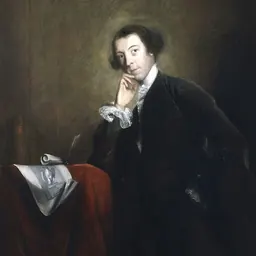
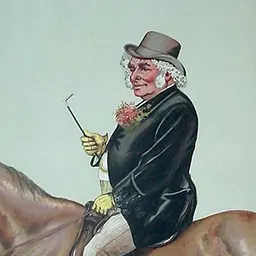
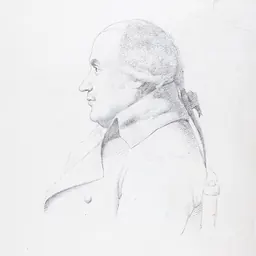


Contemporaries
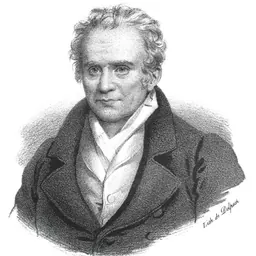
People whose lives overlapped Francis Dukinfield Astley's



Frequently asked questions
Who was Francis Dukinfield Astley?
(1781-1825)
When was Francis Dukinfield Astley born?
Francis Dukinfield Astley was born in 1781.
When did Francis Dukinfield Astley die?
Francis Dukinfield Astley died in 1825.
Sources & further reading
· Wikipedia: Francis Dukinfield Astley
· DBpedia: Francis Dukinfield Astley
Cite this page
APA: Biography.guide. (2026). Francis Dukinfield Astley. https://biography.guide/francis-dukinfield-astley/
MLA: "Francis Dukinfield Astley." Biography.guide, https://biography.guide/francis-dukinfield-astley/.
Chicago: "Francis Dukinfield Astley." Biography.guide. https://biography.guide/francis-dukinfield-astley/.
Data last updated: 2026-09-20 · Spot an error? Report a correction.
Page generated 2026-09-27 05:25 UTC