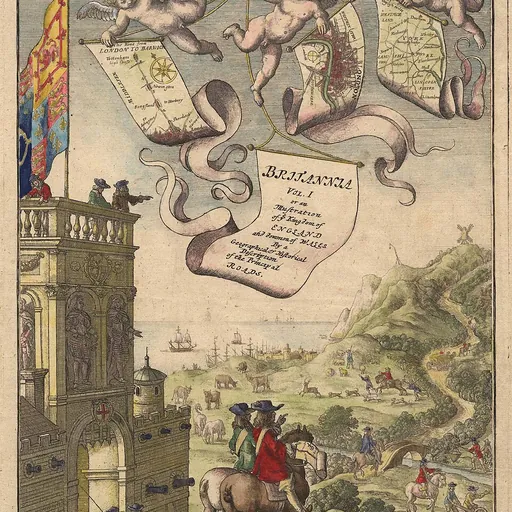
About Francis Barlow
Lived 1624 – 1704 (aged 79–80). Francis Barlow was a British painter, illustrator, etcher and draftsperson.
Francis Barlow (c. 1626 – 1704) was an English painter, etcher, and illustrator.
He ranks among the most prolific book-illustrators and printmakers of the 17th century, working across several genres: natural history, hunting and recreation, politics, and decoration and design.
Barlow is known as "the father of British sporting painting"; he was Britain's first wildlife painter, beginning a tradition that reached a high-point a century later, in the work of George Stubbs. He was furthermore a pioneer in the history of comics by creating A True Narrative of the Horrid Hellish Popish Plot (c. 1682), a picture story about the life of Titus Oates and the Popish Plot, which is told in a series of illustrated sequences where the story is written underneath them and the characters depicted on those images use speech balloons to talk. While it is not the first example of its kind in history, it is one of the oldest which is signed.
Life
Barlow was born c. 1626 in Lincolnshire.
The exact day of Barlow's death is unknown but he was buried on 11 August 1704. Joseph Strutt records that Barlow died in poverty: "not withstanding all his excellency in design, the multitude of pictures and drawings he appears to have made, and the assistance also of a considerable sum of money, said to have been left to him by a friend, he died in indigent circumstances."
Work
Barlow's first major work was the illustration (via twelve plates) of poet Edward Benlowe's Theophila (1652). In Barlow's favour, Bullen said in 1885 that "the volume [was] valued rather for the engravings than for the text." According to Manchester's Chetham's Library, no two copies of Benlowe's Theophila are the same, and no copy survives in good condition. The Victoria and Albert Museum holds two different copies, one of which includes an original drawing by Barlow.
Barlow designed the one hundred and ten woodcuts for John Ogilby's translation of Aesop's Fables, published in 1665, several of the plates of which Barlow etched himself.
Hugh James Rose observed in the early 19th century that Barlow's "chief merit [. . .] as a designer, lay in his exactness in the portrayal of birds, fishes, and animals of all kinds, which are executed in a spirited, and in many instances a masterly manner." Barlow's allegory on the threat posed to England by Roman Catholicism.
In the years leading up to the Glorious Revolution, Barlow became the prime designer of political satire in support of the Whigs; Whig MP Denzil Onslow (1642-1721) acquired or commissioned a number of paintings by Barlow, to decorate his manor house, Pyrford Court. These were more recently housed at Clandon Park, an 18th-century mansion near Guildford, Surrey, becoming one of the largest collections of Barlow's surviving work.
Examples of Barlow's work can be seen at Ham House (in Ham, south of Richmond in London); examples are held, too, by: Tate Britain, the National Portrait Gallery, the British Museum, and the Victoria and Albert Museum.
Barlow frequently signed the initials of his name, F.B., instead of inserting it at full length, sometimes enclosing the initials in a small circle.
Gallery
Don’t just read it —
keep it.
Full-length biographies made to live with: read them, listen on the way to work, watch them tonight.
- E-book
- Audio
- Video
Instant download · yours to keep · every purchase keeps this site free
Important facts
People in Francis Barlow's life
Named in this biography and alive at the same time
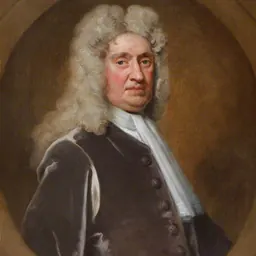
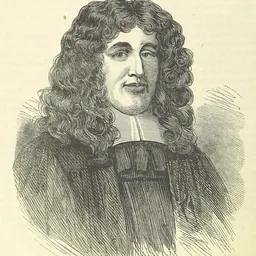

Related people
Same field, nearest in time
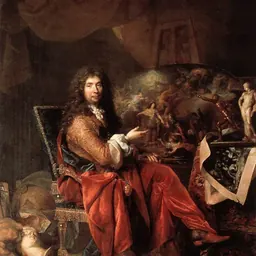


Contemporaries
People whose lives overlapped Francis Barlow's





Frequently asked questions
Who was Francis Barlow?
British artist (1624-1704)
When was Francis Barlow born?
Francis Barlow was born in 1624 in Lincolnshire.
When did Francis Barlow die?
Francis Barlow died on 11 August 1704 in London.
What was Francis Barlow's occupation?
Francis Barlow was a painter, illustrator, etcher and draftsperson.
What nationality was Francis Barlow?
Francis Barlow was British.
Sources & further reading
· DBpedia: Francis Barlow (artist)
Cite this page
APA: Biography.guide. (2026). Francis Barlow. https://biography.guide/francis-barlow/
MLA: "Francis Barlow." Biography.guide, https://biography.guide/francis-barlow/.
Chicago: "Francis Barlow." Biography.guide. https://biography.guide/francis-barlow/.
Data last updated: 2026-09-22 · Spot an error? Report a correction.
Portrait: Wikimedia Commons · author & licence
Page generated 2026-09-27 05:01 UTC