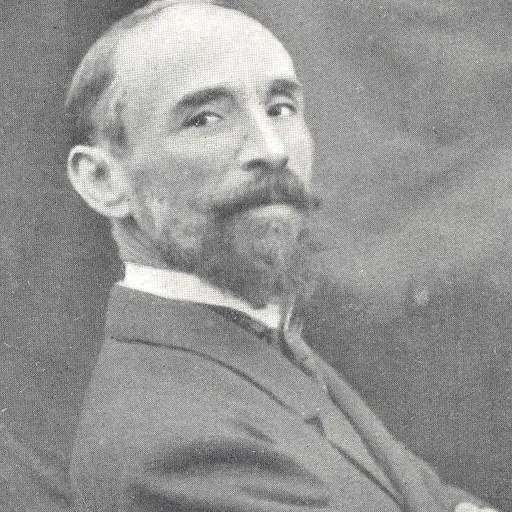
About Francesco Paolo Michetti
Lived 1851 – 1929 (aged 77). Francesco Paolo Michetti was an Italian painter, photographer and politician.
Francesco Paolo Michetti (October 2, 1851 – March 5, 1929) was an Italian painter known especially for his genre works.
Biography He was born in Tocco da Casauria in the Province of Chieti. His father having died when he was a boy, Michetti was forced to work with a local artisan. In 1868, Michetti was awarded a stipend by the province to study at the Accademia (now Istituto) in Naples under Domenico Morelli. Among his colleagues was Eduardo Dalbono. There he also interacted with Filippo Palizzi, Giuseppe De Nittis, and Marco De Gregorio, artists of the School of Resina. Disciplinary problems soon caused Michetti to return to Chieti. He began to spend time in Francavilla a Mare, which by 1878 would be his residence.
He traveled to Paris, encouraged and supported by De Nittis, by the patron Beniamino Rotondo, and by the art merchant Reutlinger. In Paris, he exhibited in the Salon of 1872: Ritorno dall’erbaggio, Dream of Innocence, and The Pumpkin Harvest. He also exhibited at Salons in 1875 and 1876. In 1874, he befriended the Spanish painter Mariano Fortuny, whose use of color strongly influenced Michetti.
In 1877, with his Corpus Christi Procession, a highly colorful, effervescent depiction of a festival, he became recognized as one of the best in the schools exhibition. The next year in Paris, he exhibited Springtime and Love, a depiction of families enjoying a hilltop above a village with a broad view of the sea and sky.
At the 1880 National Exposition in Turin, Michetti exhibited Palm Sunday, the Pescatrici di londine, and i Morticelli. Gubernatis remarks on the vivaciousness of these works, and says: To some it seemed that the success of Naples had intoxicated the mind of the young artist, and they bitterly deplored that having been led astray in search of the strange and far-fetched, he had suffered shipwreck in the indecipherable. Others proclaimed that these paintings established his indisputable fame. Certainly those works had greater success than they deserved. Everywhere there was exaggeration, and Michetti had abandoned himself to his flaws, his enthusiasm as a colorist resulting in a display that often bordered on the Baroque, so that sometimes the thrill of his palette convulsed the criteria of the artist. But alongside these defects were revealed most positive qualities: the feeling and poetry of the real, unlike many others, even among the best, who do not see anything beyond their given direction of art, beyond the school with which they are affiliated.
At the 1881 Exhibition of Milan, he was a prolific exhibitor with 34 paintings, mostly studies of faces, full of sentiment, and seascapes, full of windblown sails. Gubernatis states that it was "a phantasmagory of form and color, that reveals the fecundity and courage of the artist". The painting Il Voto describes the zealous and ecstatic devotion of lower classes for an icon and reliquary.
He is described as having a "temperament violent yet refined, restless, irrepressibly investigational". While he lived at a picturesque Francavilla al mare, and is known for his genre and pastoral scenes, his output included historic and religious themes. He favored pastels as a medium for sketches and portraits.
Later in life, he was awarded recognition. In 1896 he was named a member of the Accademia Pontaniana of Naples; in 1903, he was admitted in to the Roman Academy of St Luke; and in 1911 was named honorary president of the regional committee for the Esposizione pescarese nel 1911, in 1913 he was named to the commissione ordinatrice della Galleria nazionale d’arte moderna of Rome. In June 1909, he was nominated to be an Italian senator. He had three children, Elvira Michetti, Giorgio Michetti and Liberato Michetti. His son, Giorgio Michetti, was a World War I flying ace.
Francesco Paolo Michetti died in Francavilla al Mare on March 5, 1929, after contracting pneumonia.
Gallery
Don’t just read it —
keep it.
Full-length biographies made to live with: read them, listen on the way to work, watch them tonight.
- E-book
- Audio
- Video
Instant download · yours to keep · every purchase keeps this site free
Important facts
People in Francesco Paolo Michetti's life
Named in this biography and alive at the same time




Related people
Same field, nearest in time
Contemporaries
People whose lives overlapped Francesco Paolo Michetti's





Frequently asked questions
Who was Francesco Paolo Michetti?
Italian painter (1851-1929)
When was Francesco Paolo Michetti born?
Francesco Paolo Michetti was born on 4 August 1851 in Tocco da Casauria.
When did Francesco Paolo Michetti die?
Francesco Paolo Michetti died on 5 March 1929 in Francavilla al Mare.
What was Francesco Paolo Michetti's occupation?
Francesco Paolo Michetti was a painter, photographer and politician.
What nationality was Francesco Paolo Michetti?
Francesco Paolo Michetti was Italian.
Sources & further reading
· Wikipedia: Francesco Paolo Michetti
· DBpedia: Francesco Paolo Michetti
Cite this page
APA: Biography.guide. (2026). Francesco Paolo Michetti. https://biography.guide/francesco-paolo-michetti/
MLA: "Francesco Paolo Michetti." Biography.guide, https://biography.guide/francesco-paolo-michetti/.
Chicago: "Francesco Paolo Michetti." Biography.guide. https://biography.guide/francesco-paolo-michetti/.
Data last updated: 2026-09-23 · Spot an error? Report a correction.
Portrait: Wikimedia Commons · author & licence
Page generated 2026-09-27 05:05 UTC