
About Francesco Menzio
Lived 1899 – 1979 (aged 80). Francesco Menzio was an Italian painter.
Francesco Menzio (3 April 1899 – 28 November 1979) was an Italian painter.
Childhood and training He was born in Tempio Pausania, Sassari in Sardinia, to Pietro Angelo Menzio, a high school teacher, and Augusta Pic, both originally from Piedmont. He and his five siblings spent their childhood following the father in his frequent work moves. They moved to L'Aquila when Augusta, the mother, died in 1902. They finally settled in Turin in 1912, where Pietro Angelo married his second wife Argia Avetrani.
In Turin, Francesco completed his high school and enrolled for a year at the Accademia Albertina di Belle Arti, after which he completed his art training by himself. He served in the Army in the Infantry Battalion during the first World War, among the last young men drafted in combat, the so-called "Ragazzi del '99" ("The boys from 1899").
In the following years, Menzio's work developed a personal expression; some examples are "Interno" ("Interior"), now at the Galleria d'Arte Moderna di Torino and "Cappello blu", exhibited at the Royal Palace in Milan in 1929, works that showed soft brush strokes and "forms that vanished in the light". Other works such as "Nudo Rosa" or "Figura (con cappello)" (1929; now in private collections, Turin) or "Corridore podista" (1930) show the influence of Henri Matisse and Amedeo Modigliani. Between 1930 and 1931 Menzio continued his personal investigation, marked by experimentalism and restlessness, elements that were present in some paintings such as "Natura morta con ciliegie" (1931; in the Galleria d'Arte Moderna della cittá di Torino), where the rigorous and essential composition is substituted by objects that have restless and defined colors and outlines. Between 1934 and 1935 he created the frescos in the Psychiatric Hospital of Collegno and inside the Church.
In 1936 he installed a room at the Venice Biennale dedicated to his friend Gigi Chessa, who had died the year before of phthisis. In 1938 he married Gigi Chessa’s widow, Ottavia Cabutti, who already had two children: Luciana and Mauro Chessa. Together they had three more: Paolo, Silvia (who died in infancy in 1942), and Eva. In 1937 he had a solo show at the Galleria del Milione in Milan; in 1938, at the Galleria della Cometa in Rome and at the 21st Biennale in Venice.
1930s–1940s In 1942, Menzio's family was staying at Felice Carena's house in San Domenico di Fiesole when the bombardment of the town began. Because of that, the poor health of the newborn Silvia, and of his anti-fascist feelings, he moved the family to the town of Bossolasco, near Turin where Ottavia's family was from. Soon after, Silvia died of pulmonary tuberculosis. The same year he started a collaboration as an illustrator with the publisher Giulio Einaudi, for whom he designed covers for the series of "Narratori Stranieri Tradotti" NST and the "Universale Economica" UE series until 1946. The year ended with Menzio winning the prestigious "Premio Bergamo" award with the painting "La famiglia" ("The Family").
In 1945, right after the liberation, Menzio moved back to Turin where he established, together with Luigi Einaudi, Massimo Mila, Franco Antonicelli, Norberto Bobbio, Cesare Pavese, Ludovico Geymonat, and Natalia Ginzburg the "Unione Culturale" ("Cultural Union") of which he was the first President. He took an active role in the civil and cultural reconstruction of the postwar city, organizing art initiatives and promoting film and theatre events. In 1946 he designed the set for Woyzeck by Georg Büchner, the first theatre event in Turin after the war.
Later years In the succeeding years Menzio immersed himself in painting. In 1956, together with Felice Casorati, he was commissioned to paint a fresco depicting the Life of Santa Caterina for the church of San Domenico in Cagliari and in 1958 with the help of his student Piero Martina he painted the ceiling of the Great Hall of the University of Genoa. In 1951 he started teaching painting at the Accademia Albertina in Turin, and the same year he was awarded the Prize of the Italian Republic given personally by the President of the Italian Republic and friend Luigi Einaudi ("Premio del Presidente della Repubblica"). In 1960 he was elected National Academician by the Accademia Nazionale di San Luca in Rome.
Francesco Menzio died in Turin on 28 November 1979, and is buried with his wife Ottavia Cabutti in Bossolasco.
Don’t just read it —
keep it.
Full-length biographies made to live with: read them, listen on the way to work, watch them tonight.
- E-book
- Audio
- Video
Instant download · yours to keep · every purchase keeps this site free
Important facts
People in Francesco Menzio's life
Named in this biography and alive at the same time




Related people
Same field, nearest in time

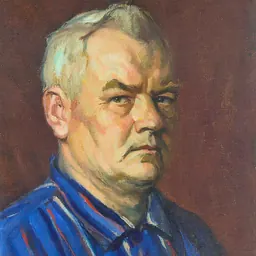
Contemporaries
People whose lives overlapped Francesco Menzio's




Frequently asked questions
Who was Francesco Menzio?
Italian painter (1899-1979)
When was Francesco Menzio born?
Francesco Menzio was born on 3 April 1899 in Tempio Pausania.
When did Francesco Menzio die?
Francesco Menzio died on 27 November 1979 in Turin.
What was Francesco Menzio's occupation?
Francesco Menzio was a painter.
What nationality was Francesco Menzio?
Francesco Menzio was Italian.
Sources & further reading
Cite this page
APA: Biography.guide. (2026). Francesco Menzio. https://biography.guide/francesco-menzio/
MLA: "Francesco Menzio." Biography.guide, https://biography.guide/francesco-menzio/.
Chicago: "Francesco Menzio." Biography.guide. https://biography.guide/francesco-menzio/.
Data last updated: 2026-09-25 · Spot an error? Report a correction.
Page generated 2026-09-27 05:12 UTC