
About Francesco Mario Pagano
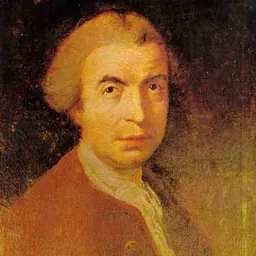
Lived 1748 – 1799 (aged 50). Francesco Mario Pagano was an Italian legal counselor, historian, philosopher, playwright, jurist and author.
Francesco Mario Pagano (8 December 1748 – 29 October 1799) was an Italian jurist, author, thinker, and the founder of the Neapolitan school of law. He is regarded as one of the most influential Enlightenment thinkers. A moderate reformist, he is seen as a forerunner of the Italian unification.
Biography He was born in Brienza in the southern Province of Potenza. He studied at the University of Naples Federico II under Antonio Genovesi. At the age of twenty, he became special lecturer in moral philosophy there, at the same time practising law. He was friend of Gaetano Filangieri, entering the masonry with him, and was elected venerable master of the Neapolitan lodge "La philantropia". Pagano was one of the men who powerfully helped Italy in her social and scientific advancement and in the 1790s, he had striven more than any other intellectual to give a political form to the 18th century reform tradition in southern Italy.
In 1794, he defended Vincenzo Galiani, Vincenzo Vitaliani and Emanuele De Deo – three alleged conspirators against Ferdinand IV; after they were sentenced to death, Pagano was deprived of his professorship, arrested, imprisoned and expelled from the kingdom. After fleeing Naples in 1796, he returned in 1799 and drafted the constitution of the short-lived Neapolitan Republic. The document bore similarities to the French Constitution of 1793 but presented original traits such as the institution of the "body of ephors", an authority who would have overseen the maintenance of the law. It is considered the precursor of the modern constitutional court.
After the fall of the republic, Pagano was arrested and imprisoned in the Castel Nuovo. He was executed by hanging at the "Piazza del Mercato" in Naples, along with other revolutionaries: Domenico Cirillo, Giorgio Pigliacelli and Ignazio Ciaia.
Works
Pagano's (1783–85) provided a philosophical history of the Kingdom of Naples, arguing against torture and capital punishment and advocating more benign penal codes. (Considerations on the criminal trial, 1787), gave him international popularity and was much praised by , the main newspaper of revolutionary France.
Pagano's other juridical or philosophical works included:
He also translated works from Greek and Latin, and wrote six tragedies ( and ) and one comedy .
Don’t just read it —
keep it.
Full-length biographies made to live with: read them, listen on the way to work, watch them tonight.
- E-book
- Audio
- Video
Instant download · yours to keep · every purchase keeps this site free
Important facts
People in Francesco Mario Pagano's life
Named in this biography and alive at the same time

Related people
Same field, nearest in time



Contemporaries
People whose lives overlapped Francesco Mario Pagano's



Frequently asked questions
Who was Francesco Mario Pagano?
Italian jurist and author
When was Francesco Mario Pagano born?
Francesco Mario Pagano was born on 8 December 1748 in Brienza.
When did Francesco Mario Pagano die?
Francesco Mario Pagano died on 29 October 1799 in Naples.
What was Francesco Mario Pagano's occupation?
Francesco Mario Pagano was a legal counselor, historian, philosopher, playwright, jurist and author.
What nationality was Francesco Mario Pagano?
Francesco Mario Pagano was Italian.
Sources & further reading
· Wikipedia: Francesco Mario Pagano
· DBpedia: Francesco Mario Pagano
Cite this page
APA: Biography.guide. (2026). Francesco Mario Pagano. https://biography.guide/francesco-mario-pagano/
MLA: "Francesco Mario Pagano." Biography.guide, https://biography.guide/francesco-mario-pagano/.
Chicago: "Francesco Mario Pagano." Biography.guide. https://biography.guide/francesco-mario-pagano/.
Data last updated: 2026-09-20 · Spot an error? Report a correction.
Page generated 2026-09-27 05:17 UTC