
Francesco Griffolini
Italian Renaissance humanist
About Francesco Griffolini
Lived 1420 – 1490 (aged 69–70). Francesco Griffolini was a grammarian.
Francesco Griffolini (1420 – 1468×1491), known in Latin as Franciscus Aretinus, was an Italian Renaissance humanist known for his Latin translations of ancient Greek works, especially the Epistles of Phalaris, the Odyssey, some of the Cynic epistles and a number of sermons of John Chrysostom. He was born in Arezzo, exiled to Ferrara and spent his most productive years in Rome and his last years in Naples. His works were dedicated to individuals from throughout Europe.
Life Griffolini was a native of Arezzo. His father, Mariotto Griffolini, was a merchant executed in 1431 for his part in a conspiracy to overthrow Florentine rule. With his mother, Bartolomea, and his siblings, he lived in exile in Ferrara. There he studied at the University of Ferrara under Guarino Veronese and Theodore Gaza. His Ciceronian style he got from Veronese. In 1447–1448, with his mother and sister, he moved to Rome, where he attended Lorenzo Valla's lectures on rhetoric.
Griffolini has an entry in Bartolomeo Facio's De viris illustribus, which is critical for distinguishing him from contemporaries known as Franciscus Aretinus. There is still much uncertainty about his life. He may be the Franciscus Aretinus, a member of the household of Cardinal Isidore of Kiev who was captured at the fall of Constantinople but subsequently escaped to Candia, from where he wrote a letter to Cardinal Domenico Capranica on 15 July 1453. or 1488.
Works Griffolini wrote a letter to Giovanni Tortelli, dated 22 March 1441.
In 1455–1457, Griffolini translated over 100 sermons by John Chrysostom. Many of these were dedicated to Callistus III, to and to Jean Jouffroy. In 1462, he sent a copy of some these sermons to Cosimo I de' Medici with a new dedication. In his dedication to Cosimo, Griffolini argued for the equality, and possibly even superiority, of the moderns with the ancients.
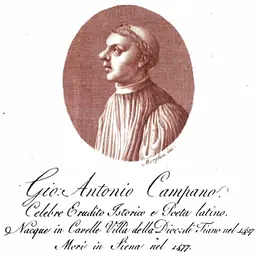
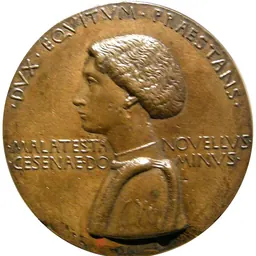
In a letter of 1456, Theodore Gaza reveals that Griffolini had translated from Homeric verses into Latin. A Latin verse translation of book 14 of the Iliad, found in a manuscript copied by Agnolo Manetti, is attributed to him. His magnum opus, however, is his translation of the Epistles of Phalaris before 1457. It originally dedicated it to Malatesta Novello and contained 138 letters attributed to Phalaris. It was printed at Rome in 1468–1469 and 1470–1471 by Ulrich Han, edited by Giovanni Antonio Campano, ensuring it a wide circulation. Griffolini subsequently translated four other letters attributed to Phalaris and dedicated them to King Alfonso I of Naples. produced a vernacular translation of Griffolini's Latin text.
After the death of Valla in 1457, Griffolini completed the last eight books of his teacher's translation of the Iliad that had been left unfinished. To Pius II he dedicated his translation of the letters of Pseudo-Diogenes, a complete translation of Homer's Odyssey (imitating the style of Valla's Iliad) and a prose paraphrase of Pietro da Eboli's Libellus de mirabilibus civitatis Putheolorum. The latter was printed at Naples in 1475. There is a published critical edition of his translation of the Odyssey. The translation was done by 1462 at the latest, since it was completed a year after that of the Iliad, which was already circulating in France by 1461. Unlike Valla, Griffolini did not use the earlier Latin translation of Leontius Pilatus, which he criticizes for its literalness in his preface. His translation is paraphrastic.
In 1459, Griffolini was commissioned to provide the inscription for the tomb of Carlo Marsuppini in Florence. Carlo's relative, Michele, had exposed the conspiracy of 1431 to the Florentine authorities. In 1461, Griffolini translated Lucian's De calumnia and Libanius' Declamationes, dedicating them to John Tiptoft, Earl of Worcester. At Napes, he translated Philostratus' Heroicus for the young Alfonso.
Besides his work as a translator, several manuscripts copied by Griffolini survive.
Don’t just read it —
keep it.
Full-length biographies made to live with: read them, listen on the way to work, watch them tonight.
- E-book
- Audio
- Video
Instant download · yours to keep · every purchase keeps this site free
Important facts
People in Francesco Griffolini's life
Named in this biography and alive at the same time





Related people
Same field, nearest in time



Contemporaries
People whose lives overlapped Francesco Griffolini's



Frequently asked questions
Who was Francesco Griffolini?
Italian Renaissance humanist
When was Francesco Griffolini born?
Francesco Griffolini was born in 1420 in Arezzo.
When did Francesco Griffolini die?
Francesco Griffolini died in 1490 in Naples.
What was Francesco Griffolini's occupation?
Francesco Griffolini was a grammarian.
Sources & further reading
· Wikipedia: Francesco Griffolini
· DBpedia: Francesco Griffolini
Cite this page
APA: Biography.guide. (2026). Francesco Griffolini. https://biography.guide/francesco-griffolini/
MLA: "Francesco Griffolini." Biography.guide, https://biography.guide/francesco-griffolini/.
Chicago: "Francesco Griffolini." Biography.guide. https://biography.guide/francesco-griffolini/.
Data last updated: 2026-09-20 · Spot an error? Report a correction.
Page generated 2026-09-27 05:16 UTC