
Francesco Bianchini
Italian philosopher, astronomer and archaeologist
About Francesco Bianchini
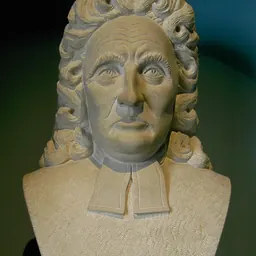
Lived 1662 – 1729 (aged 66). Francesco Bianchini was an Italian astronomer, philosopher, archaeologist, historian, art historian and catholic priest.
Francesco Bianchini (13 December 16622 March 1729) On 9 January 1706, Bianchini was elected member of the French Academy of Sciences of Paris. Today, we know that this is impossible, because of the thick cloud cover on this planet. He also worked on the parallax of Venus, and he measured the precession of the Earth's rotational axis.
As part of his efforts to improve the accuracy of the calendar, Bianchini was commissioned by Clement XI to construct an important meridian line in the Basilica of Santa Maria degli Angeli e dei Martiri (the Basilica of Saint Mary of the Angels and the Martyrs) in Rome, a device for calculating the position of the sun and stars.
According to a Catholic News Service online news story by Carol Glatz from 5 August 2011, Pope Benedict XVI noted this when he explained the importance of astronomyespecially when clocks were primitive and prone to error – in the determination of certain liturgical celebration days and the times for certain daily prayers, such as the Angelus. and the Bianchini crater on the Moon are named in his honour.
He also worked as a topographer and archaeologist of ancient Rome, and as a collector. In 1726, a structure (the columbarium of Livia) consisting of three sepulchral chambers of some of the servants and freedmen of Augustus and his wife Livia were discovered near the Via Appia, and excavated. Bianchini explored these rooms and published a description. In 1727, he fell through the ceiling of a vault while exploring the ruins of the palace of the Caesars on the Palatine Hill (Palace of Domitian), and was severely injured.
He died in Rome on 2 March 1729, and was buried in Santa Maria Maggiore. A monument was raised to his memory in Verona Cathedral.
Books
He published many books, including:
Don’t just read it —
keep it.
Full-length biographies made to live with: read them, listen on the way to work, watch them tonight.
- E-book
- Audio
- Video
Instant download · yours to keep · every purchase keeps this site free
Important facts
Related people
Same field, nearest in time



Contemporaries
People whose lives overlapped Francesco Bianchini's




Frequently asked questions
Who was Francesco Bianchini?
Italian philosopher, astronomer and archaeologist (1662-1729)
When was Francesco Bianchini born?
Francesco Bianchini was born on 13 December 1662 in Verona.
When did Francesco Bianchini die?
Francesco Bianchini died on 2 March 1729 in Rome.
What was Francesco Bianchini's occupation?
Francesco Bianchini was an astronomer, philosopher, archaeologist, historian, art historian and catholic priest.
What nationality was Francesco Bianchini?
Francesco Bianchini was Italian.
Sources & further reading
· Wikipedia: Francesco Bianchini
· DBpedia: Francesco Bianchini
Cite this page
APA: Biography.guide. (2026). Francesco Bianchini. https://biography.guide/francesco-bianchini/
MLA: "Francesco Bianchini." Biography.guide, https://biography.guide/francesco-bianchini/.
Chicago: "Francesco Bianchini." Biography.guide. https://biography.guide/francesco-bianchini/.
Data last updated: 2026-09-25 · Spot an error? Report a correction.
Page generated 2026-09-27 05:11 UTC