
Frances Herbert Woolward
Wife of Horatio Nelson
About Frances Herbert Woolward
Lived 1761 – 1831 (aged 69–70). Frances Herbert Woolward was a British.
Frances Nelson, Viscountess Nelson, Duchess of Bronte ( Frances Herbert Woolward, formerly Nisbet; 1758 4 May 1831) was the wife of Horatio Nelson, the British naval officer who won several victories over the French during the French Revolutionary and Napoleonic Wars.
Born to wealthy parents on Nevis, she was orphaned at 21, and married a doctor, Josiah Nisbet. The couple returned to England, but her new husband died there, and Frances returned to Nevis to live with her uncle, a prominent politician of the island. There she met Horatio Nelson, and married him in 1787. The couple moved to England, and Fanny established a household and cared for her husband's elderly father while Nelson was at sea. She was, by all accounts, a devoted wife, but in time Horatio met Emma Hamilton while serving in the Mediterranean, and the two embarked in a highly public affair. Fanny became estranged from her husband, who refused all contact with her through to his death at the Battle of Trafalgar in 1805. Despite this, Fanny remained devoted to his memory for the rest of her life.
Family and early life Frances was born on the Caribbean island of Nevis in the Lesser Antilles in 1758, and was baptised Frances Herbert Woolward in St. George's Church in May 1761. The Woolwards were members of the colonial elite: her mother, Mary Herbert, was one of three sisters of John Richardson Herbert, a descendant of the fourth Earl of Pembroke, and Mary and John's uncle had been President of the Council of Nevis until his death in 1768.
Fanny's father, William Woolward, was a senior judge on Nevis, and a partner in the firm of Herbert, Morton and Woolward. Josiah Nisbet became seriously ill shortly after arriving in England and died on 5 October 1781, leaving Fanny with their seventeen-month-old child Josiah, but with no other provision. Fanny raised a plaque in her dead husband's memory at the St. Lawrence Church in Stratford Sub Castle, near Salisbury, and spent some time in England acting as the guardian of the children of another Nevis planter, John Pinney. Pinney returned to England in 1783 and did not recognise his children, prompting Fanny to exclaim "Good God! Don't you know them? They are your children!" Pinney's wife was so surprised that she set her headdress alight on a nearby candle. Nelson's friend Prince William Henry wrote that she seemed "pretty and sensible", while William Hotham, then serving as a midshipman aboard , recorded that she was "pretty, attractive, and a general favourite." Another midshipman reported that though she had "some beauty, and a freshness of countenance not common in that climate", her intellect was distinctly unremarkable. Fanny's uncle promised them money on his death but could give them little in the short term; Nelson's relations also could not provide material support in the immediate future. By early 1786, Nelson had been moved to Barbados, where he engaged in legal struggles with the prize courts and other distractions, though he wrote often to Fanny on Nevis. He was able to return to Nevis in early 1787 while touring the islands with Prince William Henry, and there he determined to marry Fanny. Prince William Henry wrote to Samuel Hood saying 'He is in for it now. I wish him well and happy, and that he may not repent the step he has taken.' Nelson returned to England in July at the completion of his West Indies service, with Frances following later.
Settling in England The couple initially visited Horatio's relatives in Norfolk, before finally stopping at his old home in Burnham Thorpe to introduce Fanny to his father, the Reverend Edmund Nelson. The elderly Edmund was initially reluctant to meet his new daughter-in-law, but the two quickly became good friends, and Edmund moved out of the parsonage in late 1790 to give the couple space to establish a home. The outbreak of war with France in 1793 finally brought Nelson a ship to command, and he took his stepson Josiah Nisbet with him as a midshipman when he commissioned the 64-gun . Fanny stayed at home and cared for Horatio's ageing father, writing letters to her husband and son.
She saw little of her family during the long periods that kept them at sea, and became ever closer with Edmund, taking trips with him to Somerset in the winter. She managed her husband's financial affairs while he was at sea, and kept up relations with the Nelsons in Norfolk. Her husband's achievements were a source of pride, but also worry to her. His actions at the Battle of Cape St Vincent in 1797 made him a popular hero, but terrified Fanny that he might be killed in some heroic act. She wrote him a letter begging him not to repeat such antics, and to leave them to captains, now that he had been promoted to rear-admiral. Instead he went on further expeditions, leading from the front, and lost most of his right arm at the Battle of Santa Cruz de Tenerife later in 1797. Horatio returned to Fanny a broken man, sick and in pain from the stump, and resolved to settle in England with his wife.
Displaced by Lady Hamilton Fanny helped treat Horatio's wound, and on his recovering and returning to sea in 1798, she returned to the domestic life. The defeat of the French fleet at the Battle of the Nile brought her husband back into public attention. However, he had by now met Emma, Lady Hamilton, the wife of the British ambassador to Naples, Sir William Hamilton. Fanny and Horatio gradually became estranged as Horatio commenced an extramarital affair with Emma, who came to despise Fanny. In letters to Nelson's relatives, Lady Hamilton referred to Fanny as that 'vile Tom Tit', while Josiah Nisbet was called a 'squinting brat'. Lady Hamilton also declared that Horatio's father Reverend Edmund Nelson had been taken in by 'a very wicked, artful woman', who had conspired to turn him against his son. As time passed, Nelson began to hate even being in the same room as his wife. Events came to a head around Christmas 1800, when, according to Nelson's solicitor, Fanny issued an ultimatum to her husband. Nelson replied: I love you sincerely but I cannot forget my obligations to Lady Hamilton or speak of her otherwise than with affection and admiration. The two never lived together again after this. Edmund Nelson remained especially horrified by the breakdown of his son's marriage, and wrote to Horatio on occasion to rebuke him, both for adultery and abandonment of his wife.
After Trafalgar Fanny Nelson fell ill in 1805, the year of her husband's death at Trafalgar, but recovered. From then on she was in indifferent health. She moved to Paris for a time to live with her son, where her eldest grandchild, also named Fanny, recalled her good nature and her devotion to her husband's memory.
In 1830, her son Josiah died, and Lady Nelson returned to live in London. She died at Harley Street, London, on 4 May 1831 and was buried beside her son in the churchyard of St Margaret and St Andrew, Littleham, Devon.
Don’t just read it —
keep it.
Full-length biographies made to live with: read them, listen on the way to work, watch them tonight.
- E-book
- Audio
- Video
Instant download · yours to keep · every purchase keeps this site free
Important facts
People in Frances Herbert Woolward's life
Named in this biography and alive at the same time
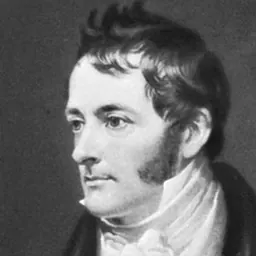

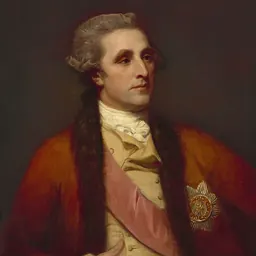

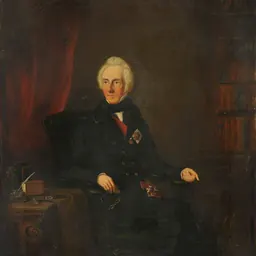


Contemporaries
People whose lives overlapped Frances Herbert Woolward's




Frequently asked questions
Who was Frances Herbert Woolward?
wife of Horatio Nelson
When was Frances Herbert Woolward born?
Frances Herbert Woolward was born in 1761 in Nevis.
When did Frances Herbert Woolward die?
Frances Herbert Woolward died on 4 May 1831 in Harley Street.
What nationality was Frances Herbert Woolward?
Frances Herbert Woolward was British.
Sources & further reading
· Wikipedia: Frances Herbert Woolward
· DBpedia: Frances Nelson, Viscountess Nelson
Cite this page
APA: Biography.guide. (2026). Frances Herbert Woolward. https://biography.guide/frances-herbert-woolward/
MLA: "Frances Herbert Woolward." Biography.guide, https://biography.guide/frances-herbert-woolward/.
Chicago: "Frances Herbert Woolward." Biography.guide. https://biography.guide/frances-herbert-woolward/.
Data last updated: 2026-09-20 · Spot an error? Report a correction.
Page generated 2026-09-27 05:28 UTC