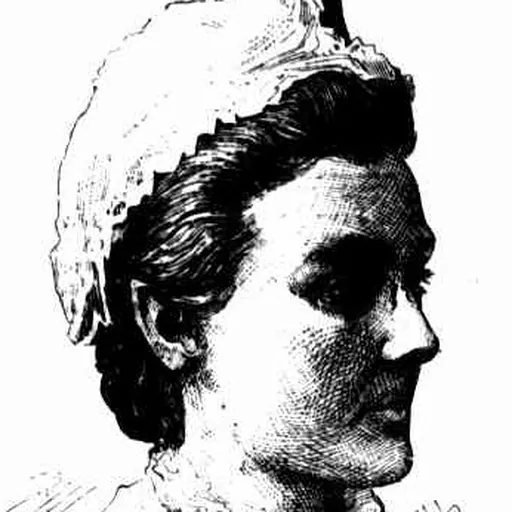
About Frances Gillam Holden
Lived 1843 – 1924 (aged 81). Frances Gillam Holden was an Australian nurse.
Frances Gillam Holden (9 February 1843 – 21 August 1924) was an Australian nurse who later became the Lady Superintendent of the Hospital for Sick Children (now the Royal Alexandra Hospital for Children) in Glebe, Sydney. Holden was also a prolific writer and wrote books, poems, and contributed to journal and newspaper articles with her publications focusing on topics such as nursing practices, physiology, and women's rights. Holden was also the co-founder of The Dawn Club, a women's suffrage group and made regular contributions to its magazine, The Dawn. For her contributions as a writer and as a women's rights supporter, Holden is regarded as a first-wave feminist.
Early life Gillam was born into a middle-class family at Gosford, New South Wales, Australia. She was the eldest daughter of Alfred Holden of Penshurst, and his wife Jane (née Osborne). Her father worked as a police magistrate at Brisbane Water and her mother was the daughter of Dr Alick Osborne. Holden was also the niece of George Kenyan Holden, a solicitor and politician, and cousins with John Watt, a businessman.
Holden, along with her eleven siblings, were avid readers and were known as "the little bookworms" by other families in their neighborhood; she herself took her reading tastes from her father, enjoying books on English literature, poems, history, and Shakespeare. The twelve children were educated by in-home tutors due to her father's dislike of the idea of schools. On 3 March 1875, Holden, along with four other nurses, two of whom were her sisters, was dismissed as incompetent by Osburn. Holden had predominantly worked in the men's and accident's wards. In 1880, Holden began work in Hospital for Sick Children which her cousin, J. B. Watt helped establish. Later, she applied for and was selected to be Lady Superintendent. this decision was not supported by the House Committee of ladies. Several members of the staff went with her. She placed emphasis on the importance of education for nurses, particularly concerning science and physiology as well as clinical practice that would eventually facilitate the independent decision making of the nurse. Her principles were based on the idea that there was a much-needed transition of nursing from being considered "philanthropic or charitable, towards being considered a trained and science-based area of expertise".
Moving a patient requires three people to do it safely. It is recommended that the nurses carry the patient as if the patient were a "dishful of liquid diamonds". You must be steady and quiet when lifting and moving with some of her most popular publications were written during the time she worked as Lady Superintendent. As a writer and author, she published a variety of works including lectures, journal and newspaper articles, books, and poems in which she discussed a range of topics including public health, hospital reform, physiology, nursing, and women's rights.
In 1887, Holden wrote a collection of poems which she titled, Her Father's Darling. In this publication, her writing has been stated to be "simple, natural, and sympathetic" while being "uneven and unpolished at times".
Works Trained Nursing (1882); her treatise
Feminism In 1888, Holden co-founded The Dawn Club along with Louisa Lawson, who was also a prominent writer and suffragist. Holden became the vice-president of the association and composed its manifesto. Later, she would become a contributing writer to its journal, The Dawn.
In 1902, the editors of the magazine lost contact with Holden. The Australian Town and Country Journal (1887) states:No one questions her [Holden's] remarkable skill in the noble and self-sacrificing calling she has adopted or her unselfish and single-hearted devotion to that calling. Holden has also been seen to have:Helped place nursing on the public agenda, wrote pamphlets demystifying illness, and argued for women's rights, but her lead was followed by few other nursing leaders.
AAHN In 2015, Holden was mentioned in the American Association for the History of Nursing's Annual Conference for her work and life in nursing.
Don’t just read it —
keep it.
Full-length biographies made to live with: read them, listen on the way to work, watch them tonight.
- E-book
- Audio
- Video
Instant download · yours to keep · every purchase keeps this site free
Important facts
People in Frances Gillam Holden's life
Named in this biography and alive at the same time



Related people
Same field, nearest in time

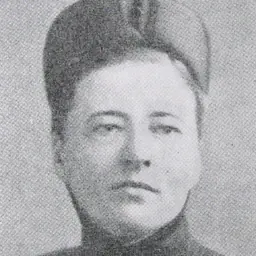
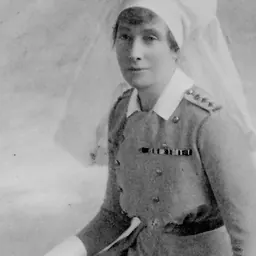

Contemporaries
People whose lives overlapped Frances Gillam Holden's

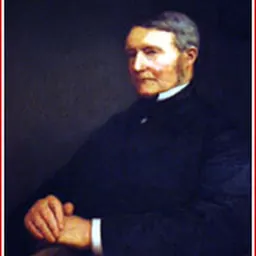
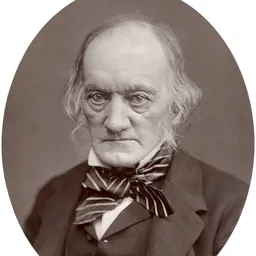
Frequently asked questions
Who was Frances Gillam Holden?
Australian nurse (1843-1924)
When was Frances Gillam Holden born?
Frances Gillam Holden was born on 9 February 1843 in Gosford, New South Wales.
When did Frances Gillam Holden die?
Frances Gillam Holden died on 21 August 1924 in Burwood, New South Wales.
What was Frances Gillam Holden's occupation?
Frances Gillam Holden was a nurse.
What nationality was Frances Gillam Holden?
Frances Gillam Holden was Australian.
Sources & further reading
· Wikipedia: Frances Gillam Holden
· DBpedia: Frances Gillam Holden
Cite this page
APA: Biography.guide. (2026). Frances Gillam Holden. https://biography.guide/frances-gillam-holden/
MLA: "Frances Gillam Holden." Biography.guide, https://biography.guide/frances-gillam-holden/.
Chicago: "Frances Gillam Holden." Biography.guide. https://biography.guide/frances-gillam-holden/.
Data last updated: 2026-09-22 · Spot an error? Report a correction.
Portrait: Wikimedia Commons · author & licence
Page generated 2026-09-27 05:02 UTC