
About Frances Browne
Lived 1816 – 1879 (aged 63). Frances Browne was an Irish poet, writer and children's writer.
Frances Browne (16 January 1816 – 21 August 1879) was an Irish poet and novelist. Browne became blind after contracting smallpox as a young child. She wrote her first poem at age 7, and went on to write essays, reviews, stories, and poems. She is best remembered for her collection of short stories for children, Granny's Wonderful Chair. A statue of Browne was erected in Stranorlar in 2010, and since 2021 an annual festival is held in her honour.
Early life She was born at Stranorlar, in County Donegal, Ireland, the seventh child in a family of twelve children. Her father was the town's first postmaster. She was blind as a consequence of an attack of smallpox when she was 18 months old. In her writings, she recounts how she learned by heart the lessons which her brothers and sisters said aloud every evening, and how she bribed them to read to her by doing their chores. She then worked hard at memorising all that she had heard.
First publications In 1841, Browne's first poems were published in the Irish Penny Journal. These included the lyric "Songs of Our Land", which can be found in anthologies of Irish patriotic verse. In the following months, she published poems in the London literary magazine the Athenaeum. According to Alexis Easley, "almost all of the poems Brown published in the Athenaeum were immediately reprinted in periodicals and newspapers," thus bringing her work to an even wider audience.
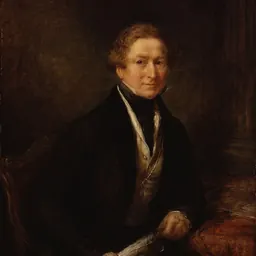
Browne published her first volume of poetry, The Star of Attéghéi, the Vision of Schwartz, and other Poems, in 1844. The volume received mostly positive reviews. However, as Heather Tilley has noted, early commentary on Browne’s work was "characterized by its fascination with the way in which an individual with effectively no visual memory was able to become a writer and, moreover, a writer who could accurately convey visual concepts and images." The provincial newspapers, especially the Belfast-based Northern Whig, reprinted many of her poems, and she became widely known as 'The Blind Poetess of Ulster'. In December 1844, Prime Minister Robert Peel granted her an annual pension of twenty pounds.
In March 1845, she made her first contribution to the popular magazine Chambers's Edinburgh Journal. It was a short story called "The Lost New Year's Gift", which tells of a poor dressmaker in London. She continued to write for Chambers's for the next 25 years.
Browne regularly contributed short stories to magazines with a largely female readership, including a number to the Ladies' Companion, a magazine read by many well-to-do women of the Victorian era. Her earliest contribution, made when Jane Loudon was the magazine's editor, was "Barbara's Satin: A Tale of the Cumberland Peasantry" (April 13, 1850). Later contributions included the amusing "Mrs Sloper's Swan" (October 1853) and an eerie tale set in County Fermanagh, called "The Botheration of Ballymore" (April 1855).
In 1852, she moved to London. Around this time her sister Rebecca married, and Browne "established a partnership with Emma Eliza Hickman, who served as her companion and amanuensis for the rest of her life." Granny's Wonderful Chair has been translated into several languages.
Browne published her first novel, My Share of the World, in 1861. A second three-volume novel, The Castleford Case, quickly followed in 1862. Despite her impressive productivity, Browne struggled with her finances. The Royal Literary Fund awarded Browne “fifty pounds in November 1860, forty pounds in April 1863, [and] thirty pounds in November 1866.” Even with this assistance, she declared bankruptcy in April 1867.
Frances Browne died on 21 August 1879 at 19 St John's Grove, Richmond upon Thames. She left all of her assets, which amounted to less than £100, to her companion Emma Eliza Hickman.
In 1886–87, the British-American writer Frances Hodgson Burnett published a fairy tale called “The Story of Prince Fairyfoot”. It appeared over three issues of the American magazine for children, St. Nicholas. A reader noticed that the story had been plagiarised from Browne's “The Story of Fairyfoot" in Granny’s Wonderful Chair. Burnett apologised, stating that she remembered the story from her childhood but had been unable to find a copy of the source book. She had intended the story to appear with the subtitle, "Stories from the Lost Fairy-Book". Seventeen years later, in 1904, and after the work was out of copyright, Burnett wrote an introduction for a new edition of Granny’s Wonderful Chair. Many more editions of the book would appear in the following decades.
Legacy
A bronze statue of Browne was erected in Stranorlar in 2010. Since 2021, the Frances Browne Literary Festival has been an annual event in the twin towns of Stranorlar and Ballybofey. The festival, which takes place in October, “celebrates the rich cultural and literary heritage of East Donegal.” It includes lectures, musical performances, and a multilingual poetry competition, with awards for poems in English, Irish, and Ulster Scots. Recent guests have included Annemarie Ní Churreáin and Nessa O'Mahony. Local writer Shirley Anne Godfrey wrote a play Frances Browne: In My Mind’s Eye, which was first produced in 2016, the bicentenary of Browne's birth.
Don’t just read it —
keep it.
Full-length biographies made to live with: read them, listen on the way to work, watch them tonight.
- E-book
- Audio
- Video
Instant download · yours to keep · every purchase keeps this site free
Important facts
People in Frances Browne's life
Named in this biography and alive at the same time

Related people
Same field, nearest in time

Contemporaries
People whose lives overlapped Frances Browne's




Frequently asked questions
Who was Frances Browne?
Irish writer (1816–1879)
When was Frances Browne born?
Frances Browne was born on 16 January 1816 in Stranorlar.
When did Frances Browne die?
Frances Browne died on 21 August 1879 in London Borough of Richmond upon Thames.
What was Frances Browne's occupation?
Frances Browne was a poet, writer and children's writer.
What nationality was Frances Browne?
Frances Browne was Irish.
Sources & further reading
Cite this page
APA: Biography.guide. (2026). Frances Browne. https://biography.guide/frances-browne/
MLA: "Frances Browne." Biography.guide, https://biography.guide/frances-browne/.
Chicago: "Frances Browne." Biography.guide. https://biography.guide/frances-browne/.
Data last updated: 2026-09-20 · Spot an error? Report a correction.
Page generated 2026-09-27 05:18 UTC