
About Frances Balfour
Lived 1858 – 1931 (aged 73). Frances Balfour was a British politician, editor, suffragist and feminist.
Lady Frances Balfour (née Campbell; 22 February 1858 – 25 February 1931) was a British aristocrat, biographer, writer, and suffragist. She was one of the highest-ranking members of the British aristocracy to assume a leadership role in the Women's suffrage campaign in the United Kingdom. Balfour was a member of the executive committee of the National Society for Women's Suffrage (NUWSS) from 1896 to 1919. As a non-violent suffragist, she was opposed to the militant actions of the Women's Social and Political Union (WSPU).
Family and early life Frances Campbell was born on 22 February 1858 at Argyll Lodge in Kensington, London, England. She was the tenth child of British Liberal politician and Scottish peer George Campbell, 8th Duke of Argyll, and his wife, Lady Elizabeth Sutherland-Leveson-Gower (eldest daughter of George Sutherland-Leveson-Gower, 2nd Duke of Sutherland and Harriet Sutherland-Leveson-Gower, Duchess of Sutherland). Her siblings included John Campbell, 9th Duke of Argyll, Lord Colin Campbell and Lady Victoria Campbell. She reportedly helped with these campaigns as a child, for example by knitting garments to be sent to the children of former slaves after slavery was formally banned by the government within the British territories in 1833.
In February 1877, she slipped into the gallery of the House of Lords to listen to her father give a speech. She became a regular attendee to the Ladies Gallery in Parliament, attending major debates over Ireland, South Africa, education and church policy. Eustace's uncle, Robert Gascoyne-Cecil, 3rd Marquess of Salisbury, had served three terms as Britain's prime minister. Her brother-in-law, Arthur Balfour, was also a Conservative British prime minister from 1902 to 1905. However, in opposition to the Conservative politics of her husband's family, Balfour, along with both her parents, supported Liberal statesman William Ewart Gladstone and his government when she was a young woman. Lady Balfour and her husband never overcame these political differences and spent less and less time together. Hartley wrote that theirs was "not a particularly happy marriage." Despite this, the Balfours had five children: Francis Cecil Campbell Balfour (1884–1965), who became a colonial Governor in Sudan in the 1920s Oswald Herbert Campbell Balfour (1894–1953), Military Secretary to the Governor General of Canada, 1921–23 Joan Eleanor Campbell Balfour (died 1939) Alison Catherine Campbell Balfour (died 3 September 1955) Her husband Eustace Balfour died on 14 February 1911. She survived her husband by 20 years. She began her work for women's suffrage in 1889, when she became the constitutionalists' main liaison with Parliament.
In 1897, Lady Balfour became a member of the executive committee of the newly formed National Union of Women's Suffrage Societies (NUWSS), whose President was Millicent Garrett Fawcett. Lady Balfour served the NUWSS executive committee from its inception until some women got the vote in 1918. She led the suffragist Mud March demonstration on 9 February 1907, alongside Fawcett. In 1910, Lady Balfour was a member of the "Royal Commission upon the Law of Divorce and its Administration." thumb Millicent Fawcett and Lady Balfour at the Women's Coronation Procession on 17 June 1911Lady Balfour wrote political commentary in the monthly magazine National Review under the pseudonym "Grille." Today the magazine serves as a source of early suffrage history.
Lady Balfour published six books, She completed her two-volume autobiography Ne Obliviscaris (Dinna Forget) in 1930.
Lyceum Club The writer Constance Smedley had decided to start a new type of club for women. Another founder, Jessie Trimble, proposed that the new club be called the Lyceum Club, and the new committee arranged for Smedley to meet Lady Balfour. The committee had decided to extend their net for new members from writers, to professional women and even the daughters or wives of prominent men. In 1903, Balfour agreed to lead the new club and served as their chair until 1915. Her vice chair was Enid Moberly Bell, a writer and headmistress.
Death Lady Balfour died in London on 25 February 1931 from bronchial pneumonia Also in 2018, Lady Balfour's diaries were exhibited by the National Records of Scotland (NRS) at the General Register House, Edinburgh.
Don’t just read it —
keep it.
Full-length biographies made to live with: read them, listen on the way to work, watch them tonight.
- E-book
- Audio
- Video
Instant download · yours to keep · every purchase keeps this site free
Important facts
People in Frances Balfour's life
Named in this biography and alive at the same time


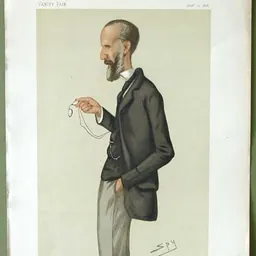



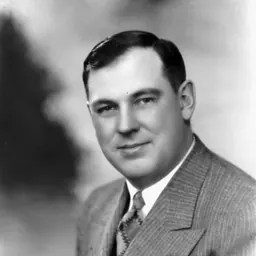

Related people
Same field, nearest in time




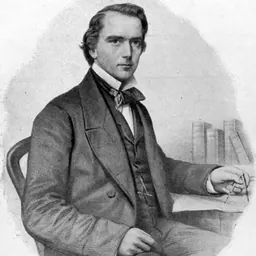
Contemporaries
People whose lives overlapped Frances Balfour's



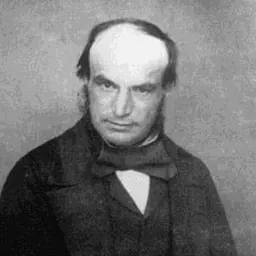
Frequently asked questions
Who was Frances Balfour?
British aristocrat and suffragist (1858-1931)
When was Frances Balfour born?
Frances Balfour was born on 22 February 1858 in London.
When did Frances Balfour die?
Frances Balfour died on 25 February 1931 in London.
What was Frances Balfour's occupation?
Frances Balfour was a politician, editor, suffragist and feminist.
What nationality was Frances Balfour?
Frances Balfour was British.
Sources & further reading
· DBpedia: Lady Frances Balfour
Cite this page
APA: Biography.guide. (2026). Frances Balfour. https://biography.guide/frances-balfour/
MLA: "Frances Balfour." Biography.guide, https://biography.guide/frances-balfour/.
Chicago: "Frances Balfour." Biography.guide. https://biography.guide/frances-balfour/.
Data last updated: 2026-09-25 · Spot an error? Report a correction.
Page generated 2026-09-27 05:08 UTC