
Fran Krsto Frankopan
Croatian baroque poet, nobleman and politician
About Fran Krsto Frankopan
Lived 1640 – 1671 (aged 30–31). Fran Krsto Frankopan was a poet, writer, military personnel, political activist and politician.
Fran Krsto Frankopan (; 4 March 1643 – 30 April 1671) was a Croatian baroque poet, nobleman and politician. He is remembered primarily for his involvement in the failed Zrinski-Frankopan conspiracy. He was a Croatian marquess, a member of the Frankopan noble family and its last male descendant.
Biography Early life
Frankopan was Born in Bosiljevo, Croatia, as the son of Vuk II Krsto Frankopan and his third wife Dorothea Maria Haller von Hallerstein (b. 1608- d. 1659). Frankopan's maternal grandparents were Hans Georg von Haller von Hallerstein, he also had two older half sisters, Eva Franziska Unusually for his class Frankopan also grew up speaking both the Croatian and Slovenian languages,both of which he later would also write in.
Education
Following the death of his father, in 1652, Frankopan was sent to be schooled in Zagreb, where he enrolled at the Jesuit academy. He lived at today's Habdelić street in the Upper Town, before continuing his education in Italy. There he published his first poetic work in Latin, Elegia, aged 13, in 1656.
The poem details the legendary transfer of the House of the Holy Family from Palestine to Trsat, and then to Loreto. Thematically, the Elegy directly connects to the well-known Marian cult of the Black Madonna, that is, Mary of Loreto, of which the Frankopan family had played a significant part in popularizing. Frankopan supposedly composed it during his stay in Loreto, and it was published in 1656 in Macerata under the title Querimoniae piae.
Inheritance and marriage During Frankopan's stay in Italy, the last member of the Roman branch of the Frangipane, Mario Frangipane having no heirs decided that he wanted to leave his assets to the Veglian branch of which Frankopan belonged and was the last heir of. But Roman law at the time prohibited foreigners from inheriting property held by citizens of the Papal States. Frankopan was a foreign citizen, and the law opposed Frangipani's will and therefore a way had to be found to overcome this inheritance law. As early as 1638, Frangipani had made a will, in which he named Cardinal Antonio Barberini as his heir general. Barberini was then given instructions to ensure that the Frangipane inheritance would not leave the family, but be passed on to the Frangipani of Hungary and Croatia. (daughter of Barberini's maternal aunt Maria Magalotti) and Bernardino Naro, Marchese di Mompeo.
Arrest and imprisonment of Frankopan and Zrinski Frankopan and Zrinski were lured to Vienna with promises of safety and clemency but Immediately on their arrival April 1670 they were arrested in a privilegie accorded only to those of the nobility. As convicted of high treason and lèse-majesté Frankopan's right hand was also to be cut off. Santissima Incarnazione del Divino Verbo where she lived until her death on January 28. 1721.
A painting said to depict Julia Naro Frankopan as St. Julia is located in the church of the Holy Trinity (Croatian: crkva Sv. Trojstva) in Novi Vinodolski.
The deaths of Zrinski and Frankopan caused outrage among Croatian nobles. Zrinski and Frankopan did not even try to answer the court in Vienna on the terms in which Vienna dealt with them, but rather wished to counteract its injustices with what was then quite justifiable diplomacy. Viennese officials later recognized that the main reason for the rebellion was the dissatisfaction among Hungarians and Croats prompted by the unfavorable Peace of Vasvár, rather than unprovoked sedition.
The remains of Fran Krsto Frankopan and Petar Zrinski were handed over to the Croatian authorities and buried in the Zagreb Cathedral in 1919, following World War I.
Poet Frankopan underwent various poetic influences, none of which was able to deafen his own inspiration. In such a vein was written his The Garden in which to Cheat Time (Gartlic za čas kratiti), a personal account of the poet's experiences while in prison.
Living in an area bordering on several Croatian dialects, Frankopan mainly wrote his poetry in the Kajkavian-ikavian dialect of Croatian (as seen in his poem Srića daje kaj misal ne zgaje). In prison, Frankopan translated Molière's Georges Dandin, the first translation into Slovenian and any Slavic language.
Along with Petar Zrinski, his brother Nikola, Frankopan and his sister Katarina (Petar's wife), contributed various works of poetry and prose to 17th century Croatian literature.
Ozalj Linguistic-Literary Circle
Frankopan and Zrinski were also involved with the Ozalj Linguistic-Literary Circle , which had its headquarters at Ozalj castle. It members were inspired by the ideas of Glagolitic writers such as Franjo Glavinić ,the aim of the circle was to combine the three Croatian dialects; kajkavian,chakavian and shtokavian, together into a common language . It was the belief of the circle that by the standardization of the Croatian language this would bring about cultural unity among Croatians.
Other members of this circle was Ivan Belostenec, Juraj Križanić and Juraj Rattkaj.
List of works From the following list only Elegia was published during Frankopan's lifetime,
Lyric Elegia (1656), written in Latin Gartlic za čas kratiti, completed c. 1671 Various pious poems Zganke za vrime kratiti Sentencije vsakojaške
Prose Trumbita sudnjega dneva Preljubljeno zlato i izabranice moga srca
Drama Jarne bogati (translation from Moliere)
Legacy
The portraits of Frankopan and Zrinski are depicted on the obverse of the Croatian 5 kuna banknote, issued in 1993 and 2001.
His poems are still popular and are written in a combination of all three Croatian dialects: štokavian, kajkavian and čakavian. This type of writing was also regular for other writers of the Croatian Baroque Ozalj Literary Circle: Ana Katarina Zrinski and Petar IV Zrinski.
Quotes
Don’t just read it —
keep it.
Full-length biographies made to live with: read them, listen on the way to work, watch them tonight.
- E-book
- Audio
- Video
Instant download · yours to keep · every purchase keeps this site free
Important facts
People in Fran Krsto Frankopan's life
Named in this biography and alive at the same time
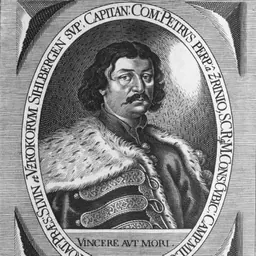
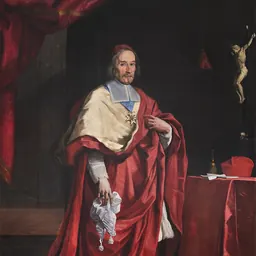
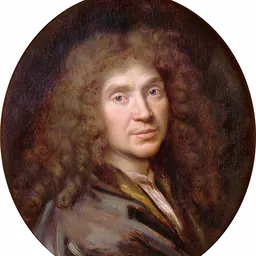


Related people
Same field, nearest in time
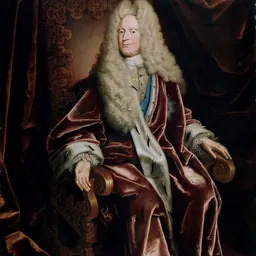


Contemporaries
People whose lives overlapped Fran Krsto Frankopan's


Frequently asked questions
Who was Fran Krsto Frankopan?
Croatian baroque poet, nobleman and politician (1640-1671)
When was Fran Krsto Frankopan born?
Fran Krsto Frankopan was born in 1640 in Bosiljevo.
When did Fran Krsto Frankopan die?
Fran Krsto Frankopan died on 30 April 1671 in Wiener Neustadt.
What was Fran Krsto Frankopan's occupation?
Fran Krsto Frankopan was a poet, writer, military personnel, political activist and politician.
Sources & further reading
· Wikipedia: Fran Krsto Frankopan
· DBpedia: Fran Krsto Frankopan
Cite this page
APA: Biography.guide. (2026). Fran Krsto Frankopan. https://biography.guide/fran-krsto-frankopan/
MLA: "Fran Krsto Frankopan." Biography.guide, https://biography.guide/fran-krsto-frankopan/.
Chicago: "Fran Krsto Frankopan." Biography.guide. https://biography.guide/fran-krsto-frankopan/.
Data last updated: 2026-09-20 · Spot an error? Report a correction.
Page generated 2026-09-27 05:19 UTC