
About Fortunato Benavides
Lived 1947 – 2023 (aged 76). Fortunato Benavides was an American lawyer and judge.
Fortunato Pedro Benavides (February 3, 1947 – May 5, 2023) was an American judge. From 1994 until 2023, he served as a United States circuit judge of the United States Court of Appeals for the Fifth Circuit.
Education and career
Born on February 3, 1947, in Mission, Texas, Benavides received a Bachelor of Business Administration degree in 1968 from the University of Houston. He received a Juris Doctor in 1972 from the University of Houston Law Center. He was in private practice as an attorney in McAllen, Texas from 1972 to 1977, from 1980 to 1981 and from 1993 to 1994. He was a judge of the Hidalgo County, Texas Court-at-Law Number Two, from 1977 to 1979. He was a judge of the Hidalgo County, Texas Ninety Second District Court, from 1981 to 1984. He was a justice of the Thirteenth Court of Appeals of Texas, from 1984 to 1991. He was a judge of the Texas Court of Criminal Appeals, from 1991 to 1992.
Jurisprudence Lawyers who practiced before Benavides considered him an ideological moderate. Additionally, Benavides was reputed as a succinct writer. His most noteworthy rulings included Burdine v. Johnson, Tennard v. Cockrell (also known as Tennard v. Dretke), and Texas Democratic Party v. Benkiser.
Burdine v. Johnson In 2000, Benavides sat on a three-judge panel of the Fifth Circuit to hear the case of Burdine v. Johnson. Burdine, who had received a death sentence for capital murder in Texas, had petitioned the federal courts for a Writ of habeas corpus. Burdine's central complaint was that his court-appointed attorney, Joe Cannon, had fallen asleep repeatedly during his trial.
After hearing the case, Judges Rhesa Barksdale and Edith Jones ruled for the court that Burdine's claim did not, in and of itself, warrant issuance of the writ and grant of a new trial. Rather, Barksdale and Jones reasoned, Burdine would have to show that he was prejudiced by his sleeping lawyer; that is, Burdine would need to show that there was a reasonable likelihood that the outcome of his trial would have been different had his lawyer not repeatedly dozed off.
Benavides issued a strong dissent. Benavides wrote that it shocks the conscience that someone could be sentenced to death after being represented by a lawyer who slept through substantial portions of his trial. In Benavides' view, no further analysis was necessary to find that Burdine had been denied his right to counsel.
Benavides' views were later vindicated when the entire Fifth Circuit, sitting en banc, took up the case and reversed the panel's judgment. Writing for the en banc court, Benavides held that Supreme Court precedent provided a presumption of prejudice where a defendant's lawyer sleeps repeatedly throughout his trial.
Both Benavides' panel dissent and his en banc opinion were covered in the New York Times.
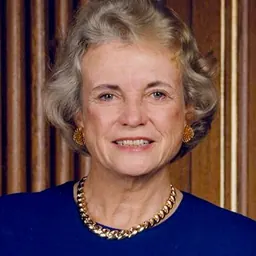
Tennard In Tennard v. Cockrell (Tennard I), Benavides applied longstanding precedent of the Fifth Circuit Court of Appeals to an esoteric issue of death penalty law: He affirmed Tennard's death sentence, holding that Texas' capital sentencing law adequately took into account Tennard's evidence of low IQ before he was sentenced to death. The United States Supreme Court took up the case, and in a sharply-worded opinion (Tennard II), held that the Fifth Circuit law Benavides had used was wrong. Justice Sandra Day O'Connor wrote that Benavides' opinion had merely paid "lipservice" to important principles and had used a test that "has no foundation in the decisions of this Court." The case was sent back to the Court of Appeals to apply the right standards as articulated by the Supreme Court.
On remand, Benavides, writing for the majority of a three-judge panel (Tennard III), reversed Tennard's death sentence using the Supreme Court's rule, holding that Texas law had failed to attach sufficient import to Tennard's low IQ evidence. In the course of his new opinion on remand, Benavides chided the Supreme Court for giving inconsistent and indeterminate guidance in the death penalty area, likening the High Court's jurisprudence to the Augean stables.
Court of Appeals Judge Jerry Edwin Smith has since called the Supreme Court's Tennard opinion an unfair "tongue-lashing" that singled out the Fifth Circuit for abuse when the Court of Appeals was only trying to honestly apply the Supreme Court's own "sundry pronouncements."
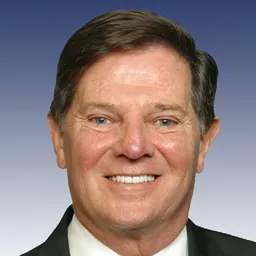
TDP v. Benkiser In TDP v. Benkiser, Benavides weighed in on a controversial election-year ballot dispute. After Congressman Tom DeLay resigned from Congress, the Republican Party of Texas sought to replace him with another candidate on the ballot shortly before the 2006 election. Texas law, however, forbids candidates from being replaced in the months leading up to an election unless they are ruled ineligible. The Texas Democratic Party sued the Republican Party to stop the switch. In court, the Republican Party argued that Tom DeLay was in fact ineligible to run for Congress in Texas because he had recently moved to Virginia.
Benavides, writing for a unanimous three-judge panel of the Fifth Circuit that included conservative Republican appointee Edith Brown Clement, ruled in favor of the Democrats. According to Benavides, the plain language of the Constitution says that candidates for Congress only need be residents of the requisite state, in this case Texas, as of election day. Since Tom DeLay had not yet failed to reside in Texas on election day (because that day had not yet come), he remained eligible.
Benavides' opinion was hailed both by academics and by the press. Professor Rick Hasen called the opinion's reasoning "solid." The Houston Chronicle wrote, "The laudable impartiality by the judges making these politically sensitive rulings should strengthen the confidence of all parties that they can get a fair day in federal court." The Washington Post applauded Benavides' ruling as both correct as a matter of constitutional law and preferable as a matter of public policy.
Death Benavides died on May 5, 2023, at the age of 76.
Don’t just read it —
keep it.
Full-length biographies made to live with: read them, listen on the way to work, watch them tonight.
- E-book
- Audio
- Video
Instant download · yours to keep · every purchase keeps this site free
Important facts
People in Fortunato Benavides's life
Named in this biography and alive at the same time





Related people
Same field, nearest in time



Contemporaries
People whose lives overlapped Fortunato Benavides's


Frequently asked questions
Who was Fortunato Benavides?
American judge
When was Fortunato Benavides born?
Fortunato Benavides was born on 3 February 1947 in Mission.
When did Fortunato Benavides die?
Fortunato Benavides died on 5 May 2023 in Austin.
What was Fortunato Benavides's occupation?
Fortunato Benavides was a lawyer and judge.
What nationality was Fortunato Benavides?
Fortunato Benavides was American.
Sources & further reading
· Wikipedia: Fortunato Benavides
· DBpedia: Fortunato Benavides
Cite this page
APA: Biography.guide. (2026). Fortunato Benavides. https://biography.guide/fortunato-benavides/
MLA: "Fortunato Benavides." Biography.guide, https://biography.guide/fortunato-benavides/.
Chicago: "Fortunato Benavides." Biography.guide. https://biography.guide/fortunato-benavides/.
Data last updated: 2026-09-27 · Spot an error? Report a correction.
Page generated 2026-09-27 05:17 UTC