
About Floyd Schmoe
Lived 1895 – 2001 (aged 105). Floyd Schmoe was an American writer, university teacher, peace activist, naturalist and pacifist.
Floyd Wilfred Schmoe (September 21, 1895 – April 20, 2001) was a Quaker, pacifist, author, college professor, marine biologist, and park ranger living in the Seattle, Washington, area for most of his life. He earned Japan's highest civilian honor for his peace activism and was nominated for the Nobel Peace Prize three times.
Early life
Japan's "Order of the Sacred Treasure" (4th Class) awarded to Floyd Schmoe in 1982, for his work building homes in Hiroshima after WWII.
Floyd was the second of five children of Ernest and Minta Schmoe. The family lived on a farm in Johnson County, Kansas, near Prairie Center. His family belonged to the Religious Society of Friends, or the Quakers, from which he gained his commitment to non-violence. The family farm also gave him a profound interest in nature.
In 1916 he enrolled in Friends University in Wichita. He moved to Seattle in 1917 to pursue a degree in forestry from the University of Washington. With the likelihood of conscription to fight in World War I looming, Schmoe joined the American Friends Service Committee. He sailed to Europe in May 1918 and spent the bulk of his 14 months in Europe taking care of refugees. Perhaps the most dramatic event of his war service was his work with an ambulance unit where he carried stretchers of wounded soldiers for 30 hours during the Battle of Chateau-Thierry. In 1924 he was named the Park's first Naturalist.
With his growing family, Schmoe moved out of Mount Rainier National Park in 1928 to take a position with the University of Washington in Seattle as the Director of the Puget Sound Academy of Science. While at the university he embarked on graduate study in marine biology, earning a master's degree in 1937.
Peace Activism As World War II loomed on the horizon, Schmoe began a career of public peace activism. On the University of Washington campus he opposed conscription. Working with the American Friends Service Committee, he assisted refugees fleeing the war in Europe. The removal of Japanese-Americans became more deeply personal when Ester Schmoe, Floyd's daughter, married Gordon Hirabayashi, who fought the removal order all the way to the Supreme Court. Although he lost his case at the time, Hirabayashi was posthumously awarded the Presidential Medal of Freedom for his stand against removal. After the Japanese-Americans were released, Floyd helped them repair their homes and restart their businesses.
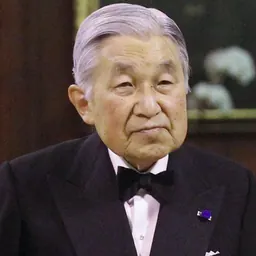
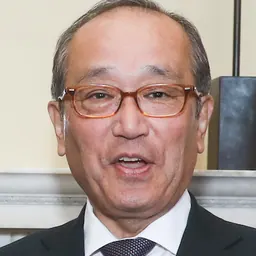
After World War II he went to Hiroshima and Nagasaki, Japan, and built houses to replace those destroyed by the atomic bomb. He described the program as "adventures in good will". He built approximately 40 residential buildings, some single family and some multi-family, from 1949 to 1953 using funds and volunteers from the US. During his "Houses For Hiroshima" project, he exchanged letters with Emperor Hirohito and screened his presentation on Mount Rainier for the future Emperor Akihito. In 2012, the sole remaining house was re-opened as a museum, with his then-85-year-old son Wilfred P. Schmoe attending along with Hiroshima mayor Kazumi Matsui. That same year he received the Hiroshima Peace Prize and was made an honorary citizen of Japan.
In 1953, after the Korean War, Schmoe was sent to South Korea under the auspices of the United Nations Korean Reconstruction Agency to examine humanitarian needs in the war-torn country. He founded "Houses for Korea" to rebuild residential structures, roads, bridges, and wells, and lectured all over the United States to raise money, just as he did for "Houses for Hiroshima".
At the urging of Gordon and Ester Hirabayashi, who were at the American University in Cairo at the time, Schmoe also worked on helping refugees from the 1956 Sinai War. After this effort he retired from full-time peace activism and spent more time writing.
Although retired from full-time activism, Schmoe continued to work for peace in his later life. He spoke out against the war in Vietnam in 1966. He marched on the United Nations for nuclear disarmament in 1982. He assisted in the establishment of the Seattle-Tashkent Peace Park in 1988. In 1990, he was the prime mover behind the Seattle Peace Park, using his prize money from the Hiroshima Peace Prize for funding.
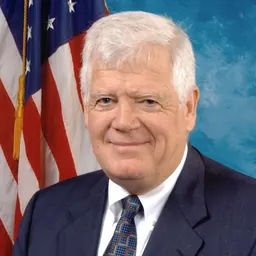
Floyd Schmoe was nominated three times for the Nobel Peace Prize by U.S. Representative Jim McDermott. Their first child, Kenneth, was born September 28, 1920. Their second child, Helen Elizabeth, was born and died in 1923. Their third child, Esther Roberta, was born in 1924. Their fourth child, Wilfred P., was born in 1927. Their fifth child, Ruthanna, was born in 1934.
Ruth Schmoe died on March 15, 1969. Floyd married Tomiko Yamazaki, who he met as a volunteer for the "Houses for Hiroshima" project, in 1970.
Don’t just read it —
keep it.
Full-length biographies made to live with: read them, listen on the way to work, watch them tonight.
- E-book
- Audio
- Video
Instant download · yours to keep · every purchase keeps this site free
Important facts
People in Floyd Schmoe's life
Named in this biography and alive at the same time


Related people
Same field, nearest in time


Contemporaries
People whose lives overlapped Floyd Schmoe's

Frequently asked questions
Who was Floyd Schmoe?
American activist (1895–2001)
When was Floyd Schmoe born?
Floyd Schmoe was born on 21 September 1895 in Kansas.
When did Floyd Schmoe die?
Floyd Schmoe died on 20 April 2001 in Kenmore.
What was Floyd Schmoe's occupation?
Floyd Schmoe was a writer, university teacher, peace activist, naturalist and pacifist.
What nationality was Floyd Schmoe?
Floyd Schmoe was American.
Sources & further reading
Cite this page
APA: Biography.guide. (2026). Floyd Schmoe. https://biography.guide/floyd-schmoe/
MLA: "Floyd Schmoe." Biography.guide, https://biography.guide/floyd-schmoe/.
Chicago: "Floyd Schmoe." Biography.guide. https://biography.guide/floyd-schmoe/.
Data last updated: 2026-09-22 · Spot an error? Report a correction.
Page generated 2026-09-27 04:57 UTC