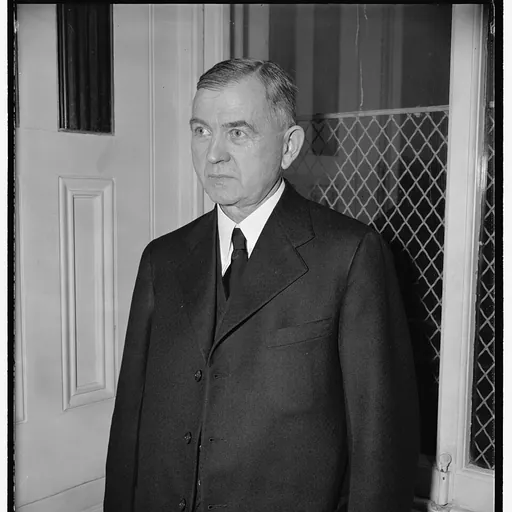
About Floyd H. Roberts
Lived 1879 – 1967 (aged 87). Floyd H. Roberts was an American lawyer and judge.
Floyd Hurt Roberts (March 29, 1879 – January 29, 1967) was a United States district judge of the United States District Court for the Western District of Virginia.
Education and career
Born on March 29, 1879, in Bristol, Virginia, Roberts attended the University of Virginia School of Law. He entered private practice in Bristol in 1904.
Unsuccessful federal judicial nomination and recess appointment
Roberts received a recess appointment from President Franklin D. Roosevelt on July 6, 1938, to the United States District Court for the Western District of Virginia, to a new seat authorized by 52 Stat. 584. He was nominated to the same position by President Roosevelt on January 5, 1939. His service terminated on February 6, 1939, due to his resignation, after his nomination was rejected by the United States Senate that same day. He would otherwise have been eligible to continue serving until August 5, 1939, the day the first session of the 76th United States Congress adjourned. In the "broader political context" of 1938, Roosevelt tried to oppose the renomination of Democrats who opposed his New Deal. The timing of the Roberts' nomination corresponded with Roosevelt's efforts across the board to reassert his authority over Democratic legislators. At stake were not only the immediate prospects for Roosevelt's legislative agenda, but also the prospect of a future struggle over the presidential nomination in 1940, as Roosevelt sought to use federal patronage to woo Democratic supporters away from Democratic opponents of the New Deal, in Virginia and elsewhere.
Roberts had the support of Congressman John W. Flannagan Jr., but both Virginia senators, Harry F. Byrd and Carter Glass, disapproved of Roberts' selection. They preferred another state court judge, A.C. Buchanan, or Assistant United States Attorney Frank S. Tavenner Jr., among others seeking the position. Months prior, Roosevelt had debated about who should have "veto power" over federal appointments in Virginia, suggesting that newly elected Governor James H. Price should have that power rather than the United States senators. Charles J. Harkrader, a member of the Senate of Virginia and publisher of the Bristol Herald Courier made this White House discussion public in March 1938. When Senator Glass objected that he had not been consulted over Roberts' selection, Roosevelt responded "that he was happy to consult Glass, but reserved the right to consult others, including, if he wished, 'Nancy Astor, the Duchess of Windsor, the WPA, a Virginia moonshiner, Governor Price or Charlie McCarthy.
Virginian R. Walton Moore, a former congressman and president of the Virginia Bar Association, then serving as counselor in the State Department, "led the administration's effort to secure" the Roberts nomination, but Moore badly underestimated the vigor of Glass and Byrd's opposition. At Roberts' confirmation hearing, witnesses testifying to his qualifications included Governor Price, former Governors Westmoreland Davis and E. Lee Trinkle, and the head of the Virginia Bar Association. The Judiciary Committee recommended against confirming Roberts, by vote of 14—3, "on the grounds that his nomination was 'personally offensive' to the two Virginia Senators." The Senate vote against Roberts was 72—9, with Harry S. Truman among other Democrats siding with Glass
Commenting on who might be nominated after Roberts by Roosevelt, Senator Glass predicted: "I think he'll send up a more objectionable one – if he can find it." Roosevelt solved the problem of filling the judgeship by naming the dean of the University of Virginia Law School, Armistead Mason Dobie, then state court judge Alfred D. Barksdale, to the position. Roberts returned to private practice in Bristol, and litigated cases as counsel before his successors as judge in both state and federal court.
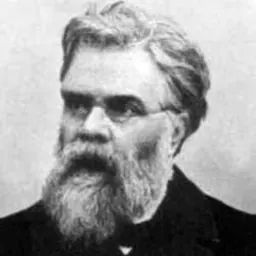
Death and legacy Roberts died on January 27, 1967. His wife also died by the end of the year. They are buried in Bristol's Mountain View Cemetery. A portrait of Judge Roberts hangs in the courtroom of the Circuit Court for the City of Bristol.
Don’t just read it —
keep it.
Full-length biographies made to live with: read them, listen on the way to work, watch them tonight.
- E-book
- Audio
- Video
Instant download · yours to keep · every purchase keeps this site free
Important facts
People in Floyd H. Roberts's life
Named in this biography and alive at the same time


Related people
Same field, nearest in time

Contemporaries
People whose lives overlapped Floyd H. Roberts's



Frequently asked questions
Who was Floyd H. Roberts?
American judge (1879-1967)
When was Floyd H. Roberts born?
Floyd H. Roberts was born on 29 March 1879 in Bristol.
When did Floyd H. Roberts die?
Floyd H. Roberts died on 29 January 1967.
What was Floyd H. Roberts's occupation?
Floyd H. Roberts was a lawyer and judge.
What nationality was Floyd H. Roberts?
Floyd H. Roberts was American.
Sources & further reading
Cite this page
APA: Biography.guide. (2026). Floyd H. Roberts. https://biography.guide/floyd-h-roberts/
MLA: "Floyd H. Roberts." Biography.guide, https://biography.guide/floyd-h-roberts/.
Chicago: "Floyd H. Roberts." Biography.guide. https://biography.guide/floyd-h-roberts/.
Data last updated: 2026-09-20 · Spot an error? Report a correction.
Portrait: Wikimedia Commons · author & licence
Page generated 2026-09-27 04:58 UTC