
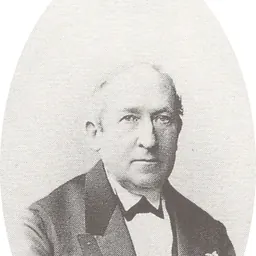
Florian Cajori
American mathematician
About Florian Cajori
Lived 1859 – 1930 (aged 71). Florian Cajori was an American and Swiss mathematician, historian of mathematics, university teacher, astronomer and physicist.
Florian Cajori (February 28, 1859 – August 14 or 15, 1930) was a Swiss-American historian of mathematics, especially known for his comprehensive treatise about mathematical notation, A History of Mathematical Notations.
Biography Florian Cajori was born in Zillis, Switzerland, as the son of Georg Cajori and Catherine Camenisch. He attended schools first in Zillis and later in Chur. In 1875, Florian Cajori emigrated to the United States at the age of sixteen, and attended the State Normal school in Whitewater, Wisconsin. After graduating in 1878, he taught in a country school, and later began studying mathematics at University of Wisconsin–Madison. He taught for a few years at Tulane University, before being appointed as professor of applied mathematics there in 1887. He was then driven north by tuberculosis. He founded the Colorado College Scientific Society and taught at Colorado College where he held the chair in physics from 1889 to 1898 and the chair in mathematics from 1898 to 1918. He was the position Dean of the engineering department. While at Colorado, he received his doctorate from Tulane in 1894, and married Elizabeth G. Edwards in 1890 and had one son. Based upon his reputation in the history of mathematics (even today his 1928–1929 History of Mathematical Notations has been described as "unsurpassed") he was appointed in 1918 to the first history of mathematics chair in the U.S, created especially for him, at the University of California, Berkeley. He remained in Berkeley, California until his death in 1930. Cajori did no original mathematical research unrelated to the history of mathematics. 1924–1925, History of Science Society vice-president 1929–1930, Comité International d'Histoire des Sciences vice-president The Cajori crater on the Moon was named in his honour
Publications
Books 1890: The Teaching and History of Mathematics in the United States U.S. Government Printing Office. 1893: A History of Mathematics, Macmillan & Company. 1898: A History of Elementary Mathematics, Macmillan. 1899: A History of Physics in its Elementary Branches: Including the Evolution of Physical Laboratories, The Macmillan Company, 1899. A History of Physics in its Elementary Branches: Including the Evolution of Physical Laboratories, The Macmillan Company, 1917.
1909: A History of the Logarithmic Slide Rule and Allied Instruments The Engineering News Publishing Company. 1916: William Oughtred: a Great Seventeenth-century Teacher of Mathematics The Open Court Publishing Company 1919: A History of the Conceptions of Limits and Fluxions in Great Britain, from Newton to Woodhouse, Open Court Publishing Company. 1920: On the History of Gunter's Scale and the Slide Rule during the Seventeenth Century Vol. 1, University of California Press. 1928: A History of Mathematical Notations The Open Court Company. 1934: Sir Isaac Newton's Mathematical Principles of Natural Philosophy and His System of the World tr. Andrew Motte, rev. Florian Cajori. Berkeley: University of California Press.
Articles 1913: "History of the Exponential and Logarithmic Concepts", American Mathematical Monthly 20: Page 5 From Napier to Leibniz and John Bernoulli I, 1614 — 1712 Page 35 The Modern Exponential Notation (continued) Page 75 : The Creation of a Theory of Logarithms of Complex Numbers by Euler, 1747 — 1749 Page 107 : From Euler to Wessel and Argand, 1749 — 1800, Barren discussion. Page 148: Generalizations and refinements effected during the nineteenth century : Graphic representation Page 173: Generalizations and refinements effected during the nineteenth century (2) Page 205: Generalizations and refinements effected during the nineteenth century (3) These seven installments of the article are available through the Early Content program of Jstor. 1923: "The History of Notations of the Calculus." Annals of Mathematics, 2nd Ser., Vol. 25, No. 1, pp. 1–46
Notes and references
Don’t just read it —
keep it.
Full-length biographies made to live with: read them, listen on the way to work, watch them tonight.
- E-book
- Audio
- Video
Instant download · yours to keep · every purchase keeps this site free
Important facts
People in Florian Cajori's life
Named in this biography and alive at the same time


Related people
Same field, nearest in time
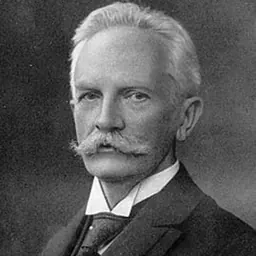
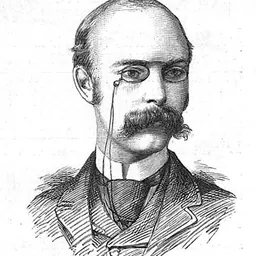
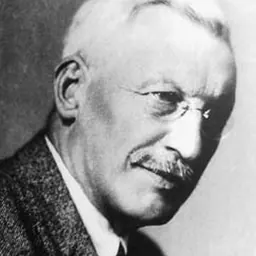
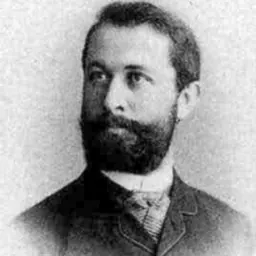
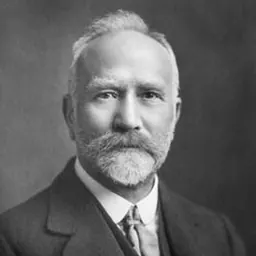
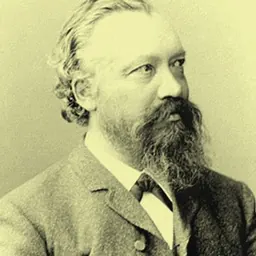
Contemporaries
People whose lives overlapped Florian Cajori's

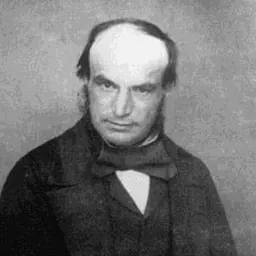
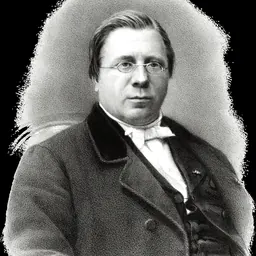


Frequently asked questions
Who was Florian Cajori?
American mathematician (1859–1930)
When was Florian Cajori born?
Florian Cajori was born on 28 February 1859 in Scharans.
When did Florian Cajori die?
Florian Cajori died on 15 August 1930 in Berkeley.
What was Florian Cajori's occupation?
Florian Cajori was a mathematician, historian of mathematics, university teacher, astronomer and physicist.
What nationality was Florian Cajori?
Florian Cajori was American and Swiss.
Sources & further reading
Cite this page
APA: Biography.guide. (2026). Florian Cajori. https://biography.guide/florian-cajori/
MLA: "Florian Cajori." Biography.guide, https://biography.guide/florian-cajori/.
Chicago: "Florian Cajori." Biography.guide. https://biography.guide/florian-cajori/.
Data last updated: 2026-09-25 · Spot an error? Report a correction.
Page generated 2026-09-27 05:11 UTC