
About Florencio Pla Meseguer
Lived 1917 – 2004 (aged 86–87). Florencio Pla Meseguer was a Spanish herder, partisan, soldier and farmer.
Florencio Pla Meseguer, known as La Pastora ("The Shepherdess") (Teresa Pla Meseguer; February 1, 1917 – January 1, 2004), was an intersex Spanish fighter in the Maquis, the anti-fascist guerrilla resistance during and after the Spanish Civil War. Born in the village of Vallibona, province of Castellón, Florencio became a symbol of defiance against both political oppression and rigid gender roles. His journey through the Maquis and his eventual legal recognition as a man after years of imprisonment represents a story of personal transformation and resistance.
Early life and background Florencio was born as Teresa Pla Meseguer on February 1, 1917, in Vallibona, a remote village in the province of Castellón. He was the youngest of seven siblings, growing up in a small farmhouse known as Mas de la Pallissa, inherited from his grandfather. Florencio's father, José Pla Abella, died when he was just three years old. With life proving harsh, Florencio began working at a young age, tending the family's sheep and goats Due to his remote upbringing, he received little formal education, attending school briefly just long enough to take his First Communion.
Although initially sentenced to death in March 1961, his penalty was commuted to 30 years' imprisonment the following month. After being incarcerated in Valencia for several years, he was transferred to El Dueso prison in 1968, where his good conduct allowed him to reduce his sentence. In July 1977, with the help of Marino Vinuesa Hoyos, a prison official who advocated for his pardon, he was released. Florencio moved to Vinuesa's house in Olocau, where he lived until his death on January 1, 2004.
Post-release and legacy After his release, he underwent a legal process to have his identity officially recognized as male and his name changed from Teresa to Florencio, receiving his official documentation as a man on March 25, 1980. Returning to Vallibona, he was met with acceptance and support from local residents. Despite the hardships he faced, Florencio's life story, marked by resilience in the face of gendered prejudice and political strife, continues to resonate as a symbol of defiance and self-determination in the struggle against oppressive regimes and societal norms.
In popular culture
Vinuesa's unpublished book and Villar Raso's novel Marino Vinuesa Hoyos wrote a book about Florencio based on interviews conducted during his imprisonment in Valencia, intending to publish it later. Seeking assistance, he entrusted the manuscript to Manuel Villar Raso. However, Villar Raso transformed the work into a novel, adding his own passages and emphasizing sensational aspects such as Florencio's intersex condition and alleged sexual behavior in guerrilla camps. The book was ultimately published without Vinuesa's consent and solely under Villar Raso's name.
Published in 1978 under the title La Pastora: el maqui hermafrodita, the book included 32 pages allegedly copied from Vinuesa's manuscript, prompting a plagiarism lawsuit. Additionally, Villar Raso's embellishments led to another lawsuit for defamation. Vinuesa criticized the novel, stating, "Everything, except the barbarities he added, is taken from my work." He accused Villar Raso of creating a sinister image of Florencio, despite never meeting him.
Books Villar Raso, Manuel (1978). (in Spanish). Calvo Segarra, José (2009). (in Spanish). This investigative journalism publication stands as the most comprehensive source on his life. Giménez Bartlet, Lucia (2011). (in Spanish). Premio Nadal. Silva Tomás, Valeriano (2015). (in Spanish). Rolón Collazo, Lissette (2021). (in Spanish). Solanas, Elena (2023). (in Catalan).
Theater Porcar, Laia and Vizcarro, Núria (2018). Instruccions per a no tenir por si ve La Pastora (in Catalan). La Ravalera Teatre. Finalist in the 22nd edition of the Premios Max (2019).
Film and television Siempre será la Pastora (in Spanish, France, 2004); documentary directed by Ismael Cobo. L' Ombra de la Pastora (in Catalan, Spain, 2011); espisode 557 in the documentary series Dossiers in Canal Nou. Florencio Pla Meseguer, 'la Pastora' (1917-2004) (in Catalan, Spain, 2019); second season, episode 23 in the documentary series Valentes. Les Vides de La Pastora (in Catalan, Spain, 2021); documentary directed by José Antonio Guerrero Navarrete. Els Mals Noms (in Catalan, Spain, 2025); film directed by Marc Ortiz Prades.
Music Pastora (in Catalan, 2015); song by the Spanish folk punk band Ebri Knight. No s'apaguen les estreles (in Catalan, 2020); song by the Spanish ska and folk rock singer-songwriter Xavi Sarrià. 'La Pastora' aka Florencio (in Spanish, 2022); song by the Spanish band Aina Palmer.
Don’t just read it —
keep it.
Full-length biographies made to live with: read them, listen on the way to work, watch them tonight.
- E-book
- Audio
- Video
Instant download · yours to keep · every purchase keeps this site free
Important facts
Related people
Same field, nearest in time

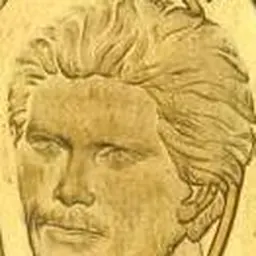



Contemporaries
People whose lives overlapped Florencio Pla Meseguer's

Frequently asked questions
Who was Florencio Pla Meseguer?
Spanish partisan (1917-2004)
When was Florencio Pla Meseguer born?
Florencio Pla Meseguer was born on 1 February 1917 in Vallibona.
When did Florencio Pla Meseguer die?
Florencio Pla Meseguer died in 2004 in Olocau.
What was Florencio Pla Meseguer's occupation?
Florencio Pla Meseguer was a herder, partisan, soldier and farmer.
What nationality was Florencio Pla Meseguer?
Florencio Pla Meseguer was Spanish.
Sources & further reading
· Wikipedia: Florencio Pla Meseguer
· DBpedia: Florencio Pla Meseguer
Cite this page
APA: Biography.guide. (2026). Florencio Pla Meseguer. https://biography.guide/florencio-pla-meseguer/
MLA: "Florencio Pla Meseguer." Biography.guide, https://biography.guide/florencio-pla-meseguer/.
Chicago: "Florencio Pla Meseguer." Biography.guide. https://biography.guide/florencio-pla-meseguer/.
Data last updated: 2026-09-20 · Spot an error? Report a correction.
Page generated 2026-09-27 05:25 UTC