
Flaxman Charles John Spurrell
British Egyptologist, geologist and photographer
About Flaxman Charles John Spurrell
Lived 1842 – 1915 (aged 72). Flaxman Charles John Spurrell was a British anthropologist, photographer, archaeologist, geologist and egyptologist.
F. C. J. Spurrell (second from left) and his father, Flaxman Spurrell (far left), outside a denehole near Bexley, Kent.
Flaxman Charles John Spurrell (8 September 1842 – 25 February 1915 ) was a British archaeologist, geologist and photographer who worked mainly in Kent and East Anglia. He was also a noted egyptologist, working closely with Flinders Petrie.
Family and early life Born at Mile End in Stepney, London, Spurrell was the eldest son of Dr. Flaxman and Ann Spurrell and a descendant of the Spurrell family of Norfolk. He was a nephew of the Rev. Frederick Spurrell, a fellow archaeologist, and an uncle of the biologist and author Herbert George Flaxman Spurrell.
Not long after his birth, the family settled at Bexley in Kent, living for many years at The Priory, Picardy Road, Belvedere (later home to the Priory Conservative Club).
Spurrell was educated at Epsom College and went on to study medicine, although he never completed his studies.
Archaeological work By the late 1850s Spurrell had developed an interest in archaeology and geology in the North Kent area and was encouraged to pursue his interest by his father, who had been a founding member of both the Kent Archaeological Society and the West Kent Natural History, Microscopical and Photographic Society. He visited and investigated dozens of other sites, including prehistoric and Roman sites on both sides of the Thames estuary.
Spurrell discovered an Acheulean “chipping floor” at Stoneham's Pit in Crayford and the Middle Palaeolithic site later known as Baker's Hole in the Ebbsfleet Valley. Along with documenting fine-scale artifact distributions, he used refitting to validate the integrity of archaeological context, a technique that gained great popularity 100 years later in the 1980s. In his 1884 article in the Journal of the Anthropological Institute of Great Britain and Ireland, Spurrell used refitting and replication experiments to establish the various differences in “style and method of chipping” with the goal of establishing the evolution of cognition in ancient humans. He also recognized the differences between formal tool production and expedient tool use. These approaches are standard analytical procedures and concepts in Stone Age archaeological studies in the 21st century.
He published his findings in the periodicals of the Kent Archaeological Society, the Essex Archaeological Society and the Royal Archaeological Society, as well as those of other societies and groups.
In the 1870s Spurrell met Flinders Petrie, becoming a trusted friend and collaborator.
In 1895 he presented a number of prehistoric artefacts to the Natural History Museum in London and later donated material from his personal collection to the museum at Norwich Castle. Some of his photographic images are now held by the Historic England Archive.
Later life and recognition Shortly after his mother's death in 1896, Spurrell retired to Norfolk, where he resided first with his uncle Daniel Spurrell at the Manor House in Bessingham and later at The Den, another house on the estate. Despite what Petrie called “the entreaties of his friends”, he seldom left Norfolk and his self-imposed retirement.
On 27 March 1912 he married his cousin Katherine Anne Spurrell (1852–1919), a daughter of Daniel Spurrell and a noted daffodil breeder whose cultivars had won the Award of Merit from the Royal Horticultural Society.
Spurrell was a Fellow of the Geological Society from 1868 to 1905 and a Fellow of the Society of Antiquaries from 1899 to about 1910.
Spurrell died on 25 February 1915 in Bessingham and is buried there in St Mary's Churchyard.
When a housing estate was built at Joyden's Wood in Bexley in the 1950s, one of the roads was named Spurrell Avenue in his honour.
Publications The following papers were published by F. C. J. Spurrell in the Royal Archaeological Society's Archaeological Journal:
Implements and Chips from the floor of a Palaeolithic Workshop, Vol. XXXVII Deneholes and Artificial Caves with Vertical Entrances, Vol. XXXVIII Shallow Pits in Norfolk and Elsewhere, Vol. XL Early Sites and Embankments on the margins of the Thames Estuary, Vol. XLII The First Passage of the Thames by Aulus Plautius, Vol. XLVII Shoebury Camp, Essex, Vol. XLVII Notes on a Boat found at Albert Dock, Woolwich, Vol. XLVII Rude Implements from the North Downs, Vol. XLVIII Some Flints from Egypt of the IVth Dynasty, Vol. XLIX Notes on Early Sickles, Vol. XLIX On Remedies in the Sloane Collections, and on Alchemical Symbols, Vol. LI Notes on Egyptian Colours, Vol. LII On Some Flint Implements from Egypt and Denmark, Vol. LIII
In Archaeologia Cantiana, the journal of the Kent Archaeological Society, he published:
Palaeolithic Implements found in West Kent, Vol. XV Sketch of the Ancient Architecture of Erith Church, Kent, Vol. XVI Dartford Antiquities. Notes on British Roman and Saxon Remains there found, Vol. XVIII
Flaxman Spurrell also published the following articles in the Essex Naturalist:
Ensilage, or preserving grain in pits (1887) Withambury (1887) Danbury Camp, Essex (1890) Hæsten's Camps at Shoebury and Benfleet, Essex (1890)
In the Proceedings of the Geologists' Association he published the following works:
Excursion to Erith and Crayford, Vol. IX On the Estuary of the Thames and its Alluvium, Vol. XI Excursion to Higham, Vol. XI Excursion to Crayford, Vol. XI Excursion to Swanscombe, Vol XI Excursion to Grays, Thurrock, Essex, Vol. XII Excursion to Dartford Heath, Vol. XIII See also Visit to see F. C. J. Spurrell's collection of fossils in Excursion to Belvedere, J. Morris, Vol. II
The following was published in the Quarterly Journal of the Geological Society:
In the Journal of the Anthropological Institute can be found:
On some Palaeolithic knapping tools and methods of using them, Vol. XIII
The following appeared in the Reports of the West Kent Natural History, Microscopical and Photographic Society:
A sketch of the history of the rivers and denudation of West Kent (1886)
Don’t just read it —
keep it.
Full-length biographies made to live with: read them, listen on the way to work, watch them tonight.
- E-book
- Audio
- Video
Instant download · yours to keep · every purchase keeps this site free
Important facts
People in Flaxman Charles John Spurrell's life
Named in this biography and alive at the same time
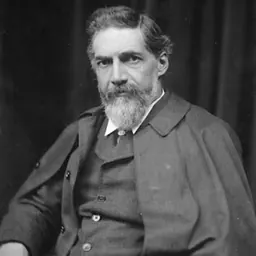



Related people
Same field, nearest in time

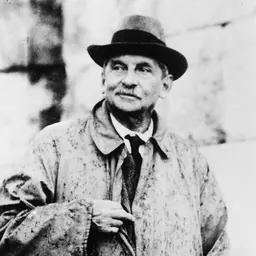
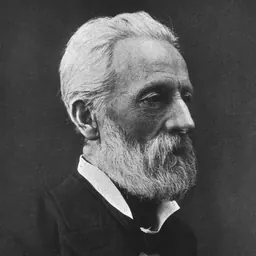



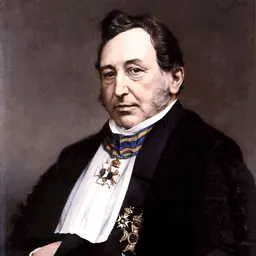
Contemporaries
People whose lives overlapped Flaxman Charles John Spurrell's


Frequently asked questions
Who was Flaxman Charles John Spurrell?
British Egyptologist, geologist and photographer (1842-1915)
When was Flaxman Charles John Spurrell born?
Flaxman Charles John Spurrell was born on 6 September 1842 in Mile End.
When did Flaxman Charles John Spurrell die?
Flaxman Charles John Spurrell died on 25 February 1915 in Bessingham.
What was Flaxman Charles John Spurrell's occupation?
Flaxman Charles John Spurrell was an anthropologist, photographer, archaeologist, geologist and egyptologist.
What nationality was Flaxman Charles John Spurrell?
Flaxman Charles John Spurrell was British.
Sources & further reading
· Wikipedia: Flaxman Charles John Spurrell
· DBpedia: Flaxman Charles John Spurrell
Cite this page
APA: Biography.guide. (2026). Flaxman Charles John Spurrell. https://biography.guide/flaxman-charles-john-spurrell/
MLA: "Flaxman Charles John Spurrell." Biography.guide, https://biography.guide/flaxman-charles-john-spurrell/.
Chicago: "Flaxman Charles John Spurrell." Biography.guide. https://biography.guide/flaxman-charles-john-spurrell/.
Data last updated: 2026-09-20 · Spot an error? Report a correction.
Page generated 2026-09-27 05:31 UTC