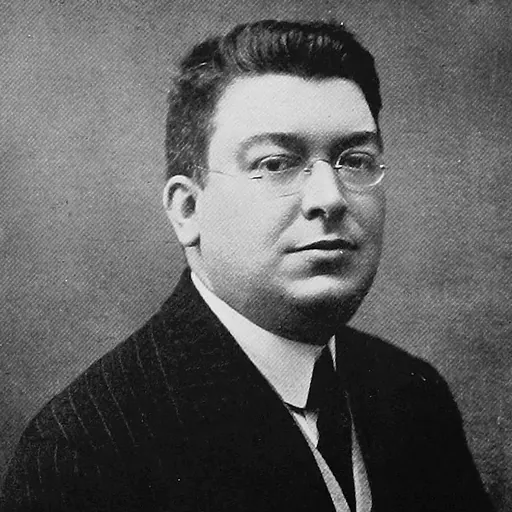
About Fernando Ortiz Fernández
Lived 1881 – 1969 (aged 87). Fernando Ortiz Fernández was a Cuban anthropologist, musicologist, ethnomusicologist, diplomat, writer and jurist.
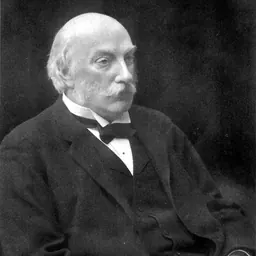
Fernando Ortiz Fernández (16 July 1881 – 10 April 1969) was a Cuban lawyer, essayist, anthropologist, ethnomusicologist and scholar of Afro-Cuban culture. Ortiz was a prolific polymath dedicated to exploring, recording, and understanding all aspects of indigenous Cuban culture. Ortiz has been called the "third discoverer of Cuba", after Christopher Columbus and Alexander von Humboldt. A title first given to him by his secretary Rubén Martínez Villena and later echoed and published by Juan Marinello. Ortiz is widely recognized as a pioneering figure in postcolonial Latin American thought, as well as a foundational voice in African American anthropology. One of Ortiz's most influential contributions is his coining of the term "transculturation," which describes the complex process of cultural convergence and exchange.
When he was two years old he moved with her mother to Menorca where he spent most of his youth. He also completed his primary and secondary studies and obtained his high school diploma in 1895. In 1902 he returned to Habana and received the title of Doctor of Civil Law and Doctor of Public Law. He was the cofounder of the Cuban Academy of the Language in 1926 and the cofounder of the Sociedad de Folklore Cubano (1928). an institute dedicated to promoting scientific research on Afro-descended populations in the Americas, focusing on their biological and cultural aspects. The institute organized conferences, conducted studies, and served as a hub for the dissemination of research and collaboration among scholars and institutions. to join the institute, along with other renowned anthropologists like Melville Herskovits.
Ortiz was professor of African American anthropologist Irene Diggs when she was doing her PhD in anthropology at University of Havana.
Ortiz published articles in several prominent journals, including The Hispanic American Historical Review, Revista Científica Internacional, Revista de Administración, Revista de Arqueología y Etnología, and Revista de La Habana. He also helped establish important journals such as Revista Bimestre Cubana, Archivos del Folklore Cubano, and Estudios Afrocubanos.
His books, La Africania de la Musica Folklorica de Cuba (1950), and Los Instrumentos de la Musica Afrocubana (1952 - 1955) are still regarded as key references in the study of Afro-Cuban music.
In his second marriage, Fernando Ortiz married María Herrera (1942), who remained by his side for the rest of his life. María was a close collaborator in Ortiz's work.
Fernando Ortiz died in Havana in 1969 and was interred there in the Colon Cemetery.
Cuban Counterpoints and the concept of Transculturation Fernando Ortiz most known and read book was Cuban Counterpoint: Tobacco and Sugar originally published in 1940 in Spanish and translated to English in 1995. In his book he draws comparisons between sugar and tobacco the most relevant products form Cuba that have entered the daily life of Cubans.
In this work, he proposes the concept of transculturation as a phenomenon that is more appropriate than acculturation to describe how cultures converge and merge, without removing some of the original aspects of the original cultures. His correspondence with Bronisław Malinowski shows they had numerous debates around the concept of transculturation and how it was being received within American anthropology. This led to disputes between Oritz and Melville Herskovits the American anthropologist that coined the term acculturation. It has also published images, documents and reprints of Ortiz's work and devoted itself to studies of ethnology, sociology and Cuba's popular traditions. Since 1995 it has been led by one of his prominent students, Miguel Barnet, known for his development of the testimonial style in ethnographic studies. The Foundation has fostered scholarly discussions around many cultural issues, including the survival of elements of racism and racial prejudice, and development of measures to deal with such problems.
Don’t just read it —
keep it.
Full-length biographies made to live with: read them, listen on the way to work, watch them tonight.
- E-book
- Audio
- Video
Instant download · yours to keep · every purchase keeps this site free
Important facts
People in Fernando Ortiz Fernández's life
Named in this biography and alive at the same time


Related people
Same field, nearest in time



Contemporaries
People whose lives overlapped Fernando Ortiz Fernández's





Frequently asked questions
Who was Fernando Ortiz Fernández?
Cuban writer (1881–1969)
When was Fernando Ortiz Fernández born?
Fernando Ortiz Fernández was born on 16 July 1881 in Havana.
When did Fernando Ortiz Fernández die?
Fernando Ortiz Fernández died on 10 April 1969 in Havana.
What was Fernando Ortiz Fernández's occupation?
Fernando Ortiz Fernández was an anthropologist, musicologist, ethnomusicologist, diplomat, writer and jurist.
What nationality was Fernando Ortiz Fernández?
Fernando Ortiz Fernández was Cuban.
Sources & further reading
· Wikipedia: Fernando Ortiz Fernández
· DBpedia: Fernando Ortiz Fernández
Cite this page
APA: Biography.guide. (2026). Fernando Ortiz Fernández. https://biography.guide/fernando-ortiz-fernandez-anthropologist/
MLA: "Fernando Ortiz Fernández." Biography.guide, https://biography.guide/fernando-ortiz-fernandez-anthropologist/.
Chicago: "Fernando Ortiz Fernández." Biography.guide. https://biography.guide/fernando-ortiz-fernandez-anthropologist/.
Data last updated: 2026-09-20 · Spot an error? Report a correction.
Portrait: Wikimedia Commons · author & licence
Page generated 2026-09-27 04:58 UTC