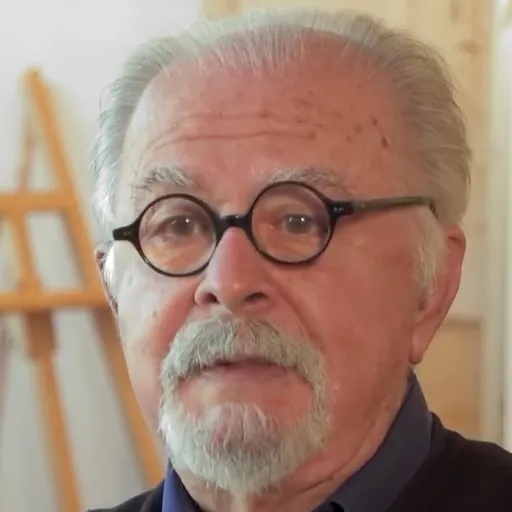
About Fernando Botero
Lived 1932 – 2023 (aged 91). Fernando Botero was a Colombian, French and Italian painter, sculptor, draftsperson, illustrator, architectural drafter and plastic artist.
Fernando Botero Angulo (19 April 1932 – 15 September 2023) His signature style, also known as "Boterismo", depicts people and figures in large, exaggerated volume, which can represent political criticism or humor, depending on the piece. He was considered the most recognized and quoted artist from Latin America in his lifetime, and his art can be found in highly visible places around the world, such as Park Avenue in New York City and the Champs-Élysées in Paris, at different times.
Self-styled "the most Colombian of Colombian artists", Botero came to national prominence when he won the first prize at the Salón de Artistas Colombianos in 1958. He began creating sculptures after moving to Paris in 1973, achieving international recognition with exhibitions around the world by the 1990s. His art is collected by many major international museums, corporations, and private collectors, sometimes selling for millions of dollars. In 2012, he received the International Sculpture Center's Lifetime Achievement in Contemporary Sculpture Award.
Biography
Early life Fernando Botero was born in Medellín on 19 April 1932. His father, David Botero, a salesman who traveled by horseback, died when Fernando was four. An uncle took a major role in his life.
Botero received his primary education at the Ateneo Antioqueño and, thanks to a scholarship, he continued his secondary education at the Jesuit School of Bolívar. In 1944, Botero's uncle sent him to a school for matadors for two years. Some of his earlier drawings were inspired by the bullfight scene. He sold his first painting for two pesos, thanks to a merchant who allowed him to display it in the window of his shop. His love of drawing nudes caused problems with his Roman Catholic education. He was expelled from school after defending Pablo Picasso's art in an essay.
Career Botero's work was first exhibited in 1948, in a group show along with other artists from the region. From 1949 to 1950, Botero worked as a set designer, before moving to Bogotá in 1951. Young Botero also worked as a newspaper illustrator to support his artistic interests and before attending San Fernando Academy. The Pérez Art Museum Miami acquired a still life picture of Botero's early days of career depicting apples, an influence of European art historical movements and 20th-century painters. His first one-man show was held at the Galería Leo Matiz in Bogotá, a few months after his arrival.
In 1952, using his gallery earnings, Botero sailed to Europe. He arrived in Barcelona and then moved on to Madrid. In Madrid, Botero studied at the Academia de San Fernando and was a frequent visitor to the Prado Museum, where he copied works by Goya and Velázquez. He sold his copies on the streets to make money.
Around 1964, Botero made his first attempts to create sculptures. Due to financial constraints preventing him from working with bronze, he made his sculptures with acrylic resin and sawdust. A notable example during this time was Small Head (Bishop) in 1964, a sculpture painted with great realism. The material was too porous, so he abandoned this method. He returned to sculpture "with enthusiasm" in Italy in the mid-1970s and exhibited his characteristic bronze sculptures for the first time at the Grand Palais in Paris in 1977. A horrified Botero decided that the damaged sculpture should be left in place as a "monument to the country's imbecility and criminality" and donated an intact replica to stand alongside it.
In 2004, Botero exhibited a series of 27 drawings and 23 paintings dealing with the violence in Colombia from 1999 through 2004. He donated the works to the National Museum of Colombia, where they were first exhibited.
Abu Ghraib, 2005, oil on canvas. Botero painted the abuses of Abu Ghraib between 2004 and 2005 as a permanent accusation. In 2005, Botero gained considerable attention for his Abu Ghraib series, which was exhibited first in Europe. He based the works on reports of United States forces' abuses of prisoners at Abu Ghraib prison during the Iraq War. Beginning with an idea he had had on a plane journey, Botero produced more than 85 paintings and 100 drawings in exploring this concept and "painting out the poison". In 2009, the Berkeley Art Museum acquired (as a gift from the artist) 56 paintings and drawings from the Abu Ghraib series, which can be seen online. Selections from the series have been regularly included in the museum's annual Art for Human Rights exhibitions.
In 2006, after having focused exclusively on the Abu Ghraib series for over 14 months, Botero returned to the themes of his early life such as the family and motherhood. In his Une Famille Botero represented the Colombian family, a subject often painted in the 1970s and 1980s. In his Maternity, Botero repeated a composition he had already painted in 2003.
In 2008, he exhibited the works of his The Circus collection, featuring 20 works in oil and watercolor. In a 2010 interview, Botero said that he was ready for other subjects: "After all this, I always return to the simplest things: still lifes."
Botero explained his use of these "large people", as they are often called by critics, in the following way:
An artist is attracted to certain kinds of form without knowing why. You adopt a position intuitively; only later do you attempt to rationalize or even justify it. Botero's work, Still Life with Mandolin, marked the beginning of his stylistic development in painting enlarged figures. It became his trademark. He donated 119 pieces to the Museum of Antioquia, including 23 bronze sculptures for the square in front of the museum, which became known as Botero Plaza.
In response to the Colombian peace process, Botero sculpted and donated La paloma de la paz (2016) to the Government of Colombia to commemorate the signing and ratification of the agreement.
Personal life Botero was married three times. With his first wife, (1935–2019), later director of the Colombian Institute of Culture (Colcultura), he had three children: Fernando, Lina, and Juan Carlos. Botero and Zambrano separated in 1975.
His home city, Medellín, is also known for being the home of Pablo Escobar, Colombia's most famous drug lord. After the death of Escobar, Botero found out that two of his paintings were in Escobar's possession, and this angered him. The couple also had a house in Pietrasanta, Italy.
Botero died from complications of pneumonia on 15 September 2023, at age 91, in Monaco.
Art market Botero most expensive painting in the art market was The Musicians (1979), who sold by $5,132,000 at Christie's, on 9 November 2023.
His most expensive sculpture was Horse (1992), sold by $4,9 million at Sotheby's New York, on 20 November 2024.
Popular culture Botero's 1964 painting Pope Leo X (after Raphael) has found a second life as a popular internet meme. It is typically seen with the caption "y tho".
Mario Vargas Llosa's 2023 novel Le dedico mi silencio uses Botero's 1979 painting Los músicos as its cover illustration.
His life and work were the subject of the 2018 Canadian documentary Botero, directed by Don Millar.
Gallery
Don’t just read it —
keep it.
Full-length biographies made to live with: read them, listen on the way to work, watch them tonight.
- E-book
- Audio
- Video
Instant download · yours to keep · every purchase keeps this site free
Important facts
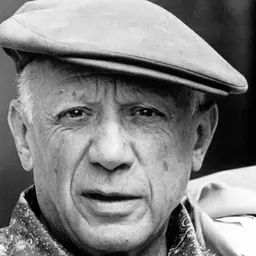
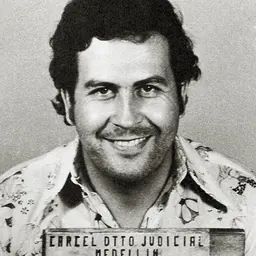
People in Fernando Botero's life
Named in this biography and alive at the same time





Related people
Same field, nearest in time

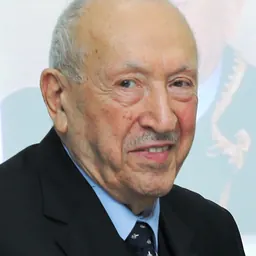


Contemporaries
People whose lives overlapped Fernando Botero's

Frequently asked questions
Who was Fernando Botero?
Colombian painter and sculptor (1932–2023)
When was Fernando Botero born?
Fernando Botero was born on 19 April 1932 in Medellín.
When did Fernando Botero die?
Fernando Botero died on 15 September 2023 in Monaco, Monte Carlo.
What was Fernando Botero's occupation?
Fernando Botero was a painter, sculptor, draftsperson, illustrator, architectural drafter and plastic artist.
What nationality was Fernando Botero?
Fernando Botero was Colombian, French and Italian.
Sources & further reading
Cite this page
APA: Biography.guide. (2026). Fernando Botero. https://biography.guide/fernando-botero/
MLA: "Fernando Botero." Biography.guide, https://biography.guide/fernando-botero/.
Chicago: "Fernando Botero." Biography.guide. https://biography.guide/fernando-botero/.
Data last updated: 2026-09-22 · Spot an error? Report a correction.
Portrait: Wikimedia Commons · author & licence
Page generated 2026-09-27 05:01 UTC