
Fernand Doukhan
Teacher, anti-colonialist and trade unionist, libertarian communist then Trotskyist.
About Fernand Doukhan
Lived 1913 – 1996 (aged 83). Fernand Doukhan was a French school teacher, trade unionist, activist and libertarian.
Fernand Isaäc Doukhan (, Algiers – , Montpellier) was a French schoolteacher and anticolonial activist of Berber Jewish origin. Born into a modest family in the Bab El Oued district, he became involved in trade unionism and libertarian communism, then in Trotskyism.
A militant for Algerian independence, he participated in the Solidarité internationale antifasciste (SIA) and supported the Front de libération nationale (FLN) as well as the Union générale des travailleurs algériens (UGTA). In , by mandate of Georges Fontenis, leader of the Fédération communiste libertaire (FCL), he was tasked, together with Léandre Valéro, to establish links with the Mouvement national algérien (MNA) of Messali Hadj. Within the Mouvement libertaire nord-africain (MLNA), Doukhan contributed to coordinating between the FCL and the MNA and took part in clandestine activities: printing leaflets, housing militants and organising secret meetings.
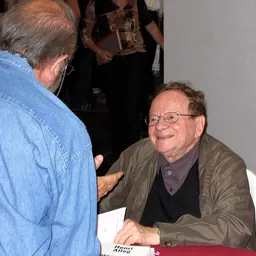
A veteran of the 9th Regiment of Zouaves during the Second World War, he was taken prisoner in and detained in German stalags until . Arrested in January during the UGTA/FLN eight-day strike, he was interned at the Lodi camp (Draa Essamar), where he met Henri Alleg, and later expelled to France in . The decree, promulgated by Adolphe Crémieux, granted French citizenship to indigenous Jews, altering the status of the Doukhan family: Saül, born indigenous in Boufarik shortly before this measure, thereby integrated into the French Republic, breaking with the dhimmi status inherited from the Regency of Algiers (6th–19th centuries).
The "Toussaint rouge" (1 November 1954: some 70 attacks, eight dead, including Guy Monnerot) galvanized their activism. Together with Jean Duteuil, Doukhan and Valéro backed Messali Hadj's MNA (recreated December 1954) via clandestine leaflets, logistical aid and FCL posters proclaiming "Long live free Algeria!". In Le Libertaire Doukhan denounced torture, concentration camps and 124 years of colonial exploitation, demanding self-determination and withdrawal of the French contingent.
Internal divisions (Spanish anarchists in favour of French Algeria versus pro-MNA elements) and FLN rivalry (resulting in fratricidal violence; around 10,000 deaths and episodes such as the Melouza massacre in 1957) weakened the MLNA. Arrests in July 1956 (including Fontenis) led to the dissolution of the FCL and increased clandestinity. Valéro fled to France; archives and many materials were destroyed or lost. Exhausted by 43, Doukhan expected internment as repression escalated.
Arrest during the Battle of Algiers (1957) An interview with Marguerite (Fernand Doukhan's widow) in 2008 recalled his traumatic arrest during the Algerian War, corroborated by administrative archives. This episode exemplifies the severe repression of European supporters of independence, including European anarchist militants like Doukhan.
On 28 January 1957 Doukhan participated in the general eight-day strike intended to influence the United Nations debate on self-determination. Despite a state of emergency (declared April 1955) and special powers (March 1956) permitting searches and detentions without trial, Doukhan observed the strike from his home on Rue du Roussillon in Bab El Oued. Algiers was paralysed—shops closed, transport disrupted and power cuts. General Jacques Massu, invested with broad authority since January, deployed some 5,000 paratroopers to break the strike during the Battle of Algiers, dismantling the FLN after deadly attacks (15 fatalities in January).
In the afternoon four paratroopers raided Doukhan's apartment, threatening him with mock execution before an officer intervened. Handcuffed and stripped of personal effects, he was taken with about a dozen European strikers (rail workers, postmen, a chemist) to the Ben Aknoun sorting centre—one of twelve detention sites in Algiers used for repression (including Villa Sésini where Henri Alleg was tortured). There he endured nocturnal interrogations by searchlight, slaps and deprivation (sleeping on the floor, minimal rations); interrogators sought his Casbah contacts and "Arab friends". While he was not physically tortured (gégène, "water-torture" bathtub), the atmosphere was terrorising, echoing methods denounced since the Vichy era. In the months that followed, thousands disappeared or were executed; notable cases included Maurice Audin and Larbi Ben M'hidi.
Ten days later Doukhan received a residence-order (6 February 1957) for "offences against public security and order", citing his articles in Le Libertaire, anti-colonial posters and participation in the strike.
Internment at Lodi camp and expulsion from Algeria (1957–1958) The Camp of Lodi, established in 1955 near Médéa, was a unique element in the colonial repression system: it was the only internment camp reserved for Europeans suspected of sympathising with the Algerian national movement. Created under the state of emergency and the special powers regime, it held between 140 and 150 detainees—mostly former members of the dissolved Algerian Communist Party, but also syndicalists, lawyers and libertarian militants arrested for political opinions. Among them was anarchist teacher Fernand Doukhan, arrested in February 1957 and interned for thirteen months.
Living conditions at Lodi, while less brutal than those in Muslim camps such as Djelfa or Aïn Oussera (Paul-Cazelles), were nonetheless marked by overcrowding, cold, restricted rations and constant censorship. Interned men were kept under strict isolation and surveillance but organised educational, cultural and sporting activities—courses, debates, theatre—to resist boredom and arbitrariness. Collective petitions to Resident Minister Robert Lacoste denounced internment without trial and violations of fundamental rights.
Henri Alleg's passage through the camp in 1957—after his torture at El Biar and his clandestine writing of La Question—gave symbolic weight to Lodi in the public denunciation of colonial abuses. The camp closed in 1960; several former internees continued anticolonial engagement and later participated in Franco-Algerian solidarity after independence. Doukhan was released in March 1958 and subsequently expelled from Algeria.
Exile in metropolitan France and final years (1958–1996) Expelled from Algeria in April 1958 for his anticolonial activism, Doukhan settled in Montpellier where, supported by the National Teachers' Union, he resumed teaching. Marginalised and isolated in metropolitan France, he nevertheless continued political activity within École émancipée and later the Parti des travailleurs, shifting from anarchism toward Trotskyism. Algerian independence led to the dispersion of his family; he took in his mother Clarisse until her death in 1970. Married in 1964 to Marguerite Hoarau, he devoted his retirement to union activism and internationalism. He died in 1996 following an accident and reportedly left his possessions to his political party, a sign of sustained fidelity to his emancipation ideals. His trajectory illustrates the tragic fate of a Jewish Algerian republican and anticolonial teacher, marginalised from official memory but faithful to justice and solidarity until his death.
Works
Articles En Afrique du Nord. A propos d’un plan, Le Libertaire, no. 246, 8 December 1950. Dictature française en Algérie. Un coup de force, Le Libertaire, no. 320, 19 June 1952. Le problème syndical en Afrique du Nord, Le Libertaire, no. 360, 14 May 1953. Mauvaise foi et colonialisme éclairé, Le Libertaire, no. 404, 11 November 1954. Un aveu. Soutiens du colonialisme, Le Libertaire, no. 406, 25 November 1954. Protestation du M.L.N.A., Le Libertaire, no. 402, 28 October 1954. La faune colonialiste de l’Assemblée algérienne, Le Libertaire, no. 412, 6 January 1955. De la nomination de Soustelle aux interpellations sur l’Afrique du Nord. Règlement de comptes, Le Libertaire, no. 416, 3 February 1955. D’Alger, solidarité néo-colonialiste I, Le Libertaire, no. 419, 24 February 1955. D’Alger, solidarité néo-colonialiste II, Le Libertaire, no. 420, 3 March 1955. Misère de l’école publique en Algérie ou l’impuissance du réformisme I, Le Libertaire, no. 426, 14 April 1955. Misère de l’école publique en Algérie ou l’impuissance du réformisme II, Le Libertaire, no. 427, 21 April 1955.
Don’t just read it —
keep it.
Full-length biographies made to live with: read them, listen on the way to work, watch them tonight.
- E-book
- Audio
- Video
Instant download · yours to keep · every purchase keeps this site free
Important facts
People in Fernand Doukhan's life
Named in this biography and alive at the same time



Related people
Same field, nearest in time
Contemporaries
People whose lives overlapped Fernand Doukhan's





Frequently asked questions
Who was Fernand Doukhan?
teacher, anti-colonialist and trade unionist, libertarian communist then Trotskyist.
When was Fernand Doukhan born?
Fernand Doukhan was born on 29 March 1913 in Algiers.
When did Fernand Doukhan die?
Fernand Doukhan died on 14 May 1996 in Montpellier.
What was Fernand Doukhan's occupation?
Fernand Doukhan was a school teacher, trade unionist, activist and libertarian.
What nationality was Fernand Doukhan?
Fernand Doukhan was French.
Sources & further reading
Cite this page
APA: Biography.guide. (2026). Fernand Doukhan. https://biography.guide/fernand-doukhan/
MLA: "Fernand Doukhan." Biography.guide, https://biography.guide/fernand-doukhan/.
Chicago: "Fernand Doukhan." Biography.guide. https://biography.guide/fernand-doukhan/.
Data last updated: 2026-09-20 · Spot an error? Report a correction.
Page generated 2026-09-27 04:57 UTC