
About Jacques Massu
Lived 1908 – 2002 (aged 94). Jacques Massu was a French military personnel and soldier.
Jacques Émile Massu (; 5 May 1908 – 26 October 2002) was a French general who fought in World War II, the First Indochina War, the Algerian War and the Suez Crisis. He led French troops in the Battle of Algiers, first supporting and later denouncing their use of torture.
Early life Jacques Massu was born in Châlons-sur-Marne to a family of military officers; his father was an artillery officer. He studied successively at Saint-Louis de Gonzague in Paris, the Free College of Gien (1919–1925) and Prytanée National Militaire (1926–1928). He then entered Saint-Cyr and graduated in 1930 as a second lieutenant in the promotion class "Marshal Foch" and chose the Colonial Infantry.
Between October 1930 and August 1931, he served in the 16th Senegalese Tirailleur Regiment (16th RTS) in Cahors. He was sent to Morocco with the 5th RTS and took part in the fighting around Tafilalt where he earned his first citation. He was promoted to lieutenant in October 1932 and took part in the operations in High Atlas, earning a new citation.
In 1934 Massu was transferred to 12th RTS at Saintes, Charente-Maritime. He served in Togo from January 1935 to February 1937 performing military and civilian duties in Komkombas. Then he was stationed in Lorraine with the 41st RMIC until June 1938, when he was sent to Chad to command the subdivision of Tibesti with headquarters in Zouar.
World War II He was serving in Africa when World War II broke out, and joined the Free French Forces. He took part in the battle of Fezzan with the armoured troops of General Leclerc. In 1941, he was in charge of the bataillon de marche du Tchad. He served as a lieutenant-colonel in the 2nd Armored Division (2e DB) serving with distinction at the Battle of Dompaire in September 1944 earning the US Silver star. He served with the division until the end of the war.
Indochina In September 1945, he landed in Saigon and took part in the retaking of the city and of the South of Indochina.
Massu took command of a mechanized infantry force of the 2e DB named Groupement Massu, comprising a reconnaissance squadron with M8 Greyhound armoured cars from 7e Escadron, 1er Régiment de Marche de Spahis Marocains; a squadron of M5A1 Stuart light tanks of 1e Compagnie, 501e Régiment de chars de combat; a provisional infantry force of the 4e Bataillon, Régiment de marche du Tchad and the French Navy’s Régiment Blindé de Fusiliers-Marins, with M3 Half-tracks; and engineer elements of the 71er Bataillon du Génie. This force was landed at Saigon between 10 and 15 October 1945, and was immediately deployed to recapture Mỹ Tho in the Mekong Delta from the Viet Minh.
Egypt In 1956, the 10th Parachute Division was sent to Egypt to take back the Suez Canal during the Suez Crisis. The 10th Parachute Division landed at Raswa. Raswa imposed the problem of a small drop zone surrounded by water, but Massu assured Andre Beaufre that this was not an insolvable problem for his men. 500 heavily armed paratroopers of the French 2nd Colonial Parachute Regiment (2ème RPC), hastily redeployed from combat in Algeria, jumped over the al-Raswa bridges from Nord Noratlas 2501 transports of the Escadrille de Transport (ET) 1/61 and ET 3/61, together with some combat engineers of the Guards Independent Parachute Company.
1958 coup d'état The Algiers putsch of 1958 began when the current government suggested that it would negotiate with the FLN, bringing the instability and ineffectiveness of the Fourth Republic to a head. On 13 May right-wing elements seized power in Algiers and called for a Government of Public Safety under General de Gaulle. Massu became chairman of the Public Safety Committee and one of the leaders of the revolt. The putschists threatened to conduct an assault on Paris, involving paratroopers and armoured forces based at Rambouillet, unless Charles de Gaulle was placed in charge of the Republic. De Gaulle did so on condition that a new constitution would be introduced creating a powerful presidency in which a sole executive, the first of which was to be de Gaulle, ruled for seven-year periods. These changes were introduced and the Fifth Republic was born.
On 14 January 1960, Massu gave an interview with the Süddeutsche Zeitung newspaper in which he declared,
The Army has the power. It did not show it yet, because the opportunity did not arise. But the Army will use its power in one precise occasion (...) it encourages settlers to constitute paramilitary organisations and provides them weapons.
Massu was immediately summoned to Paris where he was relieved of command and posted to Metz.
Massu retired from military duty in July 1969 and spent the rest of his life in his home at Conflans-sur-Loing writing his memoirs. On 15 June 2000, Louisette Ighilahriz, a woman who had been a member of the FLN, accused Massu and Marcel Bigeard in an interview published in Le Monde newspaper of being present when she was tortured and raped by the French Army at a military prison in 1957. Ighilahriz had come forward with her story as she wanted to thank one "Richaud", an Army doctor at the prison, for saving her life, saying that Dr. Richaud was a most kindly man who always treated her injuries. In response, Massu told Le Monde that "torture had been part of a certain ambience in Algiers in 1957". Massu denied being present when Ighilahriz had been tortured and raped, saying he could not remember her, but expressed "regret" that the paras had engaged in torture and used rape as an interrogation tool, saying that there were things that had happened that he had wished had never happened in Algeria. Bigeard by contrast called Ighilahriz's story a "tissue of lies" designed to "destroy all that is decent in France", going on to say this "Richaud" had never existed. Bigeard was contradicted by Massu, who confirmed the existence of "Richaud", saying that Ighilahriz was referring to Dr. François Richaud who had been the doctor stationed at the prison in 1957.
Massu died at Conflans-sur-Loing on 26 October 2002, aged 94.
Decorations Grand Cross of the Légion d'honneur Companion of the Liberation (14 July 1941) Croix de guerre 1939–1945 (8 citations) Croix de guerre des théâtres d'opérations extérieures (3 citations) Croix de la Valeur Militaire (2 citations) Distinguished Service Order (UK) Grand Officer of the Ordre du Nichan El-Anouar Grand Officer of the Order of the Black Star Bundesverdienstkreuz (West Germany)
Quotations "Give me two divisions and tomorrow, you can take your breakfast on the boulevard Saint Germain" (to De Gaulle, about May '68) "I am a soldier, I obey" Charles de Gaulle: "So, Massu, are you still stupid?" Jacques Massu's answer: "Still a Gaullist, General!"
Footnotes
Don’t just read it —
keep it.
Full-length biographies made to live with: read them, listen on the way to work, watch them tonight.
- E-book
- Audio
- Video
Instant download · yours to keep · every purchase keeps this site free
Important facts
People in Jacques Massu's life
Named in this biography and alive at the same time



Related people
Same field, nearest in time


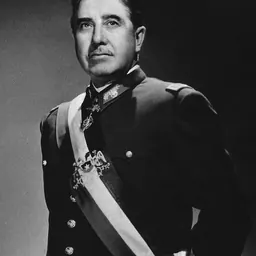

Contemporaries
People whose lives overlapped Jacques Massu's


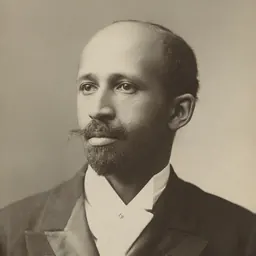
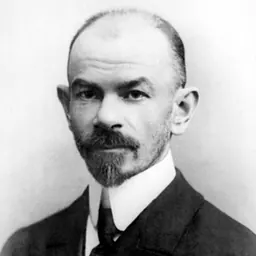
Frequently asked questions
Who was Jacques Massu?
French general (1908–2002)
When was Jacques Massu born?
Jacques Massu was born on 5 May 1908 in Châlons-en-Champagne.
When did Jacques Massu die?
Jacques Massu died on 26 October 2002 in Conflans-sur-Loing.
What was Jacques Massu's occupation?
Jacques Massu was a military personnel and soldier.
What nationality was Jacques Massu?
Jacques Massu was French.
Sources & further reading
Cite this page
APA: Biography.guide. (2026). Jacques Massu. https://biography.guide/jacques-massu/
MLA: "Jacques Massu." Biography.guide, https://biography.guide/jacques-massu/.
Chicago: "Jacques Massu." Biography.guide. https://biography.guide/jacques-massu/.
Data last updated: 2026-09-20 · Spot an error? Report a correction.
Page generated 2026-09-27 05:19 UTC