
About Louisette Ighilahriz
Born 1936. Louisette Ighilahriz is an Algerian revolutionary.
Louisette Ighilahriz (born 22 August 1936) is an Algerian writer, former Conseil de la Nation member, and a former member of the Front de Libération Nationale (FLN) who came to widespread attention in 2000 with her story of captivity by the French from 1957 to 1962, becoming, in the words of the American journalist Adam Shatz, "a catalyst of a debate about the legacy of the French-Algerian war".
Childhood and early life
Louisette Ighilahriz was born in Oujda, then part of the French Protectorate in Morocco, to a Berber family originally from the Kabylie region in northeastern Algeria. The Ighilahriz family relocated to Algiers in 1948. Although born outside Algeria, Ighilahriz maintained strong cultural and political ties to her ancestral homeland. Kabyle communities were historically among the most active opponents of French colonial rule in Algeria.
She later described her background as deeply nationalist, referring to her mother as "illiterate but hyperpoliticised" and stating that her maternal grandfather clandestinely manufactured firearms for Algerian resistance fighters. According to Ighilahriz, when news of the outbreak of the Algerian War reached them on 1 November 1954, her father, a baker by profession, remarked: "It is the end of the humiliation."
FLN involvement
Revolutionary work and capture Strongly anti-French, Ighilahriz joined the FLN under the codename Lila in late 1956 to work as a courier, smuggling information, weapons and bombs across Algiers in bread baked by her father. Furthermore, Ighilahriz wrote that during this period, "I was no longer really a woman. The war had transformed me, I had become lacking in all feeling and had basically forgotten my femininity."
Military prison
Ighilahriz was taken to a military prison at Paradou Hydra where a French Army captain, Jean Graziani, cut her bangs, prodded her wounds with a bayonet and then raped her in her words "with all sorts of objects" to make her talk. During this time, Ighilahriz was not allowed to bathe and spent months covered in her own blood, excrement and urine as she was held in a tiny cell. Ighilahriz remembered: "Mon urine s'infiltrait sous la bâche du lit de camp, mes excréments se mélangeaient à mes menstrues jusqu'à former une croûte puante" ("My urine passed through the sheet covering the camp bed, my excrement mixed with my menstrual blood, forming a stinking crust"). Ighilahriz stated about Captain Jean Graziani: "Mais l'essentiel de ses tortures ne s'exerçaient pas à mains nues. Il était toujours armé d'ustensiles pour s'acharner contre mon plâtre" ("But he did not carry out most of his torture with his bare hands. He was always armed with implements to attack my plaster cast"). "Richaud" played something of a surrogate father to Ighilahriz as she remembered him telling her: "Mon petit, vous êtes bien jeune pour le maquis. Je vous en prie, laissez ça aux autres. Aux hommes, par exemple!" ("My child, you are too young for the resistance. I beg of you, leave that to others, to men, for example!") Decades after this promise, Ighilahriz broke it to publicize her experience, encouraging "other Algerian women and men to discuss their experiences publicly as well". By contrast, Massu told the French media that he was not present when Ighilahriz was tortured and raped, saying he could not remember her, but expressed "regret" that the paras had engaged in torture and used rape as an interrogation tool, saying that there were things that had happened in Algeria that he wished had never happened. After Ighilahriz had accused him of torturing her in 2000, General Massu visited his parish priest for confession, and afterwards announced that he changed his mind about torture, saying he now believed that torture was not necessary to win the Battle of Algiers. She said that his rehabilitation would essentially equate to France admitting to large-scale torture and rape during the Algerian War. Ighilahriz explained, "Le viol, c'est ce qu'il y a de pire pour une femme : c'est la négation d'elle-même" [rape is the worst for a woman; it is the negation of her very self].
Book publication After the interview, Ighilahriz dictated her life story to the French journalist Anne Nivat. It was published in 2001 as Algérienne, becoming a bestseller in France. Nivat said about her first impression of Ighilahriz: "Dès la première seconde où j'ai croisé son regard, j'ai cru en cette femme...Je savais qu'elle parlerait, parce qu'elle avait beaucoup à raconter et souhaitait le raconter. Je n'ai pas été déçue" ("From the moment our eyes met, I believed in this woman... I knew that she would speak, because she had a lot to say and wanted to speak out. I was not disappointed.") At the beginning of Algérienne, Ighilahriz stated that her decision to go forward with her story took place over the opposition of her family, her colleagues and the Algerian government, all of whom felt that the story of a Berber woman being raped was deeply shameful. Mortimer writes that though Ighilahriz suffered terribly, the purpose of her story is more to pay tribute to Dr Richaud than to express rage at her torturers and rapists. Afterwards, the Ighilahriz sisters met Richaud's daughter to give her their thanks for her father's actions.
Trauma and support Mortimer noted that the university-educated and independent-minded Ighilahriz is fluent in French, but chose not to write her own story, instead dictating it to Nivat, and had to be accompanied by Nivat and her sister to Dr Richaud's tomb, which for her was evidence of the extraordinarily difficult nature of Ighilahriz's experiences. In response, Ighilahriz said that Yacef too broke under torture when he was captured by the French, and stated that as a Berber Muslim man, he was angry with her for breaking the taboo surrounding rape in Berber culture. Ighilahriz also suggested that Yacef was jealous of the way that her story had come to overshadow his in the popular memory of the Algerian War. Natalya Vince writes that, with the support of other former female FLN fighters, "Ighilahriz called a press conference and retorted that Saadi himself was a traitor", calling for him to "give up his parliamentary immunity as a presidentially elected senator to come and face her, as a citizen, in court to dispute the facts". The lack of a subsequent court case causes Vince to describe Ighilahriz as "the vindicated underdog who had forced Saadi to back down despite his greater political power." Thomas further noted that at the same time that Algérienne was a bestseller, another book about the Algerian War, namely Services spéciaux Algérie 1955-1957 by General Paul Aussaresses, was an even bigger bestseller in France. Schmitt stated that he served alongside Graziani in Vietnam, and called him a passionate French patriot from Corsica, whom he described as incapable of committing the acts that Ighilahriz accused him of. However, Mortimer defends Ighilahriz on the grounds of the Muslim Berber culture's attitude that it is deeply shameful for an unmarried woman not to be a virgin, so to avoid public scorn she would not want to discuss being raped. Scholars such as Abdelkader Cheref describe the UNFA as essential to "organizing active women to provide backing for the state's policies", yet "a token maneuver intended to satisfy Algerian women's demands for political representation without really giving it". Ighilahriz's activities as a member of the executive committee of the UNFA included visits to other countries, "ostensibly with the task of looking at socio-economic models which might work in Algeria". On a more practical level, Ighilahriz also cited the "lack of ambition, inefficiency and clientelism" of the Union.
Conseil de la Nation Louisette Ighilahriz joined the Conseil de la Nation, the upper house of the bicameral parliament, in February 2016, having been appointed by Abdelaziz Bouteflika, then President of Algeria, who appointed one-third of the seats. Speaking of her time in the Conseil, Ighilahriz stated that she tried to work towards addressing social problems, yet that she and the other members were asked to "marcher sans trop nous poser de question" [to walk without being asked too many questions], implying that she and the Conseil lacked legitimate power.
Resignation and protest In October 2018, Ighilahriz announced her resignation as an act of protest against President Bouteflika running for a fifth mandate. She said that the fourth mandate finished poorly and that due to his minimal public appearances, she would not vote for "un candidat invisible" [an invisible candidate].
In February 2019, potential presidential candidate Ali Ghediri announced on his Facebook page that Ighilahriz had declared her support for him. She subsequently told TSA, an Algerian news site, that his policy plans convinced her, noting particularly his plans to fight against corruption and unemployment, to create new jobs, and to try to stop underground emigration. She described him as brave, humble, and wise, remarking that she believed that he would satisfy the Algerian people and bring about significant changes for the good. Instead, she said, "Nous sommes en train de tout faire pour que le système s'en aille et quant le système partira, on se mettra d'accord sur une constituante comme point de départ et nous formerons un nouveau gouvernement par la suite" [We are doing everything so that the system goes away, and when the system leaves, we will agree on a constituent phase as a departure point and we will form a new government thereafter]. Louisette, a short animated film, synopsises the experiences of Ighilahriz was released by Le Monde in 2022.
Endnotes
Don’t just read it —
keep it.
Full-length biographies made to live with: read them, listen on the way to work, watch them tonight.
- E-book
- Audio
- Video
Instant download · yours to keep · every purchase keeps this site free
Important facts
People in Louisette Ighilahriz's life
Named in this biography and alive at the same time

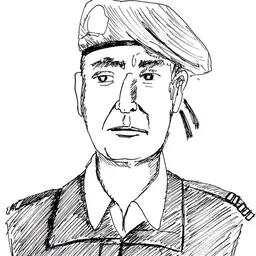
Related people
Same field, nearest in time

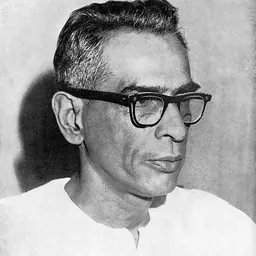




Contemporaries
People whose lives overlapped Louisette Ighilahriz's



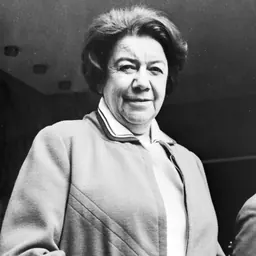
Frequently asked questions
Who is Louisette Ighilahriz?
Algerian writer
When was Louisette Ighilahriz born?
Louisette Ighilahriz was born on 22 August 1936 in Oujda.
What is Louisette Ighilahriz's occupation?
Louisette Ighilahriz is a revolutionary.
What nationality is Louisette Ighilahriz?
Louisette Ighilahriz is Algerian.
Sources & further reading
· Wikipedia: Louisette Ighilahriz
· DBpedia: Louisette Ighilahriz
Cite this page
APA: Biography.guide. (2026). Louisette Ighilahriz. https://biography.guide/louisette-ighilahriz/
MLA: "Louisette Ighilahriz." Biography.guide, https://biography.guide/louisette-ighilahriz/.
Chicago: "Louisette Ighilahriz." Biography.guide. https://biography.guide/louisette-ighilahriz/.
Data last updated: 2026-09-20 · Spot an error? Report a correction.
Page generated 2026-09-27 04:59 UTC