
About Ferdinand Freiligrath
Lived 1810 – 1876 (aged 65). Ferdinand Freiligrath was a linguist, poet, translator, writer, journalist and revolutionary.
Ferdinand Freiligrath lived in Unkel 1839/40Ferdinand Freiligrath (17 June 1810 – 18 March 1876) was a German poet, translator and liberal agitator, who is considered part of the Young Germany movement.
Life Freiligrath was born in Detmold, Principality of Lippe. His father was a teacher. He left a Detmold gymnasium at 16 to be trained for a commercial career in Soest. There he also familiarized himself with French and English literature, and before he was 20 had published verses in local journals. This contained his poems "Löwenritt", "Prinz Eugen", and "Der Blumen Rache".
Freiligrath had expressed beliefs that the artist should not be demeaned by becoming involved with politics and criticized the poet Georg Herwegh for his politicized poetry; however, due to political repression (censorship), and the encouragement of fellow poet Hoffmann von Fallersleben, Freiligrath later became more political. In 1844, he surrendered his pension, and in his Glaubensbekenntnis (Confession of Faith) placed his poetic gifts at the service of the democratic agitation that was to culminate in the Revolution of 1848. Such poems as "Trotz alledem" (a translation of Burns's "A man's a man for a' that"), "Die Freiheit", "Das Recht" and "Hamlet" made his absence from Germany expedient.
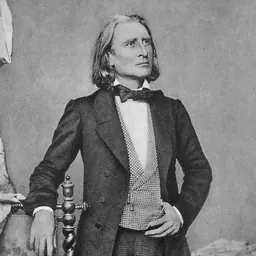
He left for Belgium In 1843, Franz Liszt set Freiligrath's poem "O lieb, so lang du lieben kannst" to music, published in 1847 — the song was later arranged by Liszt for solo piano as his "Liebesträume" No. 3 (1850), which subsequently became one of his most famous piano pieces. German composer Elise Schmezer set Freiligrath’s text to music in her Lieder, Romanzen und Balladen fur Tenor, opus 4.
Upon his return to Germany, Freiligrath settled in Düsseldorf, It was not long before he had again called down upon himself the ill-will of the ruling powers by a poem, Die Toten an die Lebenden (The Dead to the Living, 1848). He was arrested on a charge of lèse-majesté, but the prosecution ended in his acquittal.
Works
Don’t just read it —
keep it.
Full-length biographies made to live with: read them, listen on the way to work, watch them tonight.
- E-book
- Audio
- Video
Instant download · yours to keep · every purchase keeps this site free
Important facts
People in Ferdinand Freiligrath's life
Named in this biography and alive at the same time


Related people
Same field, nearest in time

Contemporaries
People whose lives overlapped Ferdinand Freiligrath's





Frequently asked questions
Who was Ferdinand Freiligrath?
German poet
When was Ferdinand Freiligrath born?
Ferdinand Freiligrath was born on 17 June 1810 in Detmold.
When did Ferdinand Freiligrath die?
Ferdinand Freiligrath died on 18 March 1876 in Stuttgart, Bad Cannstatt.
What was Ferdinand Freiligrath's occupation?
Ferdinand Freiligrath was a linguist, poet, translator, writer, journalist and revolutionary.
What nationality was Ferdinand Freiligrath?
Ferdinand Freiligrath's recorded nationality: Principality of Lippe.
Sources & further reading
· Wikipedia: Ferdinand Freiligrath
· DBpedia: Ferdinand Freiligrath
Cite this page
APA: Biography.guide. (2026). Ferdinand Freiligrath. https://biography.guide/ferdinand-freiligrath/
MLA: "Ferdinand Freiligrath." Biography.guide, https://biography.guide/ferdinand-freiligrath/.
Chicago: "Ferdinand Freiligrath." Biography.guide. https://biography.guide/ferdinand-freiligrath/.
Data last updated: 2026-09-20 · Spot an error? Report a correction.
Page generated 2026-09-27 05:18 UTC