
About Fenton Johnson
Lived 1888 – 1958 (aged 70). Fenton Johnson was an American poet.
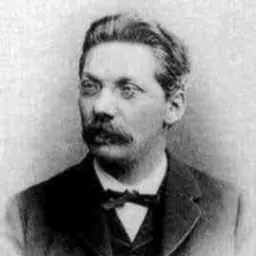
Fenton Johnson (May 7, 1888 – September 17, 1958) was an American poet, essayist, author of short stories, editor, and educator. Johnson came from a middle-class African-American family in Chicago, where he spent most of his career. His work is often included in anthologies of 20th-century poetry, and he is noted for early prose poetry. Author James Weldon Johnson (no relation) called Fenton, "one of the first Negro revolutionary poets”. He is also considered a forerunner of the Harlem Renaissance.
Early life and career Johnson was born on May 7, 1888, in Chicago, Illinois, to parents Elijah and Jesse (Taylor) Johnson. His father, Elijah Johnson, was a railroad porter and their African-American family was comparatively well-off. His family owned the State Street building in which they lived, and according to a biographical note by Arna Bontemps, Fenton Johnson was described as being "a dapper boy who drove his own electric automobile around Chicago." Growing up, Johnson recalled that he "scribbled since the age of nine," but despite literary inclinations, Johnson did not initially plan to embark on a writing career, and certainly not a career in poetry. Throughout his childhood, Johnson intended to become a member of the clergy.
Johnson grew up in Chicago, and he received his secondary education at various public schools in the city, including Englewood High School and Wendell Phillips High School. Johnson first began his undergraduate education at Northwestern University, which he attended from 1908 to 1909 and he went on to a degree at the University of Chicago. Johnson later attended the Columbia University Pulitzer School of Journalism. This manuscript, which remained unpublished, is "a vivid depiction of discrimination", with the entries "alternately optimistic, angry, depressed, and frustrated. At the conclusion of the fictional journal, Gray commits suicide, explaining that it is 'due to this color-prejudice…that I do what I am doing.' Johnson's discussion of prejudice and persecution includes racial epithets and racial and ethnic stereotypes."
Between the release of his first and second collection of poetry, Johnson moved to New York, where he attended the Columbia School of Journalism with the financial support of a benefactor.
The Favorite Magazine published a few of Johnson's poems, and around this time Johnson's short stories were also being published in The Crisis. In addition to the short stories published in The Crisis, Johnson published his own collection of short stories entitled Tales of Darkest America in 1920. In the same year, he published a book of essays entitled For the Highest Good. During this period, from about 1912 to 1925, Johnson established connections in Chicago with Harriet Monroe, and several of his poems were accepted for her magazine, Poetry. In addition, Johnson found publication in the anthology selected by poet Alfred Kreymborg in 1915 called Others: A Magazine of the New Verse. One of his most famous poems, "Tired", was published in 1919 in Others and it was also published in The Book of American Negro Poetry in 1922, among other poems of his. Johnson completed or nearly completed a fourth collection of poems entitled African Nights, but he did not succeed in publishing the collection.
In addition to his poetry, editing, and essay writing, Johnson also worked as a playwright. By the age of 19, Johnson plays had been "produced on the stage of the old Pekin Theatre, Chicago". In 1925, his play entitled The Cabaret Girl was performed at the Shadow Theatre in Chicago, the only known title of his performed plays.
James Weldon Johnson also indicates in his introduction to Johnson that it was during the war period that Fenton Johnson adopted free verse, and “broke away from all traditions and ideas of Negro Poetry.” This newfound "formlessness", Johnson found, "voiced the disillusionment and bitterness of feeling the Negro race was then experiencing." Additionally, A Little Dreaming contains a customary Scottish poem, Irish poem, and even Yiddish poem, which points to a whole range of poetic influences during the early part of his poetic career.
Personal life Johnson was married to Cecilia Rhone. He was a member of the Authors League of America and of Alpha Phi Alpha fraternity.
Works
Anthologies Harriet Monroe and Alice Corbin, The New Poetry: An Anthology of Twentieth Century Verse in English (1923); Countee Cullen, Caroling Dusk (1927). James Weldon Johnson, The Book of American Negro Poetry (1931) Arna Bontemps, American Negro Poetry from (1963) Abraham Chapman, Black Voices: An Anthology of African American Literature (1968)
Ruth Miller, Black American Literature: 1760–Present (1971) Richard Barksdale and Kenneth Kinnamon, Black Writers of America: A Comprehensive Anthology (1972) Robert Hayden, Kaleidoscope (1982) Arthur P. Davis, J. Saunders Redding and Joyce Ann Joyce, The New Cavalcade (1991) Library of America, American Poetry of the Twentieth Century Volume I (2000) Henry Louis Gates Jr. and Nellie McKay, Norton Anthology of African American Literature (2004)
Don’t just read it —
keep it.
Full-length biographies made to live with: read them, listen on the way to work, watch them tonight.
- E-book
- Audio
- Video
Instant download · yours to keep · every purchase keeps this site free
Important facts
People in Fenton Johnson's life
Named in this biography and alive at the same time
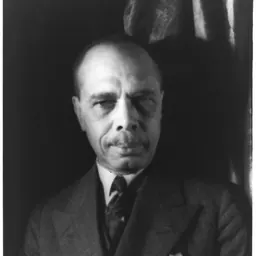

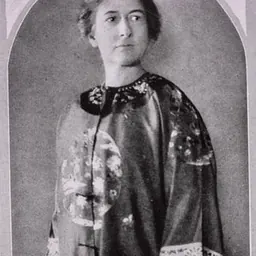
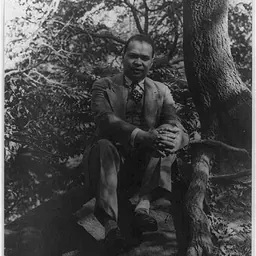


Related people
Same field, nearest in time
Contemporaries
People whose lives overlapped Fenton Johnson's



Frequently asked questions
Who was Fenton Johnson?
American poet (1888–1958)
When was Fenton Johnson born?
Fenton Johnson was born on 7 May 1888 in Chicago.
When did Fenton Johnson die?
Fenton Johnson died on 17 September 1958 in Chicago.
What was Fenton Johnson's occupation?
Fenton Johnson was a poet.
What nationality was Fenton Johnson?
Fenton Johnson was American.
Sources & further reading
· DBpedia: Fenton Johnson (poet)
Cite this page
APA: Biography.guide. (2026). Fenton Johnson. https://biography.guide/fenton-johnson/
MLA: "Fenton Johnson." Biography.guide, https://biography.guide/fenton-johnson/.
Chicago: "Fenton Johnson." Biography.guide. https://biography.guide/fenton-johnson/.
Data last updated: 2026-09-20 · Spot an error? Report a correction.
Page generated 2026-09-27 05:17 UTC