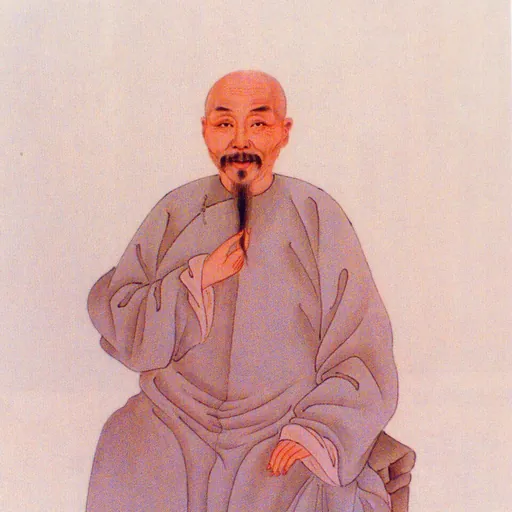
About Feng Guifen
Lived 1809 – 1874 (aged 64–65). Feng Guifen was a Chinese calligrapher, mathematician, philosopher and scholar.
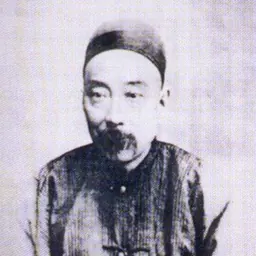
Feng Guifen (; 1809 – May 28, 1874, courtesy name Linyi , art name Jingting , later art name Dengweishanren , jinshi degree 1840) was a scholar during the Qing Dynasty. He was also a teacher, and a government official, serving as adviser to leading statesmen of his time. Feng is known for his interest in techniques by which states had become wealthy and strong, highlighting these subjects in the essay he wrote to propose reforms for the Chinese empire. He was the originator of the philosophy of the Self-Strengthening Movement undertaken in the late 19th century. After passing the imperial examination ranking the second, he started working as a compiler at the Hanlin Academy in 1840 and later became the civil service examination supervisor in Guangxi Province.
During the Taiping Rebellion, Feng organized a local militia to fight the rebels. He fled to Shanghai when the rebels occupied Suzhou. He also had an established intellectual relationship with Sun Yat-sen. Feng argued for self-strengthening and industrialization by borrowing western technology and military systems, while retaining core Neo-Confucian principles. After the disasters experienced by China following Wei Yuan's death in 1857, he proposed wide-ranging reforms in a collection of works called Jiaobinlu kangyi or Essays of Protest. In his essay, On The Manufacture of Foreign Weapons, he was famously quoted as saying: "what we have to learn from the barbarians is only the one thing - solid ships and effective guns", though in reality his proposals were a little more extensive.
The essays, which numbered 40 in total, outlined two measures. The first involved the technical improvements in the bureaucracy from the engineering initiatives in the Yellow River to fiscal reform such as the reform of the traditional salt gabelle. His ideas also became the basis for the Self-Strengthening Movement that emerged in 1861 and lasted until 1895.
Don’t just read it —
keep it.
Full-length biographies made to live with: read them, listen on the way to work, watch them tonight.
- E-book
- Audio
- Video
Instant download · yours to keep · every purchase keeps this site free
Important facts
more
Shiwujiaoshuguan, Xuansou, Huaisou, Xiaobin, Jingsou, JingtingPeople in Feng Guifen's life
Named in this biography and alive at the same time

Related people
Same field, nearest in time



Contemporaries
People whose lives overlapped Feng Guifen's




Frequently asked questions
Who was Feng Guifen?
Chinese scholar
When was Feng Guifen born?
Feng Guifen was born in 1809 in Suzhou.
When did Feng Guifen die?
Feng Guifen died on 28 May 1874.
What was Feng Guifen's occupation?
Feng Guifen was a calligrapher, mathematician, philosopher and scholar.
What nationality was Feng Guifen?
Feng Guifen was Chinese.
Sources & further reading
Cite this page
APA: Biography.guide. (2026). Feng Guifen. https://biography.guide/feng-guifen/
MLA: "Feng Guifen." Biography.guide, https://biography.guide/feng-guifen/.
Chicago: "Feng Guifen." Biography.guide. https://biography.guide/feng-guifen/.
Data last updated: 2026-09-20 · Spot an error? Report a correction.
Page generated 2026-09-27 05:09 UTC