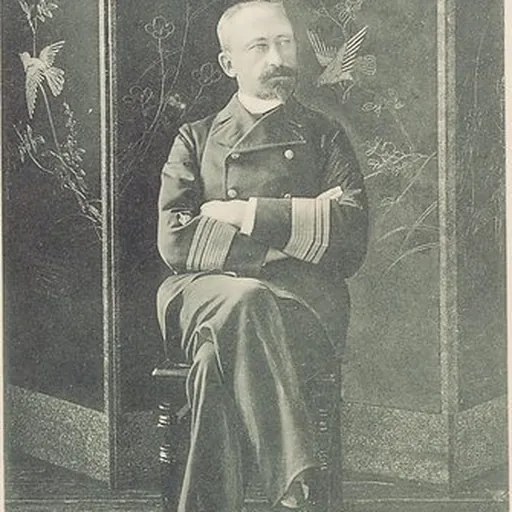
About Felix von Bendemann
Lived 1848 – 1915 (aged 67). Felix von Bendemann was a military personnel, naval officer and admiral.
Felix von Bendemann (8 August 1848 – 31 October 1915) was an Admiral of the German Imperial Navy (Kaiserliche Marine).
Early life
Bendemann was born in Dresden, Kingdom of Saxony. He was the son of the painter Eduard Julius Friedrich Bendemann (1811–1889) and Lida Schadow, who was the daughter of the sculptor Johann Gottfried Schadow. The painter Rudolf Bendemann was his brother.
Naval career Bendemann and three brothers served in the Franco-Prussian War in 1870–71. He was in the Prussian Navy as an officer on the gunboat in Key West when the war began. On 23 October the news of the outbreak of war reached the ship's captain, Eduard von Knorr. Meteor sailed for Cuba where, on 9 November they fought the only serious naval battle of the war with the French aviso Bouvet commanded by capitaine de frégate Alexandre Franquet. After an artillery exchange and an attempts by the Bouvet to ram the Meteor, both ships were incapacitated. Although the French left the scene of battle, the outcome was indecisive. As a result of this wartime conduct, he was honored with the then rarely given Iron Cross.
Bendeman was enrolled in the German Imperial Naval Academy (Marineakademie) in 1874. In his class would be three other future admirals: Otto von Diederichs, Viktor Valois and Gustav von Senden-Bibran. He then commanded the gunboat from September 1876 to April 1877.
On trainingship SMS Olga Bendemann furthered German imperialist interest in West Africa. Lieutenant-Commander (Korvettenkapitän) Bendemann commanded the screw corvette in 1884 as part of the newly formed West African-cruiser squadron (Westafrikanische Geschwader), again under Rear Admiral Eduard von Knorr, to carry out "gunboat diplomacy" in Germany's Western African area of interest, the colony of Kamerun, against a local revolt. Troops landed from Knorr's corvette and the Olga stormed the rebels and by 22 December succeeded in defeating the rebels. This led to treaties with France and Britain recognizing Cameroon as a German Colony. Afterward, a pleased Kaiser Wilhelm I awarded Bendemann the Prussian Order of the Royal Crown, 3rd Class with Swords.
He and the German navy suffered a misfortune on 16 February 1894. While Captain of the pre-dreadnought battleship taking a trial trip with forced drought the main boiler-tube burst, the explosion causing the death of over forty men.
From 14 March until 31 December 1899, he served as Chief of the Admiralty Staff (Admiralstab). In this position he expressed his concern for what he saw as Germany's hopeless situation with a weak navy and facing Britain in isolation. One solution he saw an alliance with the United States, which was already a valuable trading partner of Germany. He also favored such realpolitik actions as the violation of Danish neutrality, in case of war with Great Britain, by immediately occupying the waterways of the Danish archipelago (The Belts) to deny the Royal Navy access to the Baltic Sea and Russia.
From February 1900 until 1902, he commanded the East Asia Squadron (Ostasiengeschwader) from his flagships the protected cruiser , and then the protected cruiser . When Bendemann took command of the East Asia Squadron, he found it unprepared for the challenges presented by the Boxer Rebellion. He actually had to borrow charts from the Russians and maps from the British in order to operate in the Yellow Sea. Nevertheless, he forcefully advanced the idea of taking the Taku Forts and the ships under his command were able to make a noteworthy contribution in the Battle of Taku Forts. On 8 June 1900, he brought the large cruisers and Hertha and the small cruisers and Irene before the Taku Fort (together with warships of other nations) to land detachments of Seebataillone (marines) for the protection of their citizens in Tientsin
From 1903 through 1907, he was head of the North Sea Naval Station Marinestation der Nordsee in Wilhelmshaven. 1909—Inducted as member 390 of the Gesetzlose Gesellschaft zu Berlin. 'Mount Bendemann' and 'Bendemann Harbour' in New Guinea were named in his honor by his friend Wilhelm Knappe, who was German colonial commissioner (Reichskommissar) in the area, 1887–1910.
Don’t just read it —
keep it.
Full-length biographies made to live with: read them, listen on the way to work, watch them tonight.
- E-book
- Audio
- Video
Instant download · yours to keep · every purchase keeps this site free
Important facts
People in Felix von Bendemann's life
Named in this biography and alive at the same time
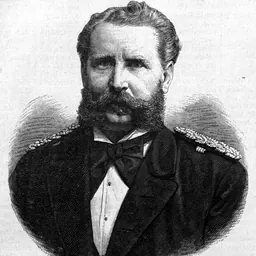





Related people
Same field, nearest in time
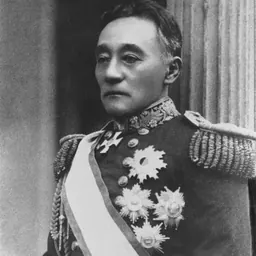
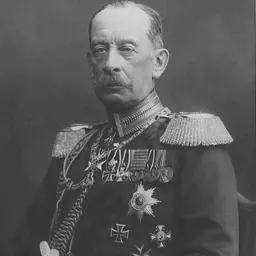


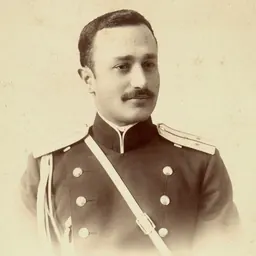
Contemporaries
People whose lives overlapped Felix von Bendemann's




Frequently asked questions
Who was Felix von Bendemann?
German admiral (1848-1915)
When was Felix von Bendemann born?
Felix von Bendemann was born on 8 August 1848 in Dresden.
When did Felix von Bendemann die?
Felix von Bendemann died on 31 October 1915 in Halensee.
What was Felix von Bendemann's occupation?
Felix von Bendemann was a military personnel, naval officer and admiral.
What nationality was Felix von Bendemann?
Felix von Bendemann's recorded nationality: German Reich.
Sources & further reading
· Wikipedia: Felix von Bendemann
· DBpedia: Felix von Bendemann
Cite this page
APA: Biography.guide. (2026). Felix von Bendemann. https://biography.guide/felix-von-bendemann/
MLA: "Felix von Bendemann." Biography.guide, https://biography.guide/felix-von-bendemann/.
Chicago: "Felix von Bendemann." Biography.guide. https://biography.guide/felix-von-bendemann/.
Data last updated: 2026-09-22 · Spot an error? Report a correction.
Portrait: Wikimedia Commons · author & licence
Page generated 2026-09-27 05:01 UTC