
About Félix Milliet
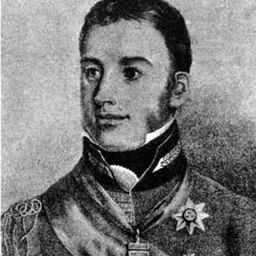
Lived 1811 – 1888 (aged 77). Félix Milliet was a French military officer, poet, chansonnier, rentier, painter and fourierist.
Félix Milliet, born on July 19, 1811, in Valence and died on October 22, 1888, in the 5th arrondissement of Paris, was a French officer and then republican activist, poet and chansonnier. He campaigned alongside his wife Louise Milliet, who was born on January 28, 1822, in Le Mans and died on July 10, 1893, in the 5th district of Paris.
An orphan from Drôme, Félix Milliet developed his republican ideas after the July Revolution in 1830. He pursued a military career, which led him to Maine, and practised the art of poetry. There he met Louise de Tucé, a teenager from a wealthy noble family. They married and moved to Le Mans.
It was in Le Mans that Félix Milliet's political career reached its peak. He rubbed shoulders with important republicans in town, such as Auguste Savardan, Marie Pape-Carpantier and Jacques François Barbier. After leaving the army, he became known for his politically committed songs, which he published in newspapers that were regularly banned by the July monarchy and then by the republican regime of Louis-Napoléon Bonaparte. He described himself as a socialist, although in practice he was very moderate, and shared the anti-clerical and Fourierist ideas of his friends. He supported the Parisian insurrection of the June days in 1848 and then stood in the legislative elections the following year among the candidates of the Montagne.
After the coup of December 2, 1851, he was implicated in an attempted insurrection in the Manche region and condemned to exile in Nice at the beginning of 1852. He took refuge in Geneva, brought his family back to him and continued his commitment. He continued to write and publish songs, until one of them, Chansonnier impérial pour l'an de grâce 1853, led to him being sentenced to exile again, this time to London.
Félix Milliet took refuge in Savoie, which was then attached to the kingdom of Sardinia. He stopped his political publications and devoted himself to painting and his family. Still a Fourierist, he considered joining the Phalansterian project of La Réunion in Texas, before the project collapsed; he saw in these small communities the possibility of a utopian "world harmony". He did not return to France until 1866, seven years after the amnesty law for politically convicted people and fourteen years after the beginning of his exile.
He spent the last twenty years of his life retired in Paris, then at La Colonie, a phalanstery located in Condé-sur-Vesgre (Seine-et-Oise). His wife Louise Milliet took an active part in the organisation of the community, but he was not very active. He died in 1888. He owes his fame in part to his son Paul Milliet, who recounts his life in a family biography published in Charles Péguy's Cahiers de la Quinzaine in 1910.
Family life
Studies and the beginning of the republican commitment Jean Joseph Félix Milliet was born in 1811 in Valence to Élisabeth Vialet and Joseph Milliet, a doctor and landowner from Cluses (Haute-Savoie) who had been living in Valence since the year IX. and a maternal uncle, an artillery colonel and director of the arms factory in Saint-Étienne, who had retired to the family property in Saint-Flour (on the banks of the Rhône and in the municipality of Guilherand-Granges
The following year, Félix Milliet went to Paris to study at the Law school. The first performance of Victor Hugo's play Hernani on February 15, 1830, made a political impression on him; he admired Hugo and was enthusiastic about his ideas. However, a republican, he took part in the July Revolution and, according to his son Paul Milliet, more particularly in the "Rambouillet expedition".
However, her social background blocked their possible union for a time. Louise de Tucé descended from a wealthy family from the provincial nobility of Maine, whereas Félix Milliet had no title of nobility and only a few modest properties. Tucé's mother, Aimée Hüe de Montaigu, did not want her daughter to be married until she was eighteen and to a wealthy, highborn man; In spite of this, she took into consideration the love that Félix Milliet had for her daughter. She then demands that he wait, and that he acquires a title of nobility on his marriage. He had the possibility of doing this by adding the name of his property in Saint-Flour to his own. He refused because of his political convictions. he was twenty-seven years old, she was seventeen.
When he married, Félix Milliet was in garrison at Vendôme and a second lieutenant in the 8th Lancers. the writer Louis Clément Silly, the Phalanstrian couple Trahan, the republican Édouard Prudhomme de La Boussinière, director of a workers' reading circle, Julien Chassevant, a fervent follower of Charles Fourier, and Dr. Jacques François Barbier. With the families of the latter two, the Milliets met regularly at picnics where they developed their republican and Fourierist but they withdrew to leave the seat to Ledru-Rollin.
Félix Milliet was particularly active as a songwriter. He had his collections published in Le Mans, where they were successful. a weekly newspaper published from 1849 to 1850 and regularly seized, co-founded by Édouard Prudhomme de La Boussinière and Jean Silly, and edited by Napoléon Gallois. back alt=Scan of Béranger's short handwritten letter to Félix Milliet. It is dated and stamped April 18, 1849. A gratitude letter from Pierre-Jean de Béranger to Félix Milliet on 18 April.
In the preface to a collection published in 1850 by Propagande Démocratique et Sociale, in which Félix Milliet included the letter Béranger had sent him, Napoléon Gallois described his friend's songs as an expression of "hatred of tyranny, pity for those who suffer, aspiration towards a more equitable organisation of society, faith in a future of peace and world harmony". dedicated to Doctor Auguste Savardan,
Félix Milliet was also elected captain of the National Guard artillery in Le Mans, which shared his opinions.
Political exile in Savoie
Direct consequences of December Two On December 2, 1851, the President of the Republic Louis-Napoléon Bonaparte, who was prevented by the constitution from renewing his mandate, proclaimed himself Prince-President in a coup. He established an authoritarian state in which the republicans suffered considerable repression. A year later, he restored the Empire and became Emperor of the French under the name of Napoleon III.
In the days following the coup, Félix Milliet was accused by the Bonapartist forces of having participated in an attempted insurrection which took place in the commune of La Suze. Three hundred workers from a tannery were armed by their boss Ariste Jacques Trouvé-Chauvel, a former republican politician. They took the town hall on 4 December, but the affair was short-lived and they surrendered on the 6th. During the following January, Félix Milliet was the target of a wanted notice published in the press and on posters, which announced : "The government has just given the order to search for and arrest wherever they are found the following persons: [...] Milliet, ex-captain of the national guard, aged 50 [...] Warrants have been issued for these nine persons, who have fled and who are accused of being authors or accomplices of the insurrection which took place in La Suze (Sarthe). His name appears alongside those of Trouvé-Chauvel and his close companions as well as Jean Silly was published anonymously politically a radical, wrote of him on 9 May 1853 that he was one of the "ultramontanes" who, according to him, were manoeuvring jointly with the Austrian Empire in order to confuse Geneva and France, that he was a "socialist [...] allied with legitimist families! captain of the hussars at 34! brother of the colonel of the 7th Lancers! friend of the count of Arnonville and the marquis Laboussière and whose furious songs were peddled by Lombards now on the run."
As soon as his name became known as the author of the collection, Félix Milliet was arrested by Abraham Louis Tourte in May 1853 to Antwerp in Belgium, where he embarked for London. Félix Milliet reached Savoy and found his family. This became known in August 1853 in Geneva; Abraham Louis Tourte wrote to Daniel-Henri Druey on 11 August: "It is certain that his children are still at the Collège de Genève. Orders have been given to arrest him if he returns to the canton".
Doctor Pollet is established with his wife in the commune of Samoëns. Alix and Paul made their first communion there on April 4, 1854. Alix went to the nuns, Fernand was a boarder at the Collège Royal de Bonneville and Paul was taught by a young vicar. died at the age of six in November 1854, carried off by an unknown illness.
Félix Milliet saw himself as a horse breeder, and settled there for eight years. Paul took art classes and Fernand joined the army in 1859, leaving without even telling his parents. That same year, a law granting amnesty to politically convicted prisoners allowed Félix Milliet to return to France.
Having sold their properties in Saint-Flour and Le Mans, provided by their daughter Alix Payen, on the other bank. They joined the Fourierist community of La Colonie, organised around a phalanstery in the forest of Rambouillet, in Seine-et-Oise, Félix Milliet kept a garden which he cultivated. and Louise Milliet had an orchard planted. Thus, when Paris was under siege during the Franco-Prussian war of 1870 and the whole family was in town, he was not there. while Paul Milliet and Henri Payen took part in the fighting. which allowed the whole Milliet family to meet again at Condé-sur-Vesgre, until they were separated again due to the siege of the French army on the insurrection of the Paris Commune. Paul Milliet and Alix Payen joined the armed ranks of the communards, the former as a member of the military engineer corps of the National Guard and the latter as an ambulance driver; Henri Payen, also a National Guard, was killed. Louise Milliet chose to stay in Paris to be with her children. They managed to maintain a regular correspondence with Félix Milliet, sharing the events they attended, their activities and their communard opinions. The mother, Louise Milliet, was the most divided, the youngest daughter the most radical. Alix Payen reports a concert where a mobile guard sings a song by Félix Milliet, Anathema to the coward criminal, written after the December 2.
Retirement alt=Torso of Félix Milliet drawn, side view. He is wearing a suit and a small hat. He has a good moustache and short hair. The Milliets managed to get out of Paris and escape the repression. Their life resumed in Condé-sur-Vesgre, in Paris, where Louise Milliet and her two daughters Alix and Louise were living, and in Geneva, where they all three regularly visited Paul, who was a refugee there. Indeed, he was sentenced in absentia to deportation. Louise Milliet took numerous steps to obtain his pardon, which was only obtained in 1879. The death of Henri Payen caused Félix Milliet to lose funds, as he had advanced him money to set up as a self-employed artisan. Julien Chassevant's daughter, Marie Chassevant, was a composer Although her parents lost most of their fortune in their misadventures, After contacting the writer Charles Péguy, he published a family biography in the latter's periodic, Cahiers de la Quinzaine, which appeared between 1910 and 1911. As an introduction, Péguy wrote his essay Notre Jeunesse, one of his major works. The biography, which ensures that the Milliet family is not forgotten, is not well received by the readership, Concerning the biographical account of Félix and Louise Milliet, the researcher Colette Cosnier notes that Paul Milliet "embellishes reality, making his father's banishment into a rocky tale that is contradicted by the file kept in the Departmental Archives of Sarthe", that his account of La Colonie remains succinct and that "his memory is very selective: the Milliets were living in Le Mans at the time when Doctor [Auguste] Savardan wanted to change the lives of the Sarthe peasants through Fourierism, yet his name never appears in this book; the failure of Reunion is barely mentioned. So many "omissions" or gaps that may be attributed to the friendship between the Milliets and [Victor] Considerant", Auguste Savardan and Victor Considerant having fallen out.
Political ideas alt=Footage of Félix Milliet, posing in costume with a cane in his hand. Félix Milliet was, throughout his life, deeply republican.
Works
Poetry
Theatre
Novel
Don’t just read it —
keep it.
Full-length biographies made to live with: read them, listen on the way to work, watch them tonight.
- E-book
- Audio
- Video
Instant download · yours to keep · every purchase keeps this site free
Important facts
People in Félix Milliet's life
Named in this biography and alive at the same time



Related people
Same field, nearest in time

Contemporaries
People whose lives overlapped Félix Milliet's






Frequently asked questions
Who was Félix Milliet?
French republican (1811-1888)
When was Félix Milliet born?
Félix Milliet was born on 19 July 1811 in Valence.
When did Félix Milliet die?
Félix Milliet died on 22 October 1888 in 5th arrondissement of Paris.
What was Félix Milliet's occupation?
Félix Milliet was a military officer, poet, chansonnier, rentier, painter and fourierist.
What nationality was Félix Milliet?
Félix Milliet was French.
Sources & further reading
Cite this page
APA: Biography.guide. (2026). Félix Milliet. https://biography.guide/felix-milliet/
MLA: "Félix Milliet." Biography.guide, https://biography.guide/felix-milliet/.
Chicago: "Félix Milliet." Biography.guide. https://biography.guide/felix-milliet/.
Data last updated: 2026-09-20 · Spot an error? Report a correction.
Page generated 2026-09-27 05:21 UTC