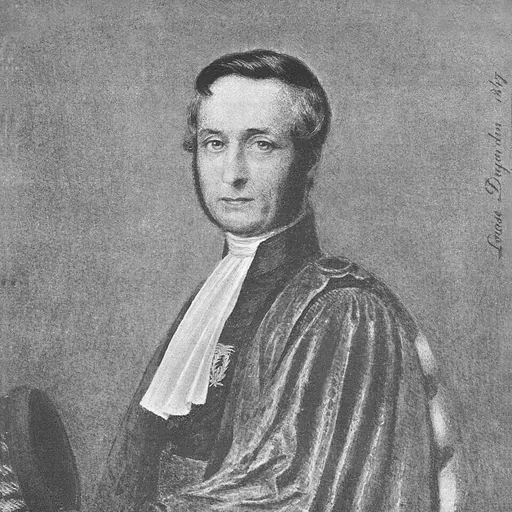
About Félix Dujardin
Lived 1801 – 1860 (aged 59). Félix Dujardin was a French biologist, zoologist, botanist and parasitologist, known for Helminths and Protozoans.
Félix Dujardin (5 April 1801 – 8 April 1860) was a French biologist born in Tours. He is remembered for his research on protozoans and other invertebrates.
Biography
In 1840 Dujardin was appointed professor of geology and mineralogy at the University of Toulouse, and during the following year was a professor of zoology and botany at Rennes. In regard to his educational background, Dujardin was largely self-taught, the son of a watchmaker.
Dujardin worked with microscopic animal life, and in 1834 proposed that a new group of one-celled organisms be called Rhizopoda. He denied naturalist Christian Gottfried Ehrenberg's theory that microscopic organisms were "complete organisms" similar to higher animals, specifically noting that they had specialized structures unique to single-celled organisms, which meant that the foraminiferan he was studying was not, as his contemporaries believed it to be, a mollusc. In addition to his studies of microscopic life, he did extensive research on invertebrate groups that included echinoderms, hexapods, helminths and cnidarians.
In the Foraminifera, he noticed an apparently formless life substance that he named "sarcode", later renamed protoplasm by Hugo von Mohl (1805–1872).
Dujardin remains famous for the naming, identification and the first description in 1850 of the mushroom bodies (corpora pedunculata) in the hymenopteran brain (bee, bumblebee, sphex, ant, fruitfly Drosophila melanogaster, etc.), which he postulated for the first time were the site of intelligence - he wrote that bees have "memories of places and things". This major discovery proved to be significant, as these structures are now considered the place where memory and many other behaviors are formed and processed in invertebrates. He suggested that one sign of honey bees' intelligence was their communication about flower locations, seventy-seven years before Karl von Frisch's 'waggle dance' theory was published. In addition, he valued the importance of brain-to-body-mass ratio and the relative sizes of brain parts to the whole instead of comparing absolute sizes, over a century before it became current thinking.
Honours and distinctions
In 1840, Louis Michel François Doyère named the tardigrade Macrobiotus dujardini in his honour.
Don’t just read it —
keep it.
Full-length biographies made to live with: read them, listen on the way to work, watch them tonight.
- E-book
- Audio
- Video
Instant download · yours to keep · every purchase keeps this site free
Important facts
People in Félix Dujardin's life
Named in this biography and alive at the same time


Related people
Same field, nearest in time

Contemporaries
People whose lives overlapped Félix Dujardin's






Frequently asked questions
Who was Félix Dujardin?
French biologist (1801–1860)
When was Félix Dujardin born?
Félix Dujardin was born on 5 April 1801 in Tours.
When did Félix Dujardin die?
Félix Dujardin died on 8 April 1860 in Rennes.
What was Félix Dujardin's occupation?
Félix Dujardin was a biologist, zoologist, botanist and parasitologist.
What was Félix Dujardin known for?
Félix Dujardin was known for Helminths and Protozoans.
What nationality was Félix Dujardin?
Félix Dujardin was French.
Sources & further reading
Cite this page
APA: Biography.guide. (2026). Félix Dujardin. https://biography.guide/felix-dujardin/
MLA: "Félix Dujardin." Biography.guide, https://biography.guide/felix-dujardin/.
Chicago: "Félix Dujardin." Biography.guide. https://biography.guide/felix-dujardin/.
Data last updated: 2026-09-21 · Spot an error? Report a correction.
Portrait: Wikimedia Commons · author & licence
Page generated 2026-09-27 05:00 UTC