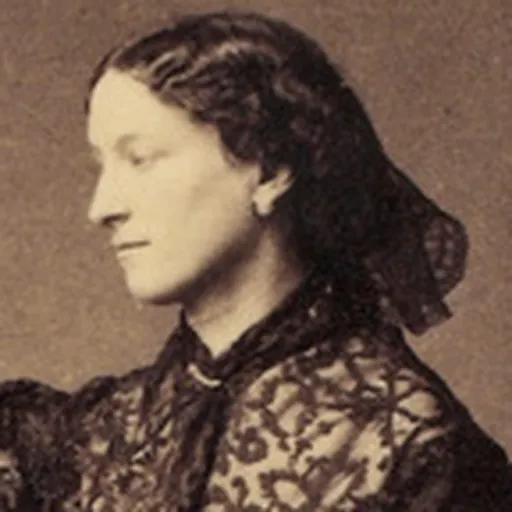
About Jeanne Villepreux-Power
Lived 1794 – 1871 (aged 76). Jeanne Villepreux-Power was a French biologist, zoologist, marine biologist, naturalist, dressmaker and researcher.
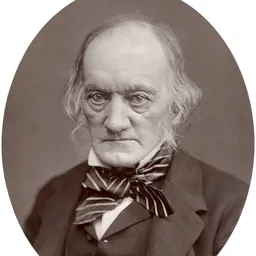
Jeanne Villepreux-Power, born Jeanne Villepreux (24 September 1794 – 25 January 1871), was a pioneering French marine biologist. Her research was presented to the Zoological Society of London on her behalf by Sir Richard Owen.
In 1832 she was the first person to invent and create aquaria for experimenting with aquatic organisms. The systematic application of the aquarium to study marine life which she created is still used today. As a leading researcher on cephalopods, she proved that the Argonauta argo produces its own shells, as opposed to acquiring them. Villepreux-Power was also a noted dressmaker, author and conservationist, as well as the first female member of the Accademia Gioenia di Catania in 1832. the eldest child of a shoemaker and a seamstress. Her family had to live on a strict budget and her mother died when she was eleven years old.
Moving to Paris At the age of 18, in 1812, she walked to Paris to become a dressmaker, a distance of over . The relative who was designated as her travel guardian assaulted her on the way and took her identity documents with him. She had to seek refuge in an Orleans police station until she could receive new travel documents. She became fairly well known and in 1816, created the wedding gown of Princess Caroline for her marriage to Charles-Ferdinand de Bourbon.
Foray into science It was after moving to Sicily that Villepreux-Power took an interest in continuing her education. She began to study geology, archeology, and natural history; in particular she made physical observations and experiments on marine and terrestrial animals. She created an inventory of the island's ecosystem While land animals could be observed somewhat easily, marine life was distinctly harder to examine. As such, she worked to develop a glass enclosure, ultimately developing three working models to study live marine life in and out of the water. The first was the aquarium as we know it today; the second glass surrounded by a case that was submerged in the ocean; the third an anchored cage also to be submerged in the ocean for larger marine life like mollusks. thumb
In 1834, a professor, Carmelo Maravigna, wrote in the Giornale Letterario dell’Accademia Gioenia di Catania that Villepreux-Power should be credited with the invention of the aquarium and systematic application of it to the study of marine life. She created three types of aquarium: a glass aquarium for her study, a submersible glass one in a cage, and a cage for larger molluscs that would anchor at sea. Her first book was published in 1839 describing her experiments, called . She also studied molluscs and their fossils; in particular she favoured Argonauta argo. At the time, there was uncertainty over whether the Argonaut species produced its own shell, or acquired that of a different organism (similar to hermit crabs). Villepreux-Power's work showed that they do indeed produce their own shells. The innovation she came up with addressed a key problem at the time, the inability to see underwater. Her solution, the first-ever glass aquarium, was a transformational innovation that changed the way marine biological research was conducted. Before it was created, studying marine species presented several difficulties for biologists. The development of marine biology as a scientific field was hampered by the incapacity to efficiently investigate these organisms in their native habitats. This problem was a significant pain point and was resolved by Villepreux-Power's idea, which helped scientists learn more about the biology and behavior of marine life. Jeanne Villepreux-Power created different models of the glass aquarium, one that could observe creatures in shallow waters, and a cage-like design that could be lowered to different depths, Furthering the capabilities of marine biology research. For her outstanding work in the field of Marine Biology Villepreux-Power became the first female member of the Catania Accademia, as well as many other scientific academies.
Villepreux-Power's innovation is still in use today, although it has been improved many times, the core idea lives on. There are already more than 200 marine aquariums and ocean life centers across the globe. The world is seeing an increase in the construction of aquariums, which are now enjoyable destinations for both children and adults to explore. We would not be able to examine and investigate aquatic life more easily without her innovation. The modern day style of the glass aquarium created by Villepreux-Power was developed by the British biologist Philip Gosse (1810–1888). The first public aquarium opened in London in 1853, and Gosse supplied the units displayed there. Aquaria became popular among the middle classes. Following London, the Berlin Aquarium Unter den Linden opened its doors in 1869, and the Public Aquarium of Trocadero (Paris) opened its doors in 1867.
In 2026, Villepreux was announced as one of 72 historical women in STEM whose names have been proposed to be added to the 72 men already celebrated on the Eiffel Tower. The plan was announced by the Mayor of Paris, Anne Hidalgo following the recommendations of a committee led by Isabelle Vauglin of Femmes et Sciences and Jean-François Martins, representing the operating company which runs the Eiffel Tower.
Popular culture A biographical song about Villepreux is featured on 26 Scientists Volume Two: Newton to Zeno, a 2008 album by the California band Artichoke.
Secrets of the Sea: The Story of Jeanne Power, Revolutionary Marine Scientist, a 2021 biographical picture book by Evan Griffith and illustrated by Joanie Stone, adapts the story of Villepreux-Power's discoveries and legacy into an educational children's book.
Don’t just read it —
keep it.
Full-length biographies made to live with: read them, listen on the way to work, watch them tonight.
- E-book
- Audio
- Video
Instant download · yours to keep · every purchase keeps this site free
Important facts
People in Jeanne Villepreux-Power's life
Named in this biography and alive at the same time
Related people
Same field, nearest in time



Contemporaries
People whose lives overlapped Jeanne Villepreux-Power's





Frequently asked questions
Who was Jeanne Villepreux-Power?
French biologist (1794-1871)
When was Jeanne Villepreux-Power born?
Jeanne Villepreux-Power was born on 25 September 1794 in Juillac.
When did Jeanne Villepreux-Power die?
Jeanne Villepreux-Power died on 25 January 1871 in Juillac.
What was Jeanne Villepreux-Power's occupation?
Jeanne Villepreux-Power was a biologist, zoologist, marine biologist, naturalist, dressmaker and researcher.
What nationality was Jeanne Villepreux-Power?
Jeanne Villepreux-Power was French.
Sources & further reading
· Wikipedia: Jeanne Villepreux-Power
· DBpedia: Jeanne Villepreux-Power
Cite this page
APA: Biography.guide. (2026). Jeanne Villepreux-Power. https://biography.guide/jeanne-villepreux-power/
MLA: "Jeanne Villepreux-Power." Biography.guide, https://biography.guide/jeanne-villepreux-power/.
Chicago: "Jeanne Villepreux-Power." Biography.guide. https://biography.guide/jeanne-villepreux-power/.
Data last updated: 2026-09-20 · Spot an error? Report a correction.
Portrait: Wikimedia Commons · author & licence
Page generated 2026-09-27 05:30 UTC