
Felix Aprahamian
English music critic, writer, concert promoter, publisher's adviser
About Felix Aprahamian
Lived 1914 – 2005 (aged 90). Felix Aprahamian was a British music critic, writer, keyboardist, editor and musician.
alt=elderly white man, with neat white moustache and beard and neat full head of white hear, seated, reding a letter or other document, held in his right hand. Felix Aprahamian (; 5 June 1914 – 15 January 2005), born Apraham Felix Bartev Aprahamian, was an English music critic, writer, concert organiser and publisher's adviser. He was secretary to the Organ Music Society, 1935–1970; concerts manager of the London Philharmonic Orchestra, 1940–1946; and deputy music critic of The Sunday Times, 1948–1989.
Aprahamian was particularly associated with modern French music including that of Olivier Messiaen and Francis Poulenc; among English composers he had great affinity with the music of Frederick Delius, becoming president of the Delius Society.
Life and career Early years Aprahamian was born on 5 June 1914 in Hornsey, London, the son of Avedis Aprahamian né Hovhanessian, a carpet dealer, and his wife, Araxie, Garabedian. The parents were both Armenian immigrants from Turkey. 1919, after the boy had recovered from diphtheria, the family moved to Muswell Hill, London, where Aprahamian lived for the rest of his life.
He was educated at Tollington School, Muswell Hill, where he developed a love of music, particularly organ music, so strong that it was detrimental to his schoolwork. He joked later "I failed Matriculation because I discovered music".
In 1935 Aprahamian was made secretary of the Organ Music Society, and the same year his first article for The Musical Times – "Eugène Goossens in London" – was published. He first corresponded with Olivier Messiaen in 1936 and in 1938 he organised the first complete performance in Britain of Messiaen's hour-long "meditations", La Nativité du Seigneur ("The Birth of Our Lord"), played by the composer on the organ of St Alban's, Holborn. They formed a friendship that lasted until the composer's death in 1992. Aprahamian's first meeting with Francis Poulenc was well before the start of the Second World War; asked to sign a photograph for Aprahamian's collection, Poulenc wrote, ("Who is this monster?"). The two men became good friends and would stay at each other's homes when making cross-Channel visits.
Second World War and post-war During the war Aprahamian was concert director of the London Philharmonic Orchestra. His work with the orchestra led to an association with Sir Thomas Beecham, who was known as the leading champion of the music of Frederick Delius. Beecham responded to Aprahamian's knowledge of Delius and of the French repertoire and Aprahamian frequently acted on his behalf. Aprahamian's knowledge and love of French music led him to become in 1942 the organiser of the for the Free French in London. He worked with Tony Mayer, cultural attaché to the French Embassy, which gave him access to all the leading French performers and composers of the day. The concerts – more than a hundred in all – were mainly given at the Wigmore Hall in London. Among the artists whom he successfully invited to appear at these concerts were Benjamin Britten, Reginald Goodall, Peter Pears, Maggie Teyte and Michael Tippett; after the liberation of Paris in 1944 many French musicians also performed in the series, including – as well as Poulenc and Messiaen – Pierre Bernac, Henri Dutilleux, Pierre Fournier, Maurice Gendron, Yvonne Loriod, Ginette Neveu, Gérard Souzay and Jacques Thibaud.
From 1946 to 1984 Aprahamian was employed by United Music Publishers – the principal agent for French music in Britain – as a consultant and, with Mayer, he played a central role in bringing French music to post-war British audiences. Aprahamian wrote what Foreman describes as "erudite and well-judged record reviews", writing for The Gramophone from 1964 to 1975. Foreman adds that Aprahamian's "innumerable programme notes" set new standards for literacy and elegance.
Honours In 1994 Aprahamian was made an honorary member of the Royal Philharmonic Society, the first music critic to receive that accolade. In 1996 he became an officier of the French order of Arts and Letters, and was awarded an honorary doctorate by City University in 1995.
Don’t just read it —
keep it.
Full-length biographies made to live with: read them, listen on the way to work, watch them tonight.
- E-book
- Audio
- Video
Instant download · yours to keep · every purchase keeps this site free
Important facts
People in Felix Aprahamian's life
Named in this biography and alive at the same time


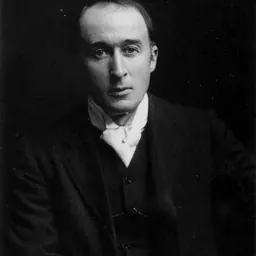


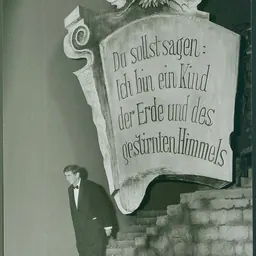
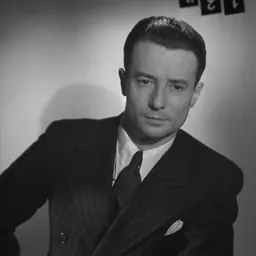

Related people
Same field, nearest in time

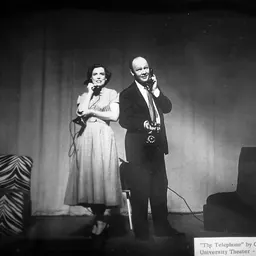


Contemporaries
People whose lives overlapped Felix Aprahamian's


Frequently asked questions
Who was Felix Aprahamian?
English music critic, writer, concert promoter, publisher's adviser (1914–2005)
When was Felix Aprahamian born?
Felix Aprahamian was born on 5 June 1914 in London.
When did Felix Aprahamian die?
Felix Aprahamian died on 15 January 2005 in London.
What was Felix Aprahamian's occupation?
Felix Aprahamian was a music critic, writer, keyboardist, editor and musician.
What nationality was Felix Aprahamian?
Felix Aprahamian was British.
Sources & further reading
Cite this page
APA: Biography.guide. (2026). Felix Aprahamian. https://biography.guide/felix-aprahamian/
MLA: "Felix Aprahamian." Biography.guide, https://biography.guide/felix-aprahamian/.
Chicago: "Felix Aprahamian." Biography.guide. https://biography.guide/felix-aprahamian/.
Data last updated: 2026-09-20 · Spot an error? Report a correction.
Page generated 2026-09-27 05:00 UTC