
About Felipe Arrese Beitia
Lived 1841 – 1906 (aged 64). Felipe Arrese Beitia was a Spanish poet, writer and sculptor.
Felipe Arrese Beitia (1841 – 1906), born in Otxandio, was a Spanish poet, writer and sculptor, from Biscay. He wrote elegies about the perceived imminent demise of the Basque language. He also studied painting in the city of Vitoria.
Career Arrese was not well-educated, but was very religious. After beginning his education in Otxandio at the age of seven, he left school at thirteen to help his father in the workshop. There he would continue with his passion for sculpture, a passion he had had from an early age, sculpting crosses. Three years later, he travelled to Vitoria to learn the trade, under the guidance of sculptor Marcos Ordozgoiti Murua. He balanced his day job in the workshop with his study of drawing at night. As a hardworking student, Arrese came top of his year, although this and the teacher's preference for him provoked hostility from some classmates, prompting him to return to Otxandio at eighteen years old to open his own workshop. His experiences in Vitoria are mentioned in the poem Bitoria'ko Uria.
Given his aptitude for drawing and sculpture, the Vizcaya Regional Council offered him a scholarship to study in Rome, which he declined owing to the incompatibility of his faith and morals with such a residency. From 1865 he carried out his work as a sculptor of religious objects in various Basque towns, such as Oñati, Vitoria, San Sebastián, Aramaio, Abadiño, Arantzazu, Urkiola, and Iurreta, among others, though few of his works have survived into the 21st century. In this period, in 1874, he published a manual of Biscayan grammar and vocabulary: Diccionario y Manual Bascongado y Castellano y Elementos de Gramática. At this time, he met José Manterola, founder and editor of the magazine Euskal-Erria, in which his poems were published, some translated into Spanish. Arrese dedicated several poems to Manterola, as a reflection of their friendship, such as "Nere erriko ujola", and after Manterola's death, "Nire adiskide laztan", "Manterolaren eriotzea" and "Euskal festa onen asmatzalle eta gidari On Jose Manterola zanari koroitzea". He also maintained friendly relationships with Arturo Campión, José Manterola, Antonio Arzak (Manterola's successor as editor of Euskal-Erria), and with López Alen (Arzak's successor). He sent his poems to Resurrección María de Azkue for publication in the magazine Euskalzale. The two men discussed philology and language, and Azkue took Arrese's opinions into consideration when writing; he mentioned him among the Biscayan collaborators in the introduction to the Diccionario Vasco-Español-Francés. Arrese also maintained epistolary relationships with Sabino Arana, Ramón de la Sota, Juan Carlos Guerra Menéndez Pelayo and Emilia Pardo Bazán.
In his old age, a heart condition made him abandon his sculpting trade, and he survived his final years with the financial aid of a group of wealthy Basque nationalists.
Work According to Mikel Aizpuru Murua, "his work, in addition to being full of Biblical reminiscences and the familiar themes of the fueros, traditional values and love for the earth, stands out for two reasons: first, the radical, agonising confrontation between disappearing traditional Basque society and external forces, be they Castile or Spain; and second, the emphasis placed on the Basque language, the symbol and bastion of Vasconia, inseparable from the issue of regionality."
Awards and recognition
1879, Prize in the "Juegos Florales de Elizondo" for his composition Ama Euskeriari azken agurrak. 1881, Prize in the "Juegos Florales de Irún" for his composition Jaungoikoa eta fueroak y por Danok Bat.
Don’t just read it —
keep it.
Full-length biographies made to live with: read them, listen on the way to work, watch them tonight.
- E-book
- Audio
- Video
Instant download · yours to keep · every purchase keeps this site free
Important facts
People in Felipe Arrese Beitia's life
Named in this biography and alive at the same time
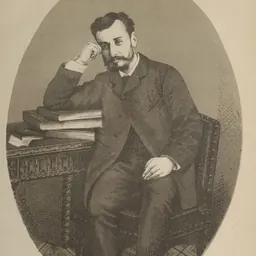

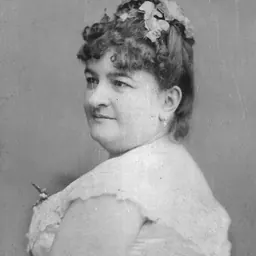
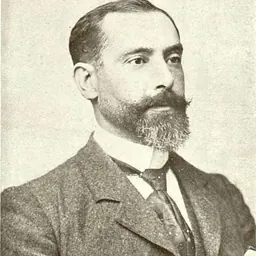
Related people
Same field, nearest in time
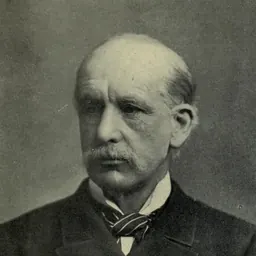

Contemporaries
People whose lives overlapped Felipe Arrese Beitia's

Frequently asked questions
Who was Felipe Arrese Beitia?
Basque writer (1841–1906)
When was Felipe Arrese Beitia born?
Felipe Arrese Beitia was born on 25 May 1841 in Otxandio.
When did Felipe Arrese Beitia die?
Felipe Arrese Beitia died on 16 January 1906 in Otxandio.
What was Felipe Arrese Beitia's occupation?
Felipe Arrese Beitia was a poet, writer and sculptor.
What nationality was Felipe Arrese Beitia?
Felipe Arrese Beitia was Spanish.
Sources & further reading
· Wikipedia: Felipe Arrese Beitia
· DBpedia: Felipe Arrese Beitia
Cite this page
APA: Biography.guide. (2026). Felipe Arrese Beitia. https://biography.guide/felipe-arrese-beitia/
MLA: "Felipe Arrese Beitia." Biography.guide, https://biography.guide/felipe-arrese-beitia/.
Chicago: "Felipe Arrese Beitia." Biography.guide. https://biography.guide/felipe-arrese-beitia/.
Data last updated: 2026-09-20 · Spot an error? Report a correction.
Page generated 2026-09-27 05:26 UTC