
About Félicie de Fauveau
Lived 1801 – 1886 (aged 85). Félicie de Fauveau was a French sculptor and painter.
Félicie de Fauveau (1801, in Livorno – 1886, in Florence) was a nineteenth-century French sculptor who was a precursor of the pre-Raphaelite style. She worked in a variety of techniques and mediums, including marble, stone, glass and bronze.
Early life
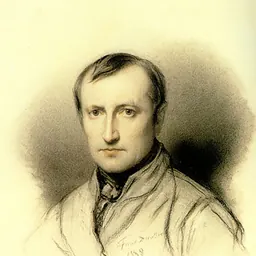
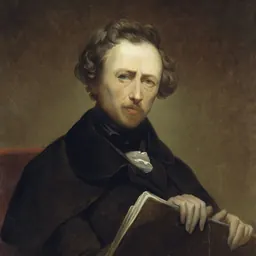
Born in Tuscany in 1801, De Fauveau moved to France at the peak of the Restoration, after having spent her childhood in Florence. In Paris, she studied painting and sculpture and cultivated an interest in archeology and ancient symbolism, establishing a studio in Paris from 1826 to 1830, at 18 Rue de la Rochefoucauld, which was frequented by artists such as Paul Delaroche and Ary Scheffer.
Artistic debut
After her participation at the Paris Salon in 1827, De Fauveau received ample acclaim. Stendhal called her the ‘new Canova’. One of the statues she presented at the event, Queen Christine of Sweden Refusing to Spare the Life of Her Equerry Monaldeschi, was awarded the gold medal, which the artist received from King Charles X, who looked to De Fauveau to promote the ideals of the Restoration. Her award-winning statue would also inspire Alexandre Dumas’s play Christine. In Paris, she subsequently received multiple commissions including bronze doors destined for the Louvre, a project that failed to reach fulfilment.
Friends and commissioners
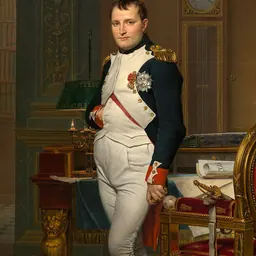
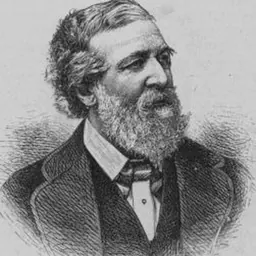
During her time in Florence, De Fauveau cultivated many friendships with artistic and literary personalities. She was welcomed to the Grand Duchy by neoclassic Florentine sculptor Lorenzo Bartolini, who is thought to have trained her. She established a studio on Via degli Serragli, which became a point of interest for international travelers on the Grand Tour. Her admirers included Italian opera singer Angelica Catalani and Elizabeth and Robert Browning, who had also made their home in Florence. De Fauveau's works were coveted by the city's Russian ex-pats including Anatoly Nikolaievich Demidov, 1st Prince of San Donato; the artist received multiple commissions from the industrialist and enjoyed the friendship of his wife Princess Mathilde Bonaparte, niece of Napoleon. The Tsar Nicolas I purchased various works from the artist and his daughter Maria Nikolaieva was given a dagger, now at the Louvre, whose handle is engraved with scenes from Shakespeare's Romeo and Juliet. Her Florentine masterworks include her sculptural tribute to West-Indian poet Louise de Favreau in the loggia of the Basilica of Santa Croce, which, according to De Fauveau scholar Silvia Mascalchi, was inspired by a poem the girl had written before her death at age seventeen. The artist's base-relief of Florence behind the figure of de Favreau is an example of her technique. During the restoration of De Fauveau's monument in Santa Maria del Carmine, restorers replaced Anne de la Pierre's chin, damaged during the Nazi invasion of Florence in 1943.
Documentary
De Fauveau's life and works are featured in the original documentary in English and Italian A French Sculptress During the Grand Tour, produced by AWA and Art Media Studio. This bi-lingual documentary spotlights the artist's Florentine years and features the restoration of her Florentine masterworks Sepulcher for Louise de Favreau and Monument to Anne de la Pierre.
Don’t just read it —
keep it.
Full-length biographies made to live with: read them, listen on the way to work, watch them tonight.
- E-book
- Audio
- Video
Instant download · yours to keep · every purchase keeps this site free
Important facts
People in Félicie de Fauveau's life
Named in this biography and alive at the same time



Related people
Same field, nearest in time



Contemporaries
People whose lives overlapped Félicie de Fauveau's





Frequently asked questions
Who was Félicie de Fauveau?
French artist (1801–1886)
When was Félicie de Fauveau born?
Félicie de Fauveau was born on 24 January 1801 in Livorno.
When did Félicie de Fauveau die?
Félicie de Fauveau died on 12 December 1886 in Florence.
What was Félicie de Fauveau's occupation?
Félicie de Fauveau was a sculptor and painter.
What nationality was Félicie de Fauveau?
Félicie de Fauveau was French.
Sources & further reading
· Wikipedia: Félicie de Fauveau
Cite this page
APA: Biography.guide. (2026). Félicie de Fauveau. https://biography.guide/felicie-de-fauveau/
MLA: "Félicie de Fauveau." Biography.guide, https://biography.guide/felicie-de-fauveau/.
Chicago: "Félicie de Fauveau." Biography.guide. https://biography.guide/felicie-de-fauveau/.
Data last updated: 2026-09-25 · Spot an error? Report a correction.
Page generated 2026-09-27 05:09 UTC