
About Fejat Sejdić
Lived 1941 – 2017 (aged 76). Fejat Sejdić was a Serbian trumpeter and bandleader.
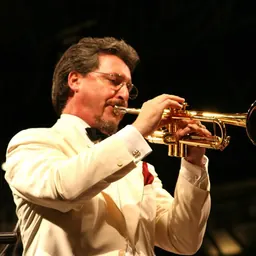
Fejat Sejdić (20 January 1941 – 22 August 2017) was a Serbian Romani trumpeter and Balkan brass band leader from Bojnik, in south Serbia. Coming from a family of trumpeters and performing since he was a child, his band was the most successful orchestra at the Guča Trumpet Festival, the largest trumpet festival in the world, while he was named "The master of Guča for all times" and the "King of Trumpet". Though he performed all over the world playing for the world dignitaries and celebrities, and collaborated with musicians like the Gipsy Kings and Goran Bregović, he never learned to read the notes and only played by ear.
Early life
Sejdić was born on 20 January 1941 in Bojnik, in south Serbia. His father Kadrija (d. 1955),
Rustem was a trumpeter in the 2nd Infantry Division of the Royal Serbian Army, the famed "Iron regiment", during the World War I. On 12 September 1916 the Battle of Kaymakchalan, for the Kajmakčalan mountain between the Serbs and the Bulgarian "Rila Division" began. From 26 to 30 September, the top of the mountain changed hands several times, but Bulgarian had an upper hand and it seemed the Serbs will have to withdraw. Out of the blue, the Serbian charge was played by Rustem and Serbian army attacked the surprised Bulgarians who backed off, allowing the Serbs to conquer the mountain and end the battle on 30 September. Commander Dimitrije Milić, who didn't give the charge order, summoned Rustem to be court-martialed for disobedience but instead, after Rustem told him "I had to do it, whether you shot me or not", he awarded him a medal. Inspecting the battlefield later, Milić discovered a barrel of rum, but it is not known whether Rustem knew that the Bulgarian soldiers were drunk. In 1917, the news of horrible Bulgarian reprisals after the Toplica Uprising (over 20.000 dead) in occupied southern Serbia, reached the Serbian army Salonika front. Many soldiers originated from the region, including Rustem. He sneaked to the closest Bulgarian position, listened and memorized their trumpet sounds. Days later, with two soldiers, he crawled to the Bulgarian position during the night and while the soldiers threw grenades, he played the Serbian charge. Awaken, Serbian army run forward on an unplanned charge. Rustem then sneaked back and played Bulgarian retreat. Confused, Bulgarian army withdrew and Serb took the position. Tomorrow, Rustem was awarded medals from both prince-regent Alexander and the French general Louis Franchet d'Espèrey. Among his medals were the Order of Karađorđe's Star and the Albanian Commemorative Medal.
Fejat's father Kadrija didn't teach him to play. He had only one trumpet, which was the family's main source of income. Fejat tried to play the trumpet for the first time when he was 3 years old. He listened to his father and learned by ear, while practicing on his father's trumpet when he would leave the house. Though still a child, by the age of 10 he could play like an adult and when he father noticed that, he took him into his band, but when he turned 14 and his father died, Fejat founded his own orchestra.
quote=The trumpet asks for your soul, it won't work without the soul. What do you need the notes for, if you have no soul?
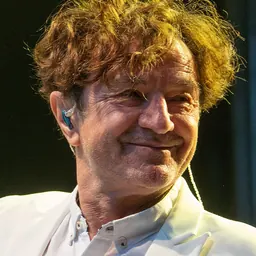
He performed with the Gipsy Kings on their European tour and collaborated with Goran Bregović on the soundtrack for the Time of the Gypsies in 1989. He also worked with numerous Serbian singers, including Predrag Živković Tozovac, Snežana Babić Sneki and Ceca Ražnatović.
His discography consists of some 60 singles, LP's and CD's. It was one of the songs performed at this funeral.
Awards
Among his Guča awards, he won a record six "Best Orchestra" awards (1976, 1983, 1985, 1987, 1991, 1994), one "Best Trumpet" award (1981) and one "Golden Trumpet" award (1982). Seventh highest award, "Best Orchestra", was won by his orchestra in 2004, when his grandson Nebojša already took over.
He received numerous other awards, domestic and foreign. In 1987 the Presidency of Yugoslavia awarded him with the Order of Labor with Silver Wreath.
Legacy
He set the new, high standards in the brass music. The sound of his trumpet was quite distinctive ("20 orchestras can play at the same time, and you will always know where is Fejat playing, like you can recognize the voice of a singer") Suzana married into the family of Bakija Bakić from Vranje, another famous trumpeter. Sejdić died on 22 August 2017 in his hometown, Bojnik.
Don’t just read it —
keep it.
Full-length biographies made to live with: read them, listen on the way to work, watch them tonight.
- E-book
- Audio
- Video
Instant download · yours to keep · every purchase keeps this site free
Important facts
People in Fejat Sejdić's life
Named in this biography and alive at the same time

Related people
Same field, nearest in time


Contemporaries
People whose lives overlapped Fejat Sejdić's


Frequently asked questions
Who was Fejat Sejdić?
Serbian trumpeter (1941–2017)
When was Fejat Sejdić born?
Fejat Sejdić was born on 20 January 1941 in Dragovac.
When did Fejat Sejdić die?
Fejat Sejdić died on 22 August 2017 in Bojnik.
What was Fejat Sejdić's occupation?
Fejat Sejdić was a trumpeter and bandleader.
What nationality was Fejat Sejdić?
Fejat Sejdić was Serbian.
Sources & further reading
Cite this page
APA: Biography.guide. (2026). Fejat Sejdić. https://biography.guide/fejat-sejdic/
MLA: "Fejat Sejdić." Biography.guide, https://biography.guide/fejat-sejdic/.
Chicago: "Fejat Sejdić." Biography.guide. https://biography.guide/fejat-sejdic/.
Data last updated: 2026-09-20 · Spot an error? Report a correction.
Page generated 2026-09-27 05:31 UTC