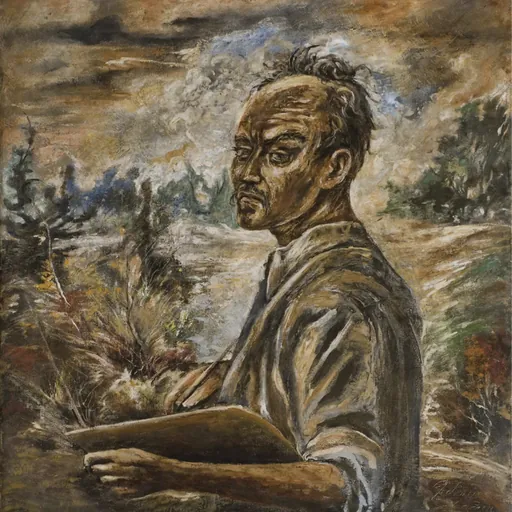
About Federico Cantú Garza
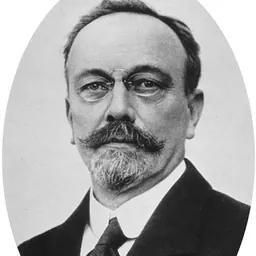
Lived 1907 – 1989 (aged 81). Federico Cantú Garza was a Mexican painter, sculptor, muralist, engraver, printmaker and graphic artist.
Federico Heraclio Cantú Garza (March 3, 1907 – January 29, 1989) was a Mexican painter, engraver and sculptor. While considered to be a member of the Mexican muralism movement, his style was noticeably different, mostly for adhering to older and more academic forms of painting and sculpture. He had his most success exhibiting in the United States and Europe, but he did murals and sculptures in Mexico. His best known work is a sculpture called La maternidad which was adapted as the logo of the Instituto Mexicano de Seguro Social (IMSS).
Life
Cantú was born to María Luiza Garza, a novelist, and Adolfo Cantú, a journalist who opposed the Porfirio Díaz regime. He was born shortly before the Mexican Revolution and spent his childhood split between Nuevo León and San Antonio, Texas, with the family moving back permanently to Mexico in the 1920s. He was born on March 3, 1907, in Monterrey, but later in life, he changed his birth year to 1908 and his birthplace to Cadereyta Jiménez, where his family was originally from.
In 1922, at age 14, Cantú entered the Escuela de Pintura al Aire Libre, which was directed by Alfredo Ramos Martínez. However, during his time there, he created over two chests of drawings made at Le Grande Chaumière. These chests were lost.
In 1929, he married his first wife, Luz Fabila Montes de Oca.
He died on January 29, 1989. His remains are at the foot of his mural Dios Padre y crucifixion (1959) at the chapel of the Universidad Intercontinental in Tlalpan. His first exhibition in Mexico was in 1933 at the Salón de Arte of the Secretaría de Educación Pública. While living in New York, he took part in several collective shows. Instituto Mexicano de Seguro Social. His best known sculpture from this relationship is La maternidad, which is used as the symbol of IMSS. Luis Cardoza y Aragón, Antonin Artaud and Alí Chumacero. the former monastery of San Diego, the Pinacoteca Virreinal, the Charles Morgan Gallery in New York and Vatican City. He has been featured in a number of monographic publications and his work has been covered in books such as Cien años a través de cien artistas of the Museo de Arte Contemporáneo de Monterrey (2000) and Arte Nuestro of the Museo Metropolitano de Monterrey (2005). While alive, he had a retrospective at the Palacio de Bellas Artes in 1970, and was one of the few to receive homage at the same institution while alive in 1986.
After his death his work has still been sold and exhibited. In 2005, his painting Mujer Desnuda sold for 19,000 USD at Sotheby's. In 2007, the Universidad Autónoma del Estado de México held a large exhibition of his work for the 100th anniversary of his birth.
Artistry Cantú created watercolors, oils, drawings, inks, prints, monotypes, sculptures and murals. He was admired for the quality of his drawings, which incorporated the people and landscapes of Mexico into his historical and religious works.
In Europe, he was exposed to the avant garde movements of the time and in Mexico, the dominant form of Mexican muralism. However, Cantú's style was classical and academic, often combining classic myth with modern symbolism. This was true even of his mural work, and he was the only major painter at the time doing religious themes. This put him at the margins of his Mexican muralist contemporaries. He expressed his dissatisfaction with this situation: "Is it fair to discount me as a Mexican, just because my paints do not drip mole or sweat pulque?" However, he has come to be known as "El gran olvidado" (the great forgotten one).
He was an avid reader, with literature being a major influence on his work. He was especially fond of 15th-century French poet François Villon, but also read much of the work of Alfonso Reyes, Renato Leduc, Efraín Huerta, Jean Nicolas, Arthur Rimbaud, Paul Valéry, Lord Byron, Goethe, André Malraux, Antonin Artaud, and Paul Éluard.
Don’t just read it —
keep it.
Full-length biographies made to live with: read them, listen on the way to work, watch them tonight.
- E-book
- Audio
- Video
Instant download · yours to keep · every purchase keeps this site free
Important facts
People in Federico Cantú Garza's life
Named in this biography and alive at the same time

Related people
Same field, nearest in time
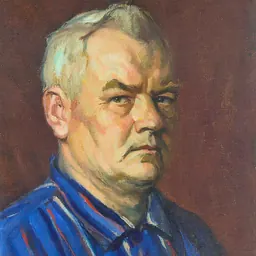
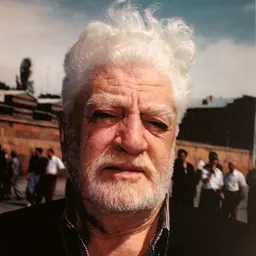

Contemporaries
People whose lives overlapped Federico Cantú Garza's

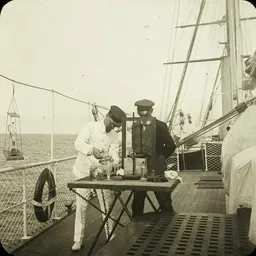
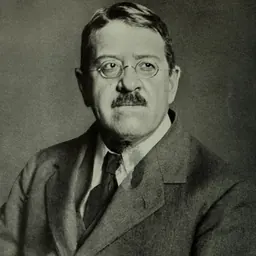


Frequently asked questions
Who was Federico Cantú Garza?
painter, etcher and sculptor Hispano-American (1907-1989)
When was Federico Cantú Garza born?
Federico Cantú Garza was born on 3 March 1907 in Nuevo León.
When did Federico Cantú Garza die?
Federico Cantú Garza died on 29 January 1989 in Mexico City.
What was Federico Cantú Garza's occupation?
Federico Cantú Garza was a painter, sculptor, muralist, engraver, printmaker and graphic artist.
What nationality was Federico Cantú Garza?
Federico Cantú Garza was Mexican.
Sources & further reading
· Wikipedia: Federico Cantú Garza
· DBpedia: Federico Cantú Garza
Cite this page
APA: Biography.guide. (2026). Federico Cantú Garza. https://biography.guide/federico-cantu-garza/
MLA: "Federico Cantú Garza." Biography.guide, https://biography.guide/federico-cantu-garza/.
Chicago: "Federico Cantú Garza." Biography.guide. https://biography.guide/federico-cantu-garza/.
Data last updated: 2026-09-23 · Spot an error? Report a correction.
Portrait: Wikimedia Commons · author & licence
Page generated 2026-09-27 05:06 UTC