
About Fay-Cooper Cole
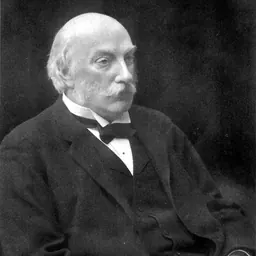
Lived 1881 – 1961 (aged 79–80). Fay-Cooper Cole was an American anthropologist.
Fay-Cooper Cole (8 August 1881 – 3 September 1961) was a professor of anthropology and founder of the anthropology department After graduating from Northwestern University in 1903, he did graduate work researching the Itneg people in the north of the then-American territory of the Philippine Islands at the University of Chicago, the University of Berlin in Germany, and Columbia University in New York, obtaining a doctorate in 1914.
Career Cole worked as the Assistant Curator of Anthropology at the Field Museum of Natural History after 1914. He led the museum’s Philippine expeditions, collecting more than 5,000 objects, traveling together with his wife, Mabel Cook Cole, with whom he co-authored The Story of Man. Their son, LaMont C. Cole, served as Professor of Zoology in the Section of Ecology and Systematics at Cornell University.
University of Chicago He was well-known for helping to establish the University of Chicago's graduate program in Anthropology (officially in 1929), as well as his broader archeological surveys in Illinois.
Archaeology – Laboratory Skeletal Collection Among his most lasting legacies at the University of Chicago, among others, are the effects of the University of Chicago's Archaeology Laboratory Skeletal Collection. From the earliest iterations of the department in the late 1890s through the 1940s, a collection of remains of both Indigenous and non-Indigenous people, bone fragments, and artifacts were compiled, studied, stored, and possibly exhibited on campus. The skeletal collection contained human remains and archaeological objects taken and collected by faculty, students, curators, and donors through excavations of Illinois burial mounds such as the Fisher Mounds, Starved Rock, Kincaid, Algeria, Globe, Arizona, among materials from private donors. The collection also contained human remains from the University's Anatomy Department and Medical School. Donations accounted for a significant portion of the collection. Skeletal remains of 400 Indigenous people, as well as 10,000 bone fragments, stone, pottery and shell implements and artifacts largely excavated from Fisher and Adler Mounds, were donated in 1930 by George Langford, an engineer from Joliet who as also an amateur anthropologist, an honorary Research Associate in the Department of Anthropology at the University of Chicago, and later Curator of Plant Fossils at Field Museum.
When Cole retired, Robert Redfield and Sol Tax intermittently served as Chair of the Department of Anthropology. The politics of the department had changed with the faculty body, and Redfield and Tax determined that the Skeletal Collection no longer served the research purposes of the department, and the storage space could be better used. They tasked a graduate student in the department to inventory and report on the collection. The remaining skeletal materials do not account for extent of the historical collection; the department's report recommended that the majority be “dumped.”
The University of Chicago Archaeology Laboratory continues to hold non-Native American human remains, while the paleoanthropology laboratory contains a large osteology collection.
Works 1912: Chinese pottery in the Philippines, Volume 12 1913: The Wild Tribes of Davao District, Mindanao. Chicago: R.F.Cummings Philippine Expedition., Anthropological Series. Publication No. 170, Vol. XII, no. 2 1933: The Long Road from Savagery to Civilization. New York and London: Century Co. 1945: The Peoples of Malaysia. New York: Van Nostrand. 1956: The Bukidnon of the Philippines. Chicago: Chicago Natural History Museum.
Don’t just read it —
keep it.
Full-length biographies made to live with: read them, listen on the way to work, watch them tonight.
- E-book
- Audio
- Video
Instant download · yours to keep · every purchase keeps this site free
Important facts
People in Fay-Cooper Cole's life
Named in this biography and alive at the same time


Related people
Same field, nearest in time

Contemporaries
People whose lives overlapped Fay-Cooper Cole's





Frequently asked questions
Who was Fay-Cooper Cole?
American anthropologist
When was Fay-Cooper Cole born?
Fay-Cooper Cole was born in 1881 in Plainwell.
When did Fay-Cooper Cole die?
Fay-Cooper Cole died in 1961 in Santa Barbara.
What was Fay-Cooper Cole's occupation?
Fay-Cooper Cole was an anthropologist.
What nationality was Fay-Cooper Cole?
Fay-Cooper Cole was American.
Sources & further reading
Cite this page
APA: Biography.guide. (2026). Fay-Cooper Cole. https://biography.guide/fay-cooper-cole/
MLA: "Fay-Cooper Cole." Biography.guide, https://biography.guide/fay-cooper-cole/.
Chicago: "Fay-Cooper Cole." Biography.guide. https://biography.guide/fay-cooper-cole/.
Data last updated: 2026-09-20 · Spot an error? Report a correction.
Page generated 2026-09-27 05:25 UTC