
Fath-Ali Khan of Quba
Khan of Quba
About Fath-Ali Khan of Quba
Lived 1736 – 1789 (aged 52–53).
Fatali Khan or Fath-Ali Khan of Quba (1736 – April 2, 1789) was a khan of the Quba Khanate (1758–1789) who also managed to dominate the Derbent, Baku, Talysh and Shirvan Khanates, as well as the Salyan Sultanate during much of his reign.
Early years Fatali was born in 1736 in Quba to Husayn Ali Khan of Quba Khanate and Peri Jahan-Bike, daughter of Ahmad Khan, Utsmi of Kaitags. He was related to other Dagestani rulers, such as Umma Khan V, who was his maternal cousin, Amir Hamza, his cousin and brother-in-law, as well as Utsmi of Kaitags, among others. According to the 19th-century military historian Isgandar bey Hajinski (1809–1878), he had no special education and "spent his youth just as sons of other khans, i.e. in idleness." He was sent to subjugate Salyan Sultanate in 1755 or 1756 by his father, a mission he accomplished successfully.
His father died in 1758 at the age of 49, leaving the throne to his young son.
Reign Just seven days after his father's death, the brother of Aghasi Khan of Shirvan, Agharazi beg, invaded the Barmak Mahal of Quba and carried off 200 families. In response, Fatali Khan set out to Shirvan and captured about 400 families and settled them onto his possessions, killing Agharazi in a battle near Old Shamakhi. In one of the documents of period it was written that: “…Fatali Khan gave New Shamakhi to Huseyn Khan, but took himself the older one". Beginning from 1768, in official Russian documents and titular appeals, Fatali was named "high-degree and highly respected Khan of Derbent, Quba and Shamakhi".
Manaf Zarnavai, a naib of the Muhammad Huseyn (and son of former Hajji Mohammad Ali Khan) in New Shamakhi conspired to seize Fatali's lands by force, but Fatali's informants forewarned him, leading him to raise an army of 15,000 and invade the rest of the khanate on 17 August 1768, arresting Manaf himself. The Shaki armies were crushed by the Quba and Gazikumukh alliance on 20 September 1768, Shirvan was fully annexed to the Quba Khanate. A peace agreement was signed in July 1769.
According to Stepan Sharipin and Egor Zamyatin, Russian merchants from Astrakhan, "Huseyn khan wanted to possess all seized lands in Shamakhi and then to be its ruler, but no one can repudiate Fatali Khan from it."
Meanwhile, the blinded ex-ruler of Shamakhi, Aghasi Khan, escaped and urged Shaki to attack Fatali to retake Shirvan. This alliance was joined by Muhammad IV, Nutsal of Avars. He sent an armed detachment under his sons Bulach and Muhammad Mirza. The warring parties met at the outskirts of Shamakhi and decided to negotiate first. However, soon a fight broke out and turned into a full-blown battle. Both sons of Avar Khan died during the battle, while the khans of Shaki and Shamakhi escaped the scene.
In 1774, Avar nuts again marched on Shamakhi and captured the city briefly. In response, Fatali set out to Shirvan with an army and detachment led by Malik Mahammad Khan, khan of Baku, in alliance with his traditional allies Akusha-Dargo Union and Principality of Tabasaran. Nutsal was defeated near Old Shamakhi. Fatali promised him safety and invited him to discuss terms, where Muhammad was murdered by Dargins of Akusha. Amir, accompanying body of perished Tishsiz Muhammad,
In 1768, Talysh Khan Gara Khan's lands were invaded by Gilaki Hedayat-Allah Khan. Gara Khan's brother Kalb Ali (or Karbalai) Sultan appealed to Fatali for help. Seeing this as an opportunity to extend his influence, Fatali demanded the release of Gara Khan under the pretext that the Talysh beys recognized him as their overlord and pledged to pay tribute, and therefore Gara Khan should be released and returned to Lankaran.
In July 1769 Russian consul to Baku informed the authorities that Fatali refused the request of the Sultan's government to act against Russia, and refused to accept gifts delivered to him. In September 1770 one of the diplomatic representatives of Russia wrote that "Fatali Khan didn’t show any inclination to their side; indeed, he doesn’t want to begin anything against Russia, except a continuing benevolence."
Despite Fatali's repeated requests for official protection from the Russian government, the latter didn not want to complicate relations with Persia and the Ottoman Empire, nor to change the order of political forces in the South Caucasus. Count Panin, minister of foreign affairs, wrote to Fatali that the Empress "confers him to the goodwill of Russian Empire for his diligence", but could not accept him to citizenship, pointing out that doing so would be a breach of agreement between Russia, Iran, and the Ottoman Empire; besides which, Fatali was an Iranian subject.
In September 1775, Catherine II ordered the President of the College of War Grigory Potemkin to give the keys of Derbent back following the Turkish pressure. Soon the Russian army was withdrawn from Dagestan to Kizlyar.
Meanwhile Karim Khan Zand, the contender for the Iranian throne, approached Fatali and unsuccessfully asked for his allegiance.
Campaign of Gilan In summer of 1781, Agha Mohammad Khan Qajar's army conquered Gilan Khanate and its ruler Hedayat-Allah Khan was forced to seek asylum with Fatali Khan. Fatali sent an army of 9,000 to Gilan in alliance with Tarki Shamkhalate and Kaitag Utsmiate; the general command was carried out by the Nāẓir Mirza bey Bayat. This army ousted the forces of Agha Mohammad Khan Qajar and reestablished Hidayat Khan's reign in Gilan, forcing Qajar to return to Gilan.
Struggle in South Caucasus
Emboldened by his successes, Fatali Khan desired to extend his influence to the rest of the South Caucasus. He invaded Karabakh Khanate in 1780 by crossing the Kura River, but the Georgian king Erekle II helped Ibrahim Khalil Khan by sending him a detachment under the command of princes George and David. In August of that year, the Khan undertook an unsuccessful campaign, but by the beginning of 1781, he had penetrated deep into Karabakh. Meanwhile, his brother-in-law and vassal Malik Muhammad Khan was captured in Karabakh and was later released. Seeing this as a humiliation, Fatali appointed 11-year-old Mirza Muhammad Khan II as Baku khan and forced his father to go on pilgrimage in 1781. Thanks to his sister acting as regent for khan, Fatali became true ruler of Baku.
He also released the brother of Aghasi Khan, Muhammad Said, and reinstated him in Shirvan Khanate. He then married his sister Fatima to Muhammad Said's son Muhammad Reza, causing rivalry between the two brothers and thus weakening Shirvan.
Seeing Heraclius as an obstacle in his campaign for dominion in the Caucasus, Fatali supported Prince Alexander – an aspirant to the throne of Kartli-Kakheti – accompanied by Prince Alexander Amilakhvari in August 1782. Fatali's harboring of a potential rival to the Georgian throne was one of the factors that forced Heraclius II to seek Russian protection. Fatali gave them up to the Russian government only after Treaty of Georgievsk.
Fatali later marched on Karabakh Khanate in 1783 in alliance with Haji Khan, and unsuccessfully besieged Ibrahim Khalil Khan in Shusha fortress. Ibrahim Khalil then armed Muhammad Hasan to depose Haji, who fled to Aghasi Khan. Aghasi returned Haji to Shaki, where he was killed. Deprived of an important ally, Fatali returned to the south in spring of 1784 and attacked Karabakh ally Ardabil Khanate, pushing out Ibrahim Khalil's in-law Nazarali Khan Shahsevan, seizing Ardabil and Meshkin. He then appointed Hasan Khan Shahseven of Javad as a governor to Ardabil, and Khudaverdi bey to Meshkin. Gara was replaced by Mir Mustafa Khan in 1786, who was in Fatali's custody. Now in charge of entire Caucasian coast of Caspian Sea, Fatali decided to march on Shirvan Khanate.
In 1785, Mehrali bey, who was Ibrahim Khalil Khan's brother, was ambushed on his way from Baku to Shirvan by Ahmed Khan, son of Aghasi Khan of Shirvan. Fatali sent the body back to Shusha. Now deprived of an important ally, Aghasi Khan submitted to Fatali, who sent him to Quba with his sons. Fatali then moved on to Shaki to defeat Muhammad Hasan Khan. Muhammad Hasan was forced to make peace by marrying Huri Khanum, sister of Fatali Khan, and married his own sister Tubu Khanum to Fatali.
Fatali forged an alliance with Tarki Shamkhalate, marrying his son Ahmad Khan to Kichik Bike, daughter of Shamkhal Bammat II, in 1787. His old enemy Amir Hamza also died that year and was succeeded by his brother Ustar Khan, who was more friendly to Fatali.
Meanwhile, Fatali kept the ex-Shirvan Aghasi and his sons Ahmad and Muhammad in Qonaqkənd under house arrest. Muhammad Said, concerned by Fatali's possible alliance with Aghasi, fled to Shaki, while his son Muhammad Reza came to Fatali. Fatali ordered Muhammad Reza to escort his uncle and cousins to prison in Baku, and appointed Muhammad Riza as the new Khan of Shirvan. Fatali also demanded Muhammad Hasan Khan return Muhammad Said and his two other sons Mahmud and Iskandar, who were sent to Salyan to be imprisoned.
At the end of 1786, Umma Khan began a campaign against Shamakhi. Shemakha was captured and razed, and the inhabitants killed. Fatali was besieged in Aghsu for nine months, supported by Agha Muhammad Khan's brother Morteza Qoli. However, Fatali was forced to enter into negotiations with Umma Khan, betrothed him his daughter as a future wife (this marriage never took place), and handed over the revenues of Salyan and 200,000 rubles of indemnity. Not achieving their target, Sarkar princes left for Akhalkalaki in Ottoman Empire. According to Samuel Gottlieb Gmelin, who visited him in his palace in Derbent, Fatali was well-regarded and did not hesitate to drink or use a hookah. Some of his followers even believed that he was practically an atheist. According to Isgander bey Hajinsky, he was also a bit promiscuous. in a cemetery of Bibi-Heybat Mosque. At present, his gravestone is kept in the Azerbaijan State Museum of History.
Family According to Gmelin, Fatali Khan had six wives. However, it appears that only three of them were principal ones:
Tuti Bike (m. 1764, d. 1787) — his cousin and the sister of Amir Hamza, Utsmi of Kaitags still the only shtetl remaining in the world.
Agha Mesih Shirvani (d. 1766), a poet, dedicated his now lost "Shahnameh" to Fatali Khan. An Azerbaijani song dedicated to Fatali Khan was published as a musical record in a magazine published in 1816–1818, in Astrakhan. In 1947 a film called "Fatali Khan", dedicated to the life of the Khan of Quba, was shot by film director Efim Dzigan in a Baku film studio. Fatali Khan was portrayed by Alasgar Alakbarov. A monument to Fatali Khan was erected on 3 January 1991, on the orders of the Council of Ministers of the Azerbaijan SSR. One of the central streets of Quba is named after Fatali Khan.
Don’t just read it —
keep it.
Full-length biographies made to live with: read them, listen on the way to work, watch them tonight.
- E-book
- Audio
- Video
Instant download · yours to keep · every purchase keeps this site free
Important facts
People in Fath-Ali Khan of Quba's life
Named in this biography and alive at the same time



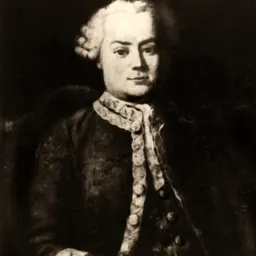
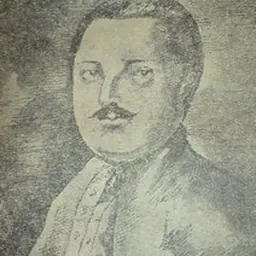

Contemporaries
People whose lives overlapped Fath-Ali Khan of Quba's






Frequently asked questions
Who was Fath-Ali Khan of Quba?
Khan of Quba (1758-1789)
When was Fath-Ali Khan of Quba born?
Fath-Ali Khan of Quba was born in 1736 in Guba.
When did Fath-Ali Khan of Quba die?
Fath-Ali Khan of Quba died on 22 March 1789 in Baku.
Sources & further reading
· Wikipedia: Fath-Ali Khan of Quba
· DBpedia: Fath-Ali Khan of Quba
Cite this page
APA: Biography.guide. (2026). Fath-Ali Khan of Quba. https://biography.guide/fath-ali-khan-of-quba/
MLA: "Fath-Ali Khan of Quba." Biography.guide, https://biography.guide/fath-ali-khan-of-quba/.
Chicago: "Fath-Ali Khan of Quba." Biography.guide. https://biography.guide/fath-ali-khan-of-quba/.
Data last updated: 2026-09-20 · Spot an error? Report a correction.
Page generated 2026-09-27 05:06 UTC