
About Fateh Ali Khan
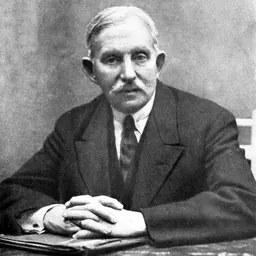
Lived 1901 – 1964 (aged 62–63). Fateh Ali Khan was a Pakistani and Indian musicologist, storyteller and singer.
Fateh Ali Khan (1901–1964), also known as Fateh Ali Khan Jullundhri Qawwal, was a Pakistani classical singer and qawwali musician active primarily in the 1940s and 1950s.
Biography Fateh Ali Khan was born in Jullundur, Punjab, British India in 1901. Their family has an unbroken tradition of qawwali and is called the Qawwal Bacchon gharana, linked closely to the Sufi Chishti Order for over 600 years.
Training Fateh Ali Khan was trained in classical music and qawwali by his father, Maula Bakhsh Khan (Ali Khan), and he, soon after his training, distinguished himself as a skilled vocalist and instrumentalist. Regarded as two of the foremost exponents of qawwali in their era, Fateh Ali Khan and Mubarak Ali Khan played a pivotal role in popularizing the poetry of Allama Muhammad Iqbal through their singing. The lyrics were written by Ameer Bakhsh Sabri (also known as Ameer-e-Sabri). This qawwali directly inspired the melodies and structure of “Na To Caravan Ki Talash Hai” and “Yeh Ishq Ishq Hai” in the 1960 Bollywood film Barsaat Ki Raat. While many lyrics in the film version were newly written by Sahir Ludhianvi, some lines were adapted or lifted verbatim from Ameer Bakhsh Sabri’s original kalam (for example: Naaz-o-andaaz se kehte hain ki jeena hoga, zehar bhi dete hain to kehte hain ki peena hoga; jab main peeta hoon to kehte hain ki marta bhi nahin, jab main marta hoon to kehte hain ki jeena hoga — 'They tell me with elegant grace that I must live; they offer poison and say I must drink it. When I drink, they say I do not die; when I am dying, they say I must live." "Sahar Qareeb Hai Taaron Ka Haal Kya Hoga" was another 1950s qawwali by Fateh Ali Khan and Mubarak Ali Khan (written by Sehba Akhtar) that inspired the track "Nigah-e-Naaz Ke Maaron Ka Haal Kya Hoga" (commonly shortened to "Nigah-e-Naaz Ke") in Barsaat Ki Raat. "Nigah-e-Naaz Ke" borrowed its central hook and melodic structure from the original, most notably adapting the line “Teri nigah ke maaron ka haal kya hoga." Reportedly, producer R. Chandra obtained permission during this period from Fateh Ali Khan and Mubarak Ali Khan before adapting their qawwalis for the Barsaat Ki Raat soundtrack. However, Nusrat showed such interest in and aptitude for qawwali that his father soon relented, and began training him on tabla, harmonium, and the art of singing.
Don’t just read it —
keep it.
Full-length biographies made to live with: read them, listen on the way to work, watch them tonight.
- E-book
- Audio
- Video
Instant download · yours to keep · every purchase keeps this site free
Important facts
People in Fateh Ali Khan's life
Named in this biography and alive at the same time
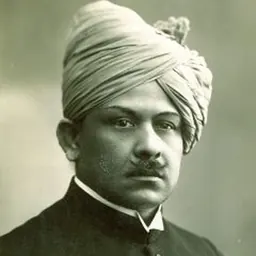

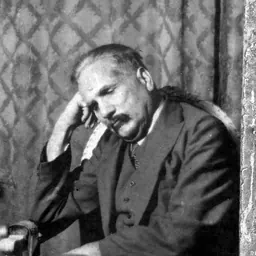
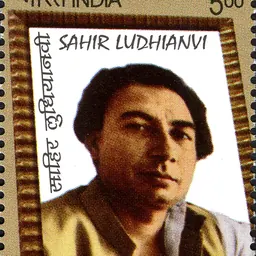

Related people
Same field, nearest in time
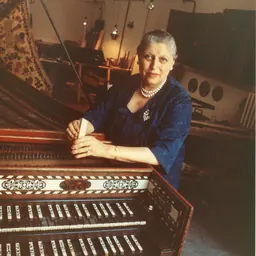

Contemporaries
People whose lives overlapped Fateh Ali Khan's




Frequently asked questions
Who was Fateh Ali Khan?
Pakistani singer
When was Fateh Ali Khan born?
Fateh Ali Khan was born in 1901 in Jalandhar.
When did Fateh Ali Khan die?
Fateh Ali Khan died on 12 March 1964 in Pakistan.
What was Fateh Ali Khan's occupation?
Fateh Ali Khan was a musicologist, storyteller and singer.
What nationality was Fateh Ali Khan?
Fateh Ali Khan was Pakistani and Indian.
Sources & further reading
· DBpedia: Fateh Ali Khan (Qawwali singer)
Cite this page
APA: Biography.guide. (2026). Fateh Ali Khan. https://biography.guide/fateh-ali-khan/
MLA: "Fateh Ali Khan." Biography.guide, https://biography.guide/fateh-ali-khan/.
Chicago: "Fateh Ali Khan." Biography.guide. https://biography.guide/fateh-ali-khan/.
Data last updated: 2026-09-20 · Spot an error? Report a correction.
Page generated 2026-09-27 05:20 UTC