
About F. G. L. Chester
Lived 1899 – 1946 (aged 47). F. G. L. Chester was a military personnel.
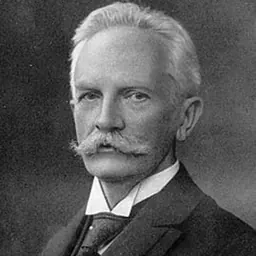
Lieutenant-Colonel Francis George Leach "Gort" Chester DSO, OBE (14 June 1899 – 18 August 1946) was a British soldier who led several Z Special Unit operations in Borneo during World War II.
Life Chester was born in Johannesburg, South Africa on 14 June 1899, the son of Arthur and Edith Florence Rose (née Murphy) Chester, both British. He was educated at Highfield School, Liphook, Hampshire, England, and then from May 1914-July 1916 at King's School, Canterbury, Kent. He graduated from the Royal Military College, Sandhurst, and during the First World War he served in King Edward's Horse, a cavalry regiment of the British Army, in 1917. He gained the nickname "Gort" due to his physical resemblance to the British Army Field Marshal John Vereker, 6th Viscount Gort.
Chester was a rubber planter at the Lokawee Estate near Jesselton in the West Coast area of North Borneo for twenty years before the Japanese invasion of January 1942. He was in Australia when the Far Eastern war broke out; he rejoined the British Army and was appointed second lieutenant on the General List on 1 May 1942, this commission was eventually backdated to 21 June 1941. At some point he was attached to the Australian Army's Services Reconnaissance Department (SRD) Z Special Unit.
Chester commanded the first Z Special Unit operation in Borneo during World War II: Operation Python I. This operation took place in early October 1943, and reported on Japanese sea-traffic in the Sibutu Passage and the Balabac Strait of the Sulu Sea, just to the north of North Borneo. The unit landed on Labian Point in North Borneo, opposite the Tawi-Tawi islands. Chester also provided support for a band of Filipino guerrillas under the command of an American officer, Captain J. A. Hamner. Chester was in touch with the East Coast of North Borneo: "He made many visits to his friends ashore there. He maintained communication with them by means of submarine and radio, and helped form guerrilla bands on the east coast. His visits were not always secret and he often moved rapidly from place to place with the Japanese and a pack of spies in close pursuit." He heard of the plans for an uprising against the Japanese and advised that it be postponed until the Allied forces were in a position to advance into Borneo; his advice was not heeded and the Double Tenth rebellion of the night of 9/10 October 1943 in North Borneo under the leadership of Albert Kwok resulted in the deaths of many Japanese. Thousands more local people died in the reprisals that followed. The awards were eventually gazetted on 26 April 1945, dated 8 March 1945. Others connected with the mission were Mentioned in Despatches, all the awards were given minimal publicity as several of the recipients had relatives who were still interned by the Japanese or were prisoners of war. ) commanded Agas I, which landed near Labuk Bay in North Borneo. He then went on to command Agas III which operated in the Jesselton-Keningau-Beaufort area of North Borneo. This operation incorporated Stallion IV, which aimed to obtain intelligence of enemy movements along the Jesselton-Beaufort part of the North Borneo Railway, the Ranau-Tambunan-Keningau Road, and the hinterland of Kimanis Bay. Chester was chosen for all these roles due to his intimate knowledge of the area of operation and his fluency in Malay. In addition, by the time of Agas III and Stallion IV, Chester had agents and known safe contacts in the region. He was also awarded the American Medal of Freedom.
Colonel J. Finlay of the SRD headquarters in Melbourne wrote that Chester could "cut his way through close jungle quicker than almost any man alive", but that he had never known him walk more than in Melbourne without summoning a taxi. He died of blackwater fever (a complication of malaria) at Jesselton (Kota Kinabalu) on 18 August 1946. His gravestone in Kota Kinabalu Anglican Cemetery bears the epitaph "A pioneer of victory in Borneo and a most lovable man." On 6 March 2007 Chester's grave was visited by Tan Sri Datuk Chong Kah Kiat, the former 13th Chief Minister of Sabah, and at the time Deputy Chief Minister of Sabah and Minister of Tourism, Environment and Development. The town of Tawau in the state of Sabah, Malaysia has a street named after him, initially rendered as Chester Street, and subsequently rerendered as Jalan Chester.
Don’t just read it —
keep it.
Full-length biographies made to live with: read them, listen on the way to work, watch them tonight.
- E-book
- Audio
- Video
Instant download · yours to keep · every purchase keeps this site free
Important facts
People in F. G. L. Chester's life
Named in this biography and alive at the same time






Related people
Same field, nearest in time


Contemporaries
People whose lives overlapped F. G. L. Chester's

Frequently asked questions
Who was F. G. L. Chester?
British soldier
When was F. G. L. Chester born?
F. G. L. Chester was born on 14 June 1899.
When did F. G. L. Chester die?
F. G. L. Chester died on 18 August 1946.
What was F. G. L. Chester's occupation?
F. G. L. Chester was a military personnel.
Sources & further reading
Cite this page
APA: Biography.guide. (2026). F. G. L. Chester. https://biography.guide/f-g-l-chester/
MLA: "F. G. L. Chester." Biography.guide, https://biography.guide/f-g-l-chester/.
Chicago: "F. G. L. Chester." Biography.guide. https://biography.guide/f-g-l-chester/.
Data last updated: 2026-09-20 · Spot an error? Report a correction.
Page generated 2026-09-27 05:30 UTC