
About Eyre Crowe
Lived 1824 – 1910 (aged 86). Eyre Crowe was a British painter.
Eyre Crowe, ARA (3 October 1824 12 December 1910) was an English painter and author who specialised in history painting and genre art. His work usually centered around the everyday life's of the poor urban working class during the industrial revolution. He was rather progressive for the time, deviating from the idealistic depictions of urban life popular among the public. Instead he aimed for social realism in his pieces. The 1874 edition of The Art Journal described him as, "[un]afraid of reality, and [un]shrinking from scenes that less robust minds would consider vulgar." He and his family moved to France in 1826 in search of work opportunities, where his father got a job working for the Morning Chronicle.
In 1851 as his art career failed to take off Crowe turned to writing. He was hired on by his father, who was then the editor of the Daily News, as an art critic. It currently hangs on display in The Manchester Art Gallery. The painting is an oil on canvas depicting the workers of Victoria Mill cotton spinning factory taking their dinner hour. The factory was owned by Thomas Taylor and was part of the Lancashire Textile industry. The painting was not originally well received by the public due to its unusually unromantic depiction of urban life for the time. Critics called it "vulgar" and "unpictoral". However, it is held by many current art historians as one of the more realistic depictions of urban working life of its time.
Other works A Slave Sale in Charleston, South Carolina (1854; Museo Nacional de Bellas Artes, Havana, Cuba) Slaves Waiting for Sale: Richmond, Virginia (1861; Private collection) Daniel Defoe in the Pillory (1862; Salford Museum and Art Gallery) Brick Court or Death of Goldsmith (1863) Luther Pasting his Theses on the Church Door of Wittenberg (1864) Shinglers or The Forge (1869; Grohmann Museum) The Penance of Dr Johnson, 1784 (1869) The Dinner Hour, Wigan (1874; Manchester Art Gallery) A Sheep-Shearing Match (1875) Sandwiches (1881) Convicts at Work, Portsmouth (1887) Nelson Leaving England for the Last Time (1888) The Founder of English Astronomy (1891; see Jeremiah Horrocks) The Brigs of Ayr (1894) The Gipsy's Rest (1897) Trial for Bigamy (1897) James II at the Battle of La Hogue (1898)
Don’t just read it —
keep it.
Full-length biographies made to live with: read them, listen on the way to work, watch them tonight.
- E-book
- Audio
- Video
Instant download · yours to keep · every purchase keeps this site free
Important facts
People in Eyre Crowe's life
Named in this biography and alive at the same time


Related people
Same field, nearest in time
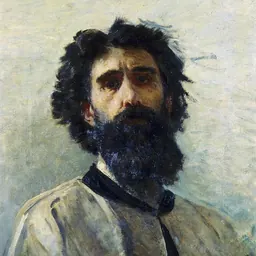
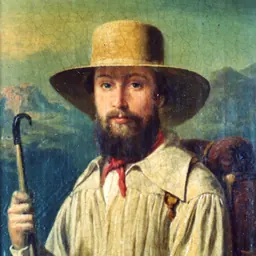
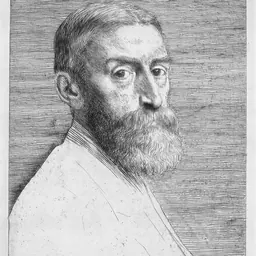
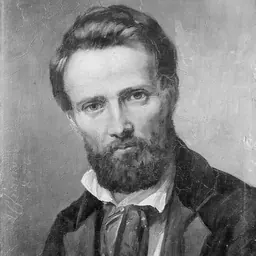


Contemporaries
People whose lives overlapped Eyre Crowe's




Frequently asked questions
Who was Eyre Crowe?
British artist (1824-1910)
When was Eyre Crowe born?
Eyre Crowe was born on 3 October 1824 in Chelsea.
When did Eyre Crowe die?
Eyre Crowe died on 12 December 1910 in London.
What was Eyre Crowe's occupation?
Eyre Crowe was a painter.
What nationality was Eyre Crowe?
Eyre Crowe was British.
Sources & further reading
· DBpedia: Eyre Crowe (painter)
Cite this page
APA: Biography.guide. (2026). Eyre Crowe. https://biography.guide/eyre-crowe/
MLA: "Eyre Crowe." Biography.guide, https://biography.guide/eyre-crowe/.
Chicago: "Eyre Crowe." Biography.guide. https://biography.guide/eyre-crowe/.
Data last updated: 2026-09-26 · Spot an error? Report a correction.
Page generated 2026-09-27 05:16 UTC