
About Ewart Guinier
Lived 1910 – 1990 (aged 79–80). Ewart Guinier was an American academic and educator.
Ewart Gladstone Guinier (May 17, 1910 – February 4, 1990) was a Jamaican-American educator, lawyer, and labor leader. He was the founding chairman of Harvard University's Afro-American Studies department, now known as the Department of African and African-American Studies.
Early life and education Ewart Guinier was born to Howard and Marie-Louise Beresford Guinier on May 17, 1910, in the Panama Canal Zone. His parents were Jamaican immigrants living under segregation in the Canal Zone; his father worked as a lawyer and real estate agent, and his mother was a bookkeeper. Following his father's death in 1919, his mother emigrated to Boston. Guinier joined her there in 1925, when he was 15 years old. He attended Boston English High School.
After high school, Guinier studied at Harvard College, beginning his freshman year in 1929. Guinier was one of only a few Black students at the university at the time, and he faced pervasive discrimination, including exclusion from the dormitory system and being ruled ineligible for financial aid. Guinier experienced outright social ostracism from white classmates, but was able to make friends with Black upper-class men, including Robert Weaver and Frank Snowden. He became a member of the Alpha Phi Alpha fraternity in 1930.
In 1949 Guinier ran for Manhattan Borough President on the American Labor Party ticket, the first Black candidate to be nominated for that office by any party. His campaign was chaired by attorney Hope Stevens, who wrote that the campaign "would put an end to the lily-white standards of other political parties which have long denied the Negro people of New York political representation in our city government." Guinier's platform was pro-labor and antiracist. He promoted policy ideas that would support fair employment practices and root out housing discrimination. He received 38 percent of the votes cast in that race, and lost to the Democratic Party candidate, Robert Wagner. He was a member of the National Urban League, and served as chairman of the Queens Urban League from 1962 to 1968.
Higher education In 1968, Guinier left a post as the executive director of the Brownsville Community Corporation to become an associate director at the Urban Center at Columbia University, where he focused on community programming. The Urban Center was founded in the aftermath of student and community protest over Columbia's role in maintaining a divide between the Morningside Heights and Harlem neighborhoods, which activists described as segregationist in both intent and result.
Not long after taking this role at Columbia, Guinier was hired away by Harvard University. He started work there as a full professor in 1969, the year the Afro-American Studies department was founded in response to student protestors' demands for better academic representation.
As a professor, Guinier taught courses on African American involvement in the labor movement before World War II, and the Civil Rights Movement's fight for Black self-determination in the postwar period. He was involved with Black affinity groups at Harvard, including the Harvard-Radcliffe Association of African and African American Students (Afro), the Harvard-Radcliffe African American Cultural Center, the Pan-African Liberation Committee (PALC) and the Student Organization for Black Unity. Guinier also corresponded with students from all over the United States who wrote to him seeking advice and information to help them start Black Studies departments at their own institutions. In 1973 Guinier told the Harvard Crimson that "the Faculty Council expects me to run the department as I would run a race: they bind my feet, tie my hands, gag and blindfold me – and then want me to do a good job."
One of his most vocal opponents was Martin Kilson, a Black political scientist and professor of government. Guinier and Kilson appeared together on the New York City television program Positively Black for a televised debate on the subject in 1973. Kilson argued that the study of Black experience and perspectives could be folded into existing departments; Guinier answered that that would be impossible at a university where major departments, such as English and Economics, lacked Black faculty members entirely. Ewart and Genii had three daughters: Sary, Marie-Louise, and Lani.
Ewart Guinier died on February 4, 1990, of Alzheimer's disease, at the Veterans' Hospital of Bedford, Massachusetts. He was 79 years old.
Legacy Ewart Guinier's papers are collected in the Schomburg Center archives at the New York Public Library.
Don’t just read it —
keep it.
Full-length biographies made to live with: read them, listen on the way to work, watch them tonight.
- E-book
- Audio
- Video
Instant download · yours to keep · every purchase keeps this site free
Important facts
People in Ewart Guinier's life
Named in this biography and alive at the same time

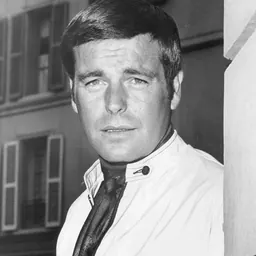


Related people
Same field, nearest in time

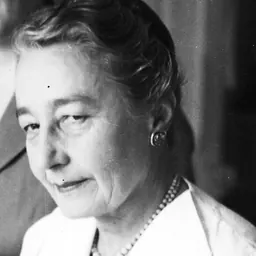


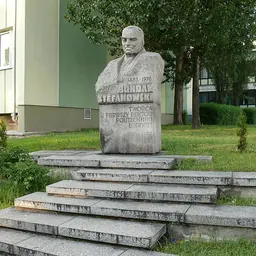
Contemporaries
People whose lives overlapped Ewart Guinier's






Frequently asked questions
Who was Ewart Guinier?
Jamaican-American educator, lawyer, and labor leader (1910–1990)
When was Ewart Guinier born?
Ewart Guinier was born in 1910.
When did Ewart Guinier die?
Ewart Guinier died in 1990.
What was Ewart Guinier's occupation?
Ewart Guinier was an academic and educator.
What nationality was Ewart Guinier?
Ewart Guinier was American.
Sources & further reading
Cite this page
APA: Biography.guide. (2026). Ewart Guinier. https://biography.guide/ewart-guinier/
MLA: "Ewart Guinier." Biography.guide, https://biography.guide/ewart-guinier/.
Chicago: "Ewart Guinier." Biography.guide. https://biography.guide/ewart-guinier/.
Data last updated: 2026-09-20 · Spot an error? Report a correction.
Page generated 2026-09-27 05:29 UTC