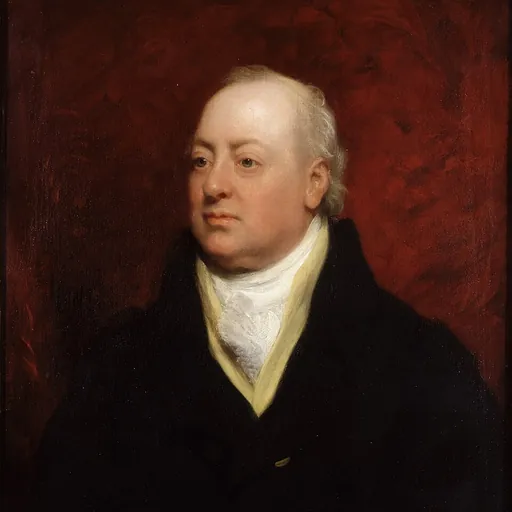
About Everard Home
Lived 1756 – 1832 (aged 76). Everard Home was a British physician, surgeon and paleontologist.
Sir Everard Home, 1st Baronet, FRS (6 May 1756 – 31 August 1832) was an English surgeon.
Life Home was born in Kingston-upon-Hull and educated at Westminster School. He gained a scholarship to Trinity College, Cambridge, but decided instead to become a pupil of his brother-in-law, John Hunter, at St George's Hospital. Hunter had married his sister, the poet and socialite Anne Home, in July 1771. He assisted Hunter in many of his anatomical investigations, and in the autumn of 1776 he partly described Hunter's collection. There is also considerable evidence that Home plagiarized Hunter's work, sometimes directly, sometimes indirectly; he also systematically destroyed his brother-in-law's papers in order to hide evidence of this plagiarism. It seems likely that the fire (in Home's apartments at Chelsea Hospital) which destroyed the Hunterian manuscripts in Home's possession also destroyed a precious collection of 26 microscopes originally made by van Leeuwenhoek, which Home had borrowed from the Royal Society. :123
Having qualified at Surgeons' Hall in 1778, Home was appointed assistant surgeon at the naval hospital, Plymouth. In 1787 he was appointed assistant surgeon, later surgeon, at St George's Hospital. He became Sergeant Surgeon to the King in 1808 and Surgeon at Chelsea Hospital in 1821. He was made a baronet (of Well Manor in the County of Southampton) in 1813.
He was elected a Fellow of the Royal Society in 1787, gave their Croonian Lecture many times between 1793 and 1829 and received their Copley Medal in 1807. He was elected a Foreign Honorary Member of the American Academy of Arts and Sciences in 1832.
Works Home published prolifically on human and animal anatomy. He was the first to describe the fossil creature (later 'Ichthyosaur') discovered near Lyme Regis by Joseph Anning and Mary Anning in 1812. Following John Hunter, he initially suggested it had affinities with fish. Home also did some of the earliest studies on the anatomy of platypus and noted that it was not viviparous, theorizing that it was instead ovoviviparous. He was also the first to propose that melanin acts a sunscreen.
A species of tortoise, Kinixys homeana , is named in his honor.
Family His son, James Everard Home, became an eminent officer in the Royal Navy.
Don’t just read it —
keep it.
Full-length biographies made to live with: read them, listen on the way to work, watch them tonight.
- E-book
- Audio
- Video
Instant download · yours to keep · every purchase keeps this site free
Important facts
People in Everard Home's life
Named in this biography and alive at the same time
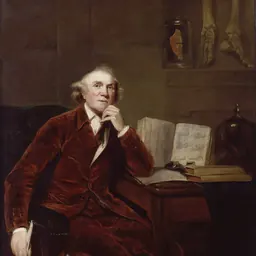


Related people
Same field, nearest in time



Contemporaries
People whose lives overlapped Everard Home's





Frequently asked questions
Who was Everard Home?
British surgeon (1756–1832)
When was Everard Home born?
Everard Home was born on 6 May 1756 in Kingston upon Hull.
When did Everard Home die?
Everard Home died on 31 August 1832 in London.
What was Everard Home's occupation?
Everard Home was a physician, surgeon and paleontologist.
What nationality was Everard Home?
Everard Home was British.
Sources & further reading
Cite this page
APA: Biography.guide. (2026). Everard Home. https://biography.guide/everard-home/
MLA: "Everard Home." Biography.guide, https://biography.guide/everard-home/.
Chicago: "Everard Home." Biography.guide. https://biography.guide/everard-home/.
Data last updated: 2026-09-22 · Spot an error? Report a correction.
Portrait: Wikimedia Commons · author & licence
Page generated 2026-09-27 05:02 UTC