
About Évariste-Vital Luminais
Lived 1821 – 1896 (aged 74). Évariste-Vital Luminais was a French painter and designer.
Luminais (date unknown)Évariste Vital Luminais (; 13 October 1821 – 10 or 15 May 1896 and his father, René Marie Luminais, represented Loire-Inférieure from 1831 to 1834 and Indre-et-Loire from 1848 to 1849. Aware of his natural artistic talent, his family sent him to Paris when he was 18 to study with the painter and sculptor Auguste Debay. He also studied with Léon Cogniet, a historical and portrait painter whose pupils included Léon Bonnat, and Constant Troyon, who painted landscapes and animals.
He married twice. By his first wife, Anne Foiret, he had a daughter, Esther. After Anne's death in 1874, he remarried in 1876 to one of his pupils, Hélène de Sahuguet d'Amarzit d'Espagnac; she had been married to Claude Durand de Neuville but had been widowed in the War of 1870.
He made his official début at the Paris Salon of 1843, where two of his paintings were hung. He won medals at the Salons of 1852, 1855, 1857, 1861 and 1889. In 1869, he was awarded the Légion d'honneur. He won the gold medal at the 1889 Exposition, and was a founder member of the Société des Artistes Français. The area had been recommended to him by two friends, Jules de Vorys and Louis Fombelle. Among his students were Albert Maignan
Luminais died in Paris at the age of 75 and was buried in the little cemetery in Douadic. His native city of Nantes has a street named for him.
Works
Luminais worked in the genre and historical modes. He was among the academic painters who satisfied a social demand for aggrandising, even propagandistic historical works in the early years of the Third Republic, after the defeat in the Franco-Prussian War. As such, he shared in their condemnation by the advocates of modern art. However, in some paintings, such as The Widow (1865) he foreshadows social realism. He also used a historical dressing to make hunting and peasant scenes more palatable to the Academy. he also depicted other scenes of early medieval history, often clashes between different peoples, such as campaign-hardened Romans in breastplates reinforced with metal battling daring Celts who are bare-chested, with only helmet and shield for protection.
More unusually among historical artists of the time, he also depicted the Franks, whose contribution to French history was then generally underrated in favour of the Gauls. His painting of the Alemannic rout at the hands of the Franks in the Battle of Tolbiac impressed Théophile Gautier at the 1848 Salon. His Frankish Cavalry in Combat was inspired by reading Chateaubriand. His paintings on Merovingian topics emphasise the barbaric cruelty of the rulers. Pepin the Short's overthrow of Childeric III with the agreement of Pope Zachary and the deposed king's imprisonment in the Monastery of St. Bertin at Saint-Omer is the subject of his painting The Last of the Merovingians, for which he reportedly used one Jean Marie Dagobert as his model. At the 1883 Salon, the critic Charles Bigot hoped this would indeed be Luminais "last" Merovingian painting.
As was common among historical painters at the time, His In Sight of Rome shows the same liberty: the shield on the left and the helmets are not realistic. The Celtic incursion into Italy made an early and lasting impression on artists. In depicting the Merovingian Franks, 19th-century painters unaware of archaeological evidence costumed queens in Oriental Germanic fashion, as in Luminais' Merovingian Princess. Luminais' approach focussed more on distancing the image from the present than on evoking a specific era.
The Sons of Clovis II In 1880 he painted what, according to Bonnie Effros, was his most famous Merovingian painting, and later reconciled with their parents. The version exhibited at the 1880 Salon created a sensation and is judged to be his best work. The painting evokes varying and strong reactions; Simone de Beauvoir wrote in 1960 of "calm horror".
The work went through a number of stages of refinement. The first study, Première pensée pour les Énervés de Jumièges, shows the cutting of the tendons and depicts four figures; a second study depicts the raft floating down the river, but has three figures, prefiguring the men's salvation by the monks. The two finished paintings show only the two figures alone on the raft. The version shown at the Salon was sold to Australia under the title The Sons of Clovis II and after being exhibited in various locations including Wallis & Sons' gallery of French paintings in London (1881), the Munich International Exposition (1883), the National Gallery of South Australia and the National Gallery of Victoria (1896), is now in the Art Gallery of New South Wales in Sydney. The second version, with greater emphasis on the grandeur of nature, was kept by Luminais; after his death it was acquired by the State and in 1912 was deposited in the Musée des Beaux-Arts in Rouen.
Brenne paintings North America section of the fresco for the Paris Commercial Bourse. At his summer studio in Douadic, he painted works reflecting his love of nature and of hunting, such as: The Hallali, memories of hunting in Brenne in 1863 The Two Guardians La Folle du Tertre (the madwoman of the mound), based on a local legend Hunting Through the Ages, six-panel work for the dining room of his friend Louis Fombelle Illustrations for Jules de Vorys' book on Dagobert I, Dagobert en Brenne
Monumental painting
Luminais was one of five artists who collaborated between 1886 and 1889 on a monumental fresco, more than in area, for the interior of the dome of the Paris Commercial Bourse, representing the history of intercontinental trade. It includes a scene representing America which features Indians, slaves, labourers, cowboys, and a steam train representing the modern world.
Don’t just read it —
keep it.
Full-length biographies made to live with: read them, listen on the way to work, watch them tonight.
- E-book
- Audio
- Video
Instant download · yours to keep · every purchase keeps this site free
Important facts
People in Évariste-Vital Luminais's life
Named in this biography and alive at the same time
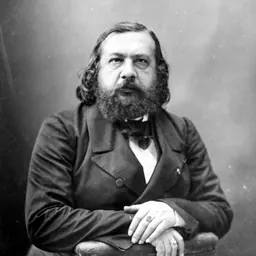
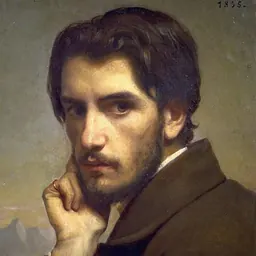
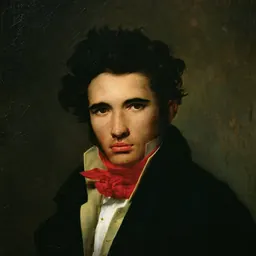


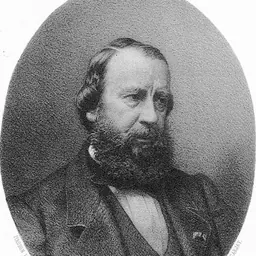
Related people
Same field, nearest in time


Contemporaries
People whose lives overlapped Évariste-Vital Luminais's



Frequently asked questions
Who was Évariste-Vital Luminais?
French painter (1821-1896)
When was Évariste-Vital Luminais born?
Évariste-Vital Luminais was born on 13 October 1821 in Nantes.
When did Évariste-Vital Luminais die?
Évariste-Vital Luminais died on 14 May 1896 in Paris.
What was Évariste-Vital Luminais's occupation?
Évariste-Vital Luminais was a painter and designer.
What nationality was Évariste-Vital Luminais?
Évariste-Vital Luminais was French.
Sources & further reading
· Wikipedia: Évariste-Vital Luminais
· DBpedia: Évariste Vital Luminais
Cite this page
APA: Biography.guide. (2026). Évariste-Vital Luminais. https://biography.guide/evariste-vital-luminais/
MLA: "Évariste-Vital Luminais." Biography.guide, https://biography.guide/evariste-vital-luminais/.
Chicago: "Évariste-Vital Luminais." Biography.guide. https://biography.guide/evariste-vital-luminais/.
Data last updated: 2026-09-26 · Spot an error? Report a correction.
Page generated 2026-09-27 05:15 UTC