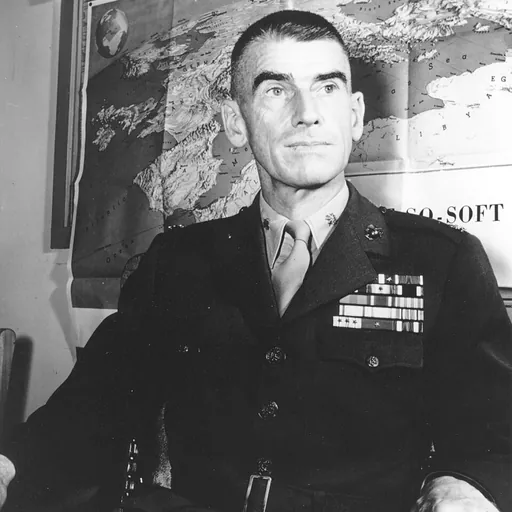
About Evans Carlson
Lived 1896 – 1947 (aged 51). Evans Carlson was an American military officer and soldier.
Evans Fordyce Carlson (February 26, 1896 – May 27, 1947) was a United States Marine Corps officer who led "Carlson's Raiders" during World War II. Many credit Carlson with developing the tactics and attitude that would later come to define America's special operations forces. He is renowned for the "Makin Island raid" in 1942, and his raiders' "Long Patrol" (aka Carlson's patrol) behind Japanese lines on Guadalcanal, in which 488 Japanese were killed. Carlson popularized the phrase "gung-ho".
Early years Evans Carlson was born on February 26, 1896, in Sidney, New York, the son of a Congregationalist minister. He ran away from his home in Vermont in 1910 and two years later disguised his age to enter the United States Army.
World War I During World War I, John J. Pershing awarded Carlson the Purple Heart Medal. In 1918, he was promoted captain of artillery and served in Germany with the Army of Occupation. In October 1919, he was discharged from the army. Carlson often had left-wing political views, prompting General David M. Shoup to say of him, "He may be red, but he's not yellow."
From 1937 until 1938, Carlson was gain in Shanghai, witness to the Battle of Shanghai in the Second Sino-Japanese War, the Eighth Route Army in Xi'an, and the Chinese Communists capital in Yan'an. Besides Edgar Snow, Carlson met Helen Foster Snow and Agnes Smedley during these journeys. Over an argument with Harvey Overesch, Carlson resigned his Marine Corps commission in Hankow. Returning to China under the auspices of the Chinese Industrial Cooperatives, after writing Twin Stars of China, Carlson found "The situation here is disappointing. Gone is all the vim and enthusiasm of the early months of the war. In their place is conflict, profiteering and apathy." In 1941, Thomas Holcomb offered Carlson a commission as a major in the Marine Corps Reserve.
In the United States military there was a sharp caste-system divide between officers and enlisted personnel, and even experienced noncommissioned officers were expected to be subservient to even the newest, greenest second lieutenant. Drawing on his time in China and his experience in having gone back and forth between officer and enlisted status in both the Army and the Marine Corps that this was not in the best interests of the service, Carlson radically reformed the raider battalion along much more egalitarian lines.
Lt. Col. Carlson is decorated by Admiral Chester W. Nimitz, September 30, 1942
Of more lasting importance to the Marine Corps, Carlson also changed the organization of his squads, eschewing an eight-man squad dictated by the Marines in favor of a 10-man squad composed of a squad leader and three 3-man "fireteams", each containing a BAR, a Thompson, and an M1 rifle.
Later service in the Pacific Carlson was soon ordered back to the United States for medical treatment of malaria and jaundice, and served as a technical advisor to Walter Wanger's Gung Ho!: The Story of Carlson's Makin Island Raiders (released December 1943).
He subsequently returned to the Pacific campaign and participated in the Battle of Tarawa in November 1943, as an observer, and was cited for volunteering to carry vital information through enemy fire from an advanced post to division headquarters. During the Battle of Saipan in 1944, he was wounded while attempting to rescue a wounded enlisted radioman from a front-line observation post, and was awarded a second Purple Heart (-inch gold star in lieu of second Purple Heart).
Retirement and death
Physical disability resulting from the wounds received on Saipan caused Carlson's retirement on July 1, 1946. He was advanced to the rank of brigadier general on the retired list at that time for having been specially commended for the performance of duty in actual combat.
On May 27, 1947, at age 51, Carlson died as the result of a cardiac ailment at Emanuel Hospital in Portland, Oregon. He had been living in Brightwood, Oregon, since his retirement. He was survived by his wife, Mrs. Peggy Tatum Carlson, and a son by a previous marriage, Evans C. Carlson.
General Carlson is buried in Arlington National Cemetery.
Awards and decorations General Carlson's awards include:
Navy Cross with two gold stars | Legion of MeritPurple Heart Medal with gold starPresidential Unit Citation (Navy) with three bronze stars Marine Corps Expeditionary MedalMexican Service MedalWorld War I Victory Medal with France claspYangtze Service MedalSecond Nicaraguan Campaign MedalChina Service MedalAmerican Defense Service MedalAmerican Campaign MedalAsiatic-Pacific Campaign Medal with three bronze starsWorld War II Victory MedalItalian Croce al Merito di GuerraNicaraguan Presidential Order of Merit with gold starNicaraguan Medal of Distinction with silver star
Navy Cross citations Nicaragua (May 16, 1930 – May 1, 1931) CARLSON, EVANS FORDYCE First Lieutenant, U.S. Marine Corps Guardia Nacional de Nicaragua Date of Action: May 16, 1930 – May 1, 1931 The Navy Cross is presented to Evans Fordyce Carlson, First Lieutenant, U.S. Marine Corps, for extraordinary heroism while attached to the Guardia Nacional from May 16, 1930, to May 1, 1931. Upon joining the Guardia Nacional, First Lieutenant Carlson was assigned at Jalapa in the bandit area of Nueva Segovia. On July 8, 1930, he received a report that a group of one hundred bandits were looting the town of Portillo. He immediately left with a detachment of sixteen men to gain contact. Four of the men deserted en route but with the remaining twelve men he pushed on and overtook and gained contact with a group of forty bandits, completely routing them, killing two and wounding seven, without any casualties to his detachment. Arms, ammunition, equipment and clothing looted from the town of Portillo were recaptured. Lieutenant Carlson maintained his district in a most excellent manner and by his activities and well-directed operations kept it singularly free from banditry.
Makin Island, Raid (August 17–18, 1942) CARLSON, EVANS FORDYCE Lieutenant Colonel, U.S. Marine Corps (Reserve) Commanding Officer, 2d Marine Raider Battalion Date of Action: August 17–18, 1942 The Navy Cross is presented to Evans Fordyce Carlson, Lieutenant Colonel, U.S. Marine Corps (Reserve), for extraordinary heroism and distinguished service as Commanding Officer of the Second Marine Raider Battalion in action against Japanese forces on Makin Island, August 17–18, 1942. In the first operation of this type ever conducted by United States forces, Lieutenant Colonel Carlson personally directed his forces in the face of intense fire of enemy ground troops and aerial bombing barrage, inflicting great personnel and material damage on the enemy. In the withdrawal of his forces under adverse sea conditions, he displayed outstanding resourcefulness, initiative and resolute purpose in evacuating all wounded and disabled men. His high courage and excellent leadership throughout the engagement were in keeping with the finest traditions of the United States Naval Service. SPOT AWARD, October 1942
Guadalcanal, Long Patrol (November 4 – December 4, 1942) CARLSON, EVANS FORDYCE Lieutenant Colonel, U.S. Marine Corps (Reserve) Commanding Officer, 2d Marine Raider Battalion Date of Action: November 4 – December 4, 1942 The Navy Cross is presented to Evans Fordyce Carlson, Lieutenant Colonel, U.S. Marine Corps (Reserve), for extraordinary heroism and courage as leader of the Second Marine Raider Battalion in action against enemy forces in the British Solomon Islands during the period from November 4 to December 4, 1942. In the face of most difficult conditions of tropical weather and heavy growth, Lieutenant Colonel Carlson led his men in a determined and aggressive search for threatening hostile forces, overcoming all opposition and completing their mission with small losses to our men while taking heavy toll of the enemy. His personal valor and inspiring fortitude reflect great credit upon Lieutenant Colonel Carlson, his command and the United States Naval Service. SPOT AWARD, January 1943
Works Carlson wrote books about his third tour in China when he was attached to the Chinese 8th Route Army: Twin Stars of China, Dodd, Mead & Company, 1940. Evans F. Carlson on China at War, 1937–1941, China and U.S. Publication. (ASIN B0006F13D2)
Don’t just read it —
keep it.
Full-length biographies made to live with: read them, listen on the way to work, watch them tonight.
- E-book
- Audio
- Video
Instant download · yours to keep · every purchase keeps this site free
Important facts
People in Evans Carlson's life
Named in this biography and alive at the same time






Related people
Same field, nearest in time
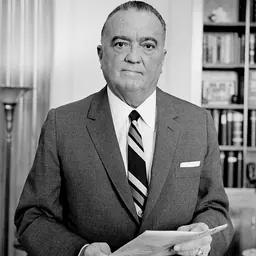

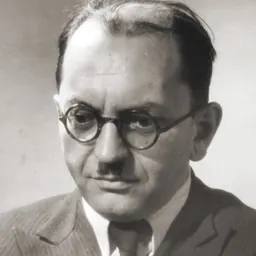
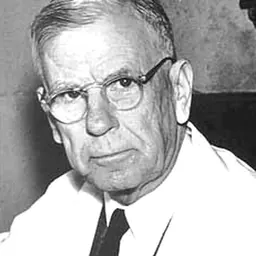
Contemporaries
People whose lives overlapped Evans Carlson's

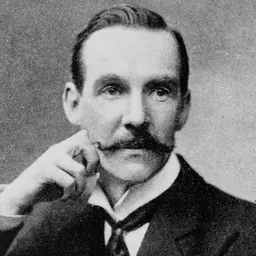


Frequently asked questions
Who was Evans Carlson?
United States Marine Corps general (1896–1947)
When was Evans Carlson born?
Evans Carlson was born on 26 February 1896 in Sidney.
When did Evans Carlson die?
Evans Carlson died on 27 May 1947 in Portland.
What was Evans Carlson's occupation?
Evans Carlson was a military officer and soldier.
What nationality was Evans Carlson?
Evans Carlson was American.
Sources & further reading
Cite this page
APA: Biography.guide. (2026). Evans Carlson. https://biography.guide/evans-carlson/
MLA: "Evans Carlson." Biography.guide, https://biography.guide/evans-carlson/.
Chicago: "Evans Carlson." Biography.guide. https://biography.guide/evans-carlson/.
Data last updated: 2026-09-20 · Spot an error? Report a correction.
Portrait: Wikimedia Commons · author & licence
Page generated 2026-09-27 04:58 UTC