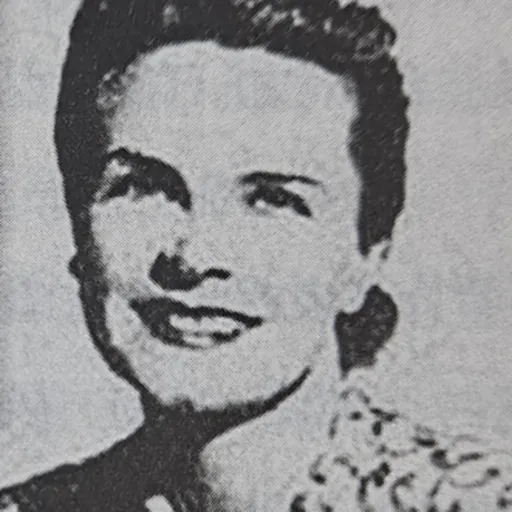
About Helen Foster Snow
Lived 1907 – 1997 (aged 89). Helen Foster Snow was an American journalist, writer and photographer, known for Chinese Industrial Cooperatives.
Helen Foster Snow (September 21, 1907 – January 11, 1997) was an American journalist who reported from China in the 1930s under the name Nym Wales on the developing Chinese Civil War, the Korean independence movement and the Second Sino-Japanese War.
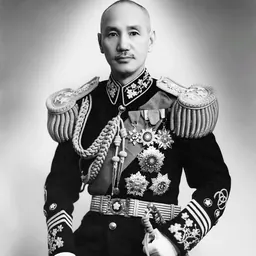
Snow's family moved often throughout her youth and she ended up living in Salt Lake City with her grandmother in her teenage years, until she decided to move to China in 1931. There, she married American journalist Edgar Snow and became a correspondent for several publications. While she and her husband were sympathetic to the revolutionaries in China, whom she compared favorably to the Nationalists under Chiang Kai-shek, she was never a card-carrying Communist.
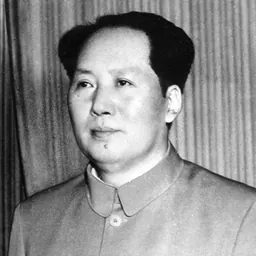
While living in Beijing, the Snows befriended leftist leaders of the 1935 December 9th Movement, who arranged for first Edgar, then Helen to visit the communist wartime capital, Yan'an, in 1937, where she interviewed Chinese Communist leaders, including Mao Zedong. The Snows also conceptualized the Chinese Industrial Cooperatives, known as the Gung-Ho movement, which provided jobs and stability. In 1940, Snow returned to the United States, where she and Edgar divorced. She continued to support the Cooperatives and write books based on her experiences in China. In the late 1940s, critics grouped her with the China Hands as one of those responsible for the "loss of China" who went beyond sympathy to active support of Mao's revolution.
Early life Helen Foster was born in Cedar City, Utah, and raised as a member of the Church of Jesus Christ of Latter-day Saints (LDS Church). She was born to John Moody Foster and Hannah Davis, who met working as teachers at Ricks Academy, a school affiliated with the LDS Church. Hannah graduated from Ricks Academy, and John was a graduate from Stanford University. Both of Helen's parents were descendants of Mormon pioneers who migrated to Utah in the mid-1800s.
From the time Helen was young, the Foster family moved quite frequently. After Helen's birth in Cedar City, the Fosters moved to Chicago so John could attend law school. Several years later, the family once again moved to Idaho. The frequent moves helped to shape Helen's outgoing personality as she was constantly concerned about what her new peers would think of her. Helen took the civil service exam and passed, yet there were no open positions in Europe, where she initially desired to go. However, her employer had a connection in China, ultimately securing a job for Helen with the president of an American company in Shanghai. But meeting Helen convinced him to stay working in China. She admired his work and had collected clippings of the newspaper articles he had written. With this privilege, the Snows were able to assist students in protesting fascism and contribute to the student movement. Helen once observed, "We couldn't have done anything if we'd been under Chinese law. A Chinese would have been executed for even messing with such things as we did". While the Snows never joined the Communist party, they sympathized with Chinese students who desired to resist the Japanese. Helen also produced and dispersed anti-fascist documents to students. In addition, the Snows produced a magazine in 1937 called Democracy, which was intended to spread Christian ethics. Her trip was much longer than anticipated as the Japanese occupied Northern China beginning in July of that same year and bad weather conditions made it impossible to travel.
While in Yan'an, Helen developed severe dysentery and became extremely ill. The system was to be run by its own members. "Gung-ho" is Chinese for "work together", which represents all peoples working together in cooperation. Helen returned to China twice more in her lifetime. The first visit was from 1972 to 1973, following President Richard Nixon's historic 1972 trip to China. The second visit was in 1978 when Helen returned to China for six weeks where she was asked in an interview to recount her adventures with Edgar during the 1930s. She published her autobiography in 1984. An official Chinese memorial service took place in the Great Hall of the People on Tiananmen Square in Beijing, an honor rarely bestowed upon foreigners. After her death, in 1997, Helen's family donated remaining manuscripts, documents, and photographs to the Brigham Young University library. On October 26–27, 2000, BYU held a Helen Foster Snow Symposium to celebrate this donation, and premiere the documentary Helen Foster Snow: Witness to Revolution. In 2009, the US–China Cultural Exchange Committee placed a tall bronze statue of Helen Foster Snow, cast in China, in the Main Street Park of her hometown of Cedar City. In 2011, students and faculty from Southern Utah University began a collaborative project with Chinese musicians, dancers, and artists to create a dance drama based on Helen Foster Snow's life entitled Dream of Helen.
Awards and honors In 1981, Helen Foster Snow was nominated for the Nobel Peace Prize for her work in China and nominated again in 1982. In her memoir My China Years, Helen writes, "The nomination was not for any particular achievement, but for the potential that my ideas and world view hold for peace and progress in the world". In June 1996, Helen was honored by the Chinese government as Friendship Ambassador, one of China's highest honors offered to foreign citizens. She was the first American and only the fifth person ever to receive the award.
Works Helen Foster Snow wrote under the pen name Nym Wales, which her husband chose for her. "Nym is the Greek word for name. Wales was used because she was part Welsh. However, the pseudonym created questions regarding nationality and whether the author was an "insider" of the Communist Party. Helen's works amount to 40 books and 27 manuscripts.
Helen Foster Snow, Inside Red China (New York: Doubleday, Doran, 1939). Reprinted: New York: DaCapo 1977, 1979. Nym Wales, China Builds for Democracy: A Story of Cooperative Industry (New York,: Modern Age Books, 1941). Reprinted: St. Clair Shores, MI: Scholarly Press, 1972. Nym Wales and Kim San, Song of Ariran: A Korean Communist in the Chinese Revolution (New York: The John Day Company, 1941). Reprinted: San Francisco: Ramparts Press, 1972. Nym Wales, The Chinese Labor Movement (New York: John Day, 1945). Reprinted: Freeport, NY: Books for Libraries, 1970. Nym Wales, Red Dust; Autobiographies of Chinese Communists (Stanford, Calif.,: Stanford University Press, 1952). Nym Wales, Fables and Parables for the Mid-Century (New York, Philosophical Library, 1952). Nym Wales, Notes on the Left-Wing Painters and Modern Art in China (Madison, Conn., 1961). Nym Wales, Women in Modern China (The Hague, Paris: Mouton, 1967). Helen Foster Snow, My China Years: A Memoir (New York: Morrow, 1984).
Don’t just read it —
keep it.
Full-length biographies made to live with: read them, listen on the way to work, watch them tonight.
- E-book
- Audio
- Video
Instant download · yours to keep · every purchase keeps this site free
Important facts
Family & relationships
People in Helen Foster Snow's life
Named in this biography and alive at the same time




Related people
Same field, nearest in time



Contemporaries
People whose lives overlapped Helen Foster Snow's



Frequently asked questions
Who was Helen Foster Snow?
American journalist (1907–1997)
When was Helen Foster Snow born?
Helen Foster Snow was born on 21 September 1907 in Cedar City.
When did Helen Foster Snow die?
Helen Foster Snow died on 11 January 1997 in Madison.
What was Helen Foster Snow's occupation?
Helen Foster Snow was a journalist, writer and photographer.
What was Helen Foster Snow known for?
Helen Foster Snow was known for Chinese Industrial Cooperatives.
What nationality was Helen Foster Snow?
Helen Foster Snow was American.
Sources & further reading
· Wikipedia: Helen Foster Snow
Cite this page
APA: Biography.guide. (2026). Helen Foster Snow. https://biography.guide/helen-foster-snow/
MLA: "Helen Foster Snow." Biography.guide, https://biography.guide/helen-foster-snow/.
Chicago: "Helen Foster Snow." Biography.guide. https://biography.guide/helen-foster-snow/.
Data last updated: 2026-09-22 · Spot an error? Report a correction.
Portrait: Wikimedia Commons · author & licence
Page generated 2026-09-27 05:02 UTC