
Evangelos Zappas
Greek philanthropist and businessman
About Evangelos Zappas
Lived 1800 – 1865 (aged 64). Evangelos Zappas was a Greek and Turkish entrepreneur, businessperson, physician, patron of the arts and merchant.
Evangelos or Evangelis Zappas (23 August 1800 – 19 June 1865) was a Greek philanthropist and businessman who is recognized today as one of the founders of the modern Olympic Games, which were held in 1859, 1870, 1875, and 1888 and preceded the Olympic Games that came under the auspices of the International Olympic Committee. These Games, known at the time simply as Olympics , came before the founding of the International Olympic Committee itself. The legacy of Zappas, as well as the legacy of his cousin Konstantinos, was also used to fund the Olympic Games of 1896.
During his youth, Zappas joined the Greek War of Independence (1821–1832), achieving the rank of Major and fighting in several significant battles. Following Greek independence, he moved to Wallachia where he spent most of his life and had a successful career as a businessman, becoming one of the richest men of that time in Eastern Europe. Aside from being the only major sponsor of the Olympic revival at that time, Zappas's philanthropy also included contributions toward the foundation of several Greek institutions and schools as well as sports and exhibition facilities. Zappas was also a financier of the Romanian Academy, including academic projects such as a new synthesis on the history of the Romanians and a Romanian dictionary. He also funded a newspaper and books in the Albanian language in Romania. Through his philanthropic activity, Zappas contributed to the national awakening of the Greeks, Romanians and Albanians.
Biography Early life, military career, and later career in Wallachia Evangelis Zappas was one of three children born to Vasileios Zappas and Sotira Meksi. His paternal origins remain uncertain, with some scholars describing him as being of Greek, Aromanian or Albanian descent. On his mother's side, he descended from the Albanian noble Meksi family, known for their Albanian patriotic figures. Zappas did not receive any education during his childhood. He left his village at the age of 13 and enrolled as a mercenary in the Ottoman militia of the local ruler Ali Pasha. There he started to learn from Petro Meksi, his mother's cousin, who practiced medicine in Ali's guard.
In 1831, Zappas emigrated to Wallachia and made a fortune in land and agriculture. In the 1850s, Zappas was considered one of the wealthiest entrepreneurs in Eastern Europe. At the time of his death in 1865, his total wealth was estimated at six million gold drachmas. In 1833, the romantic poet Panagiotis Soutsos, in his work Dialogue of the Dead, proposed the revival of the Games in the newly formed Greek state, as part of the revival of ancient Greek tradition. In 1852, archaeologist Ernst Curtius stated during a lecture that the Olympic events would be revived. Jim Resiler argues that Zappas was an ardent Greek nationalist influenced by the writings of Soutsos. In early 1856, he sent a letter through diplomatic channels to King Otto of Greece, offering to fund the revival of the Olympic Games, and to provide cash prizes to the victors. However, this initiative was not without opposition. There was wide belief among some Greek politicians that athletic games were a throwback to ancient times, unsuited to the modern era. Alexandros Rizos Rangavis, the Greek foreign minister and head of the conservative anti-athletics lobby in Athens, suggested an industrial and agricultural exposition instead of an athletics event. For months there was no official answer from the Greek state. In July 1856, an article in the Greek press by Panagiotis Soutsos made Zappas's proposal widely known to the public and triggered a series of events.
On 15 November 1859, the first Olympic Games was held in a city square in central Athens. These athletic contests were the first Olympic Games of modern times with the provenance of ancient Greek roots and the intention of using an, as yet unready, ancient Greek stadium. That stadium, the Panathenaic Stadium, was first used for a modern Olympic Games in 1870 and for the first time since the ancient Panathenaic and Olympic Games. The athletes competed in a variety of disciplines, similar to that of the ancient Olympic Games: running, discus, javelin throwing, wrestling, jumping, and pole climbing. He also instructed on the building of the Zappeion exhibition and conference center, which is named in his honour and that of his cousin Konstantinos Zappas. In 1870, the new stadium, with a spectator capacity of 30,000, was ready to host the second Zappas Olympics. The Zappas Olympics of 1870, apart from being the first modern international Olympic Games to be hosted in a stadium, were better attended and hosted more events and athletes, and were much better organized in general. The Zappeion officially opened on 20 October 1888.
Professor David C. Young, of the University of Florida (Gainesville), noted:
Had it not been for Zappas, the Athens Games of 1896 surely would not have taken place. Zappas's actions, his will and the previous tradition of Zappas Olympic Games had made [Crown Prince] Constantine [of Greece] an advocate of Olympic Games before the formation of the IOC in 1894.
Philanthropy Through his philanthropic activity, Zappas contributed to the national awakening of the Greeks, Romanians and Albanians. Apart from his efforts to revive the Olympics, Evangelos Zappas made several philanthropic donations towards the foundation of schools, libraries and other similar institutions all over the Ottoman-occupied world, and notably their birthplace, Epirus. Greek schools were founded and expanded in several villages and towns, such as Labovo, Lekli, Nivani, Dhroviani, Filiates, Delvina, Përmet. In Constantinople, education facilities were also founded that included nurseries, primary and secondary schools, which were collectively known as the Zappeion Institute. Moreover, a large amount of money was deposited in the National Bank of Greece to provide scholarships for Greek agricultural students in order to conduct postgraduate studies in Western Europe. Evangelos Zappas participated in 1860 in the debate about Albanian being written and held the view that the language could not become a literary one but should not be abandoned and that a Greek-based alphabet be used for Albanian in the Labovë school founded by him.
During the anti-Greek Istanbul Pogrom in 1955, the facilities of the Zappeion female college in the Turkish capital were vandalized by the fanatical mob and a statue of him was broken into pieces.
In addition to donations to the Greek state, Zappas was also a financier of the Romanian Academy where he has a statue there today. According to V. A. Urechia, Zappas declared "I am Romanian too". In Romania, statues of Zappas exist at the Romanian Academy and the Romanian Olympic and Sports Committee in Bucharest, and one in Broșteni.
Resting place
His cousin, Konstantinos Zappas, was the executor of his will and he continued Evangelis Zappas' philanthropic works through his legacy. Zappas's wish was to be initially buried in Romania, where he lived most of his life. But after four years his bones were exhumed and reinterred at the school's courtyard in Labovo where he was born, and his skull was enshrined beneath his memorial statue outside the Zappeion in Athens, Greece. A ceremony for the interment was held at 10am on 20 October 1888 at the Zappeion.
Don’t just read it —
keep it.
Full-length biographies made to live with: read them, listen on the way to work, watch them tonight.
- E-book
- Audio
- Video
Instant download · yours to keep · every purchase keeps this site free
Important facts
People in Evangelos Zappas's life
Named in this biography and alive at the same time

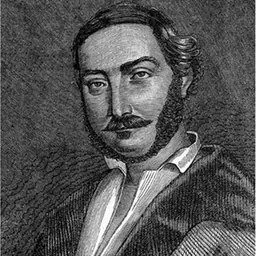
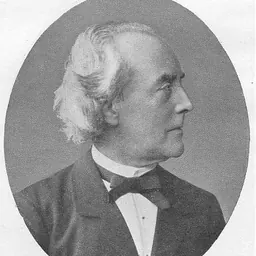
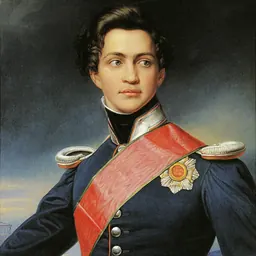
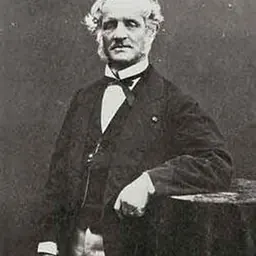

Related people
Same field, nearest in time



Contemporaries
People whose lives overlapped Evangelos Zappas's





Frequently asked questions
Who was Evangelos Zappas?
Greek philanthropist and businessman
When was Evangelos Zappas born?
Evangelos Zappas was born on 23 August 1800 in Labovë e Madhe.
When did Evangelos Zappas die?
Evangelos Zappas died on 19 June 1865 in Broșteni.
What was Evangelos Zappas's occupation?
Evangelos Zappas was an entrepreneur, businessperson, physician, patron of the arts and merchant.
What nationality was Evangelos Zappas?
Evangelos Zappas was Greek and Turkish.
Sources & further reading
Cite this page
APA: Biography.guide. (2026). Evangelos Zappas. https://biography.guide/evangelos-zappas/
MLA: "Evangelos Zappas." Biography.guide, https://biography.guide/evangelos-zappas/.
Chicago: "Evangelos Zappas." Biography.guide. https://biography.guide/evangelos-zappas/.
Data last updated: 2026-09-22 · Spot an error? Report a correction.
Page generated 2026-09-27 05:28 UTC