
About Evan Durbin
Lived 1906 – 1948 (aged 42). Evan Durbin was a British economist and politician.
Evan Frank Mottram Durbin (1 March 1906 – 3 September 1948) was a British economist and Labour Party politician, whose writings combined a belief in central economic planning with a conviction that the price mechanism of markets was indispensable.
Durbin was an influential thinker on economic policy within the Labour Party. Historian David Kynaston described Durbin as "the Labour Party's most interesting thinker of the 1940s and arguably of the twentieth century".
Early life Durbin was born in 1906, the son of a Baptist minister. He was educated at Plympton and Exmouth Elementary Schools; Hele's School, Exeter; Taunton School; and New College, Oxford. At Oxford he studied zoology, followed by PPE, and became one of what Ben Pimlott described as 'the "Cole group" of distinguished young socialists'. He befriended Hugh Gaitskell (later, leader of the Labour Party 1955–63) during the 1926 United Kingdom general strike, when he undertook public speaking tasks on behalf of the strikers in and around Oxford, and Gaitskell acted as his driver. In 1929, he was awarded a Ricardo scholarship to study economics at University College, London, where Gaitskell was already on the teaching staff
In 1931 he was the unsuccessful Labour Parliamentary candidate for East Grinstead, where Gaitskell spoke for him, addressing a meeting which included 'rowdy but good-natured Tory opposition', and in 1935 he stood for Gillingham, Kent, where, in his selection speech, Durbin famously prioritised the preservation of political democracy over the pursuit of both socialism and peace. Instead, the Labour Party refused to support conscription at all. Once war was declared, Durbin was temporarily seconded to the Economic Section of the War Cabinet Secretariat, with other notable economists such as Lionel Robbins and the young Harold Wilson, ); and then was temporary Personal Assistant to Clement Attlee, Deputy Prime Minister, 1942–1945.
Durbin was elected Labour MP for Edmonton in 1945, and was amongst those invited to Hugh Dalton's "Young Victors' Dinner", held at St Ermin's Hotel, off Victoria Street SW1. As other guests included George Brown, Richard Crossman, John Freeman, Hugh Gaitskell, Harold Wilson and Woodrow Wyatt,
Legacy Writing in The Times after Durbin's death, Hugh Gaitskell paid tribute to Durbin's 'clarity of purpose' and 'well defined set of moral values and social ideals'. Gaitskell wrote that Durbin 'insisted in applying the process of reasoning unflinchingly and with complete intellectual integrity to all human problems' – including a consistent opposition to the dictatorship of Stalin, for 'he would not sentimentalise about tyranny, which seemed to him equally odious everywhere'. Gaitskell noted in his diary: "There is ... nobody else in my life whom I can consult on the most fundamental issues, knowing that I shall get the guidance I want".
Despite his early death, Durbin continued to influence Labour Party thinking throughout the 1950s, particularly Gaitskell (who became party leader in 1955) and Labour revisionist Anthony Crosland.
Durbin was also an influence on the founders of the Social Democratic Party (SDP) in 1981. For the SDP, Durbin's writing provided a model for a successful fight against the left within the Labour Party.
Publications Purchasing Power and Trade Depression: a critique of under-consumption theories (Jonathan Cape, London and Toronto, 1933) Socialist Credit Policy (Victor Gollancz, London, 1934) The Problem of Credit Policy (Chapman and Hall, London, 1935) (Editor) War and Democracy: essays on the causes and prevention of war (Kegan Paul and Co, London, 1938) How to Pay for the War (G Routledge and Sons, London, 1939) Personal Aggressiveness and War (Kegan Paul and Co, London, 1939) The Politics of Democratic Socialism (G. Routledge and Sons, London, 1940) What Have we to Defend? A brief critical examination of the British social tradition (G. Routledge and Sons, London, 1942) Problems of Economic Planning (Routledge and Kegan Paul, London, 1949)
Don’t just read it —
keep it.
Full-length biographies made to live with: read them, listen on the way to work, watch them tonight.
- E-book
- Audio
- Video
Instant download · yours to keep · every purchase keeps this site free
Important facts
People in Evan Durbin's life
Named in this biography and alive at the same time
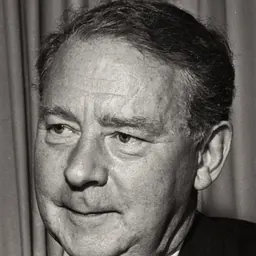
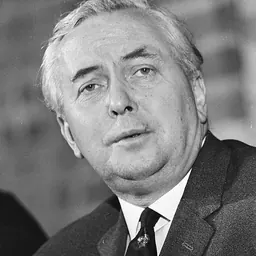





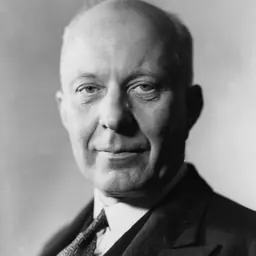
Related people
Same field, nearest in time


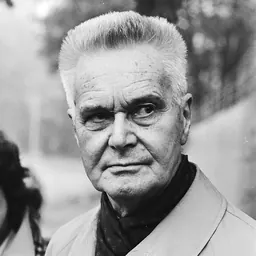
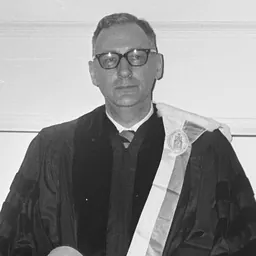
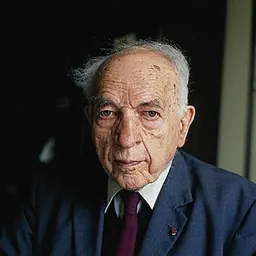
Contemporaries
People whose lives overlapped Evan Durbin's

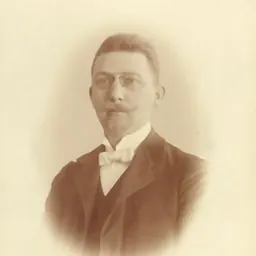
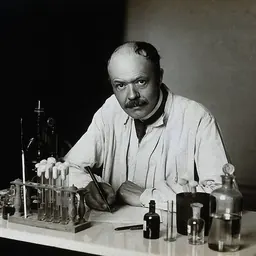

Frequently asked questions
Who was Evan Durbin?
British politician (1906-1948)
When was Evan Durbin born?
Evan Durbin was born on 1 March 1906 in Bideford.
When did Evan Durbin die?
Evan Durbin died on 2 September 1948 in Crackington Haven.
What was Evan Durbin's occupation?
Evan Durbin was an economist and politician.
What nationality was Evan Durbin?
Evan Durbin was British.
Sources & further reading
Cite this page
APA: Biography.guide. (2026). Evan Durbin. https://biography.guide/evan-durbin/
MLA: "Evan Durbin." Biography.guide, https://biography.guide/evan-durbin/.
Chicago: "Evan Durbin." Biography.guide. https://biography.guide/evan-durbin/.
Data last updated: 2026-09-20 · Spot an error? Report a correction.
Page generated 2026-09-27 05:27 UTC